
What the day feels like
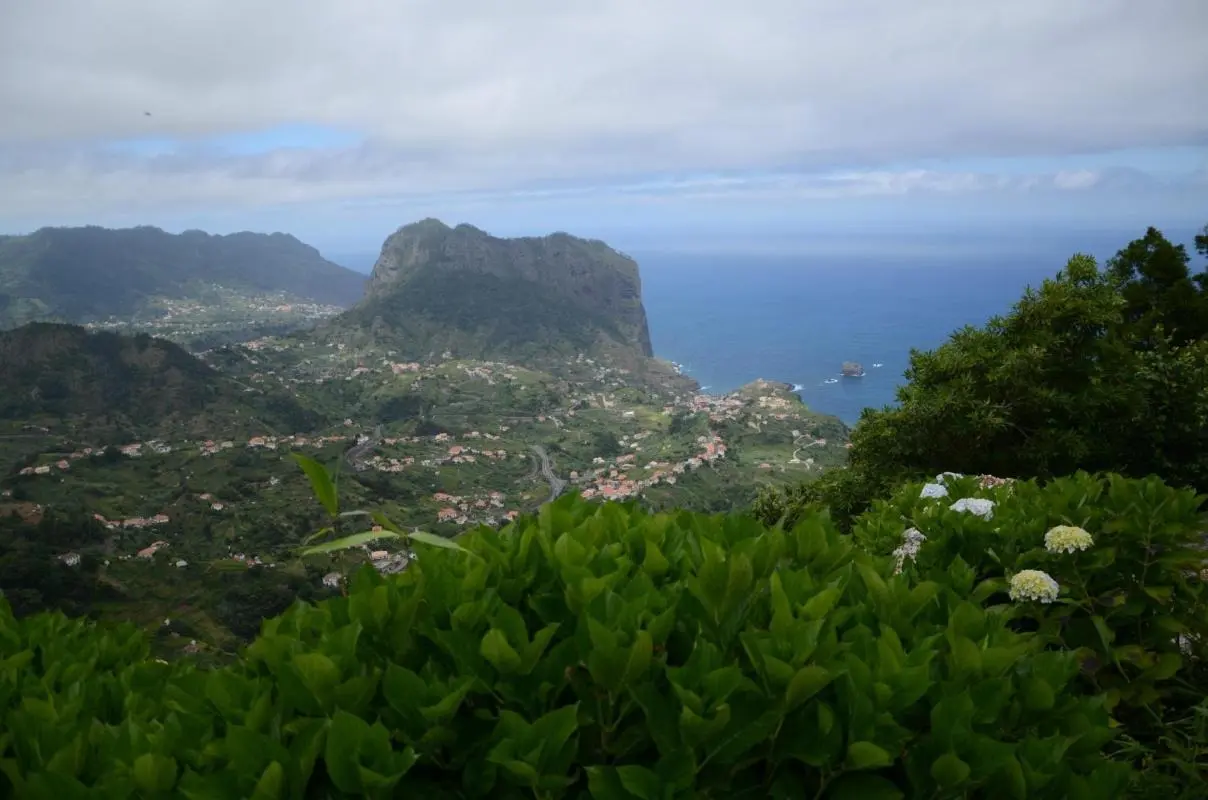
You arrive at Portela Viewpoint before the tourist buses, with the kind of early light that sharpens edges and makes the Atlantic a slab of hard silver. The pull-off is modest — a low stone wall, a scattering of benches, and a strip of wind-bent vegetation — but the view is anything but small. From this narrow terrace the island falls away in tiers: terraced farmland, the serrated backs of rain-soaked mountains, a patchwork of laurel forest that tumbles toward cliffs and the sea. Clouds move like living things, sometimes swamping the valleys, sometimes lifting to reveal the skeleton of ridgelines. When the sky clears, you can follow the arc of coastline north and east, with the red-roofed village roofs of Santana and the wind-streaked bands of Porto da Cruz below.
The scene is why guides and jeep drivers include Miradouro da Portela on East Madeira itineraries. It is a natural pause — a place to take a breath, unstrap a camera, and watch weather and geology do the work of the landscape. Local operators with open-top 4x4s and dirt-bike guides route their days so Portela punctuates the drive between the high spine of the island and its dramatic northern coast. For anyone who wants a concentrated taste of Madeira’s verticality, it’s one of the most efficient belvederes on the island.
Madeira’s story is written in stone and water. The island’s volcanic bones created steep, abrupt relief; centuries of human adaptation carved terraces and levadas — those humming irrigation galleries that lace the interior — to coax life from tight, precipitous soil. Miradouro da Portela sits on the eastern flank of this topology, where the laurel forest, or laurisilva, clings like a green mantle. That forest is not just scenography; it is a UNESCO World Heritage site and the remnant of a subtropical ecosystem that once blanketed much of southern Europe. Walking or driving here, you encounter both a living archive and a landscape still being shaped by wind and rain.
The cultural frame makes the viewpoint richer. Inland villages like Santana keep an almost postcard version of traditional Madeiran life: white houses with steep thatched roofs, local markets with honey and bolo do caco (the island’s garlicky flatbread), and small roadside stands selling poncha, the fiery sugarcane-and-honey drink. Many of the jeep and safari tours that stop at Portela build their route to visit these cultural checkpoints — a lane through mountain farms, a brief market stop, and a guided look at how people on Madeira still live with one foot in old practices and another in tourism.
Portela is also practical. It’s reachable by paved roads that climb quickly from the coastal plain, making it ideal for half-day outings and cruise-ship shore excursions. Guides use the viewpoint as a staging ground to point out key geography: Pico do Arieiro rising like a blunt spear inland, the braided ridges that separate microclimates, and the northern surf zones that make the cliffs so dramatic. For photographers the light at sunrise and late afternoon is best; mid-day can be harsh and washed out by the Atlantic glare. If you are on a dirt-bike or open-top jeep tour, Portela is often the first or last major stop, a chance to stretch legs and compare photos with companions.
Practicalities are straightforward but worth respecting. The winds here can be brisk, so mid-layers and a wind shell are useful even in summer. The view is accessible from a pull-out; there are few facilities, so plan accordingly. If you’re thinking of combining Portela with a deeper exploration of East Madeira, consider a full-day private jeep tour that includes Santana and Ribeiro Frio, or a half-day 4x4 if you’re time-limited. For riders, guided dirt-bike routes thread the island’s old roads and forest tracks and can bring you to secluded folds that only a bike or four-wheel-drive reaches.
Time your visit for mornings when clouds are low and dramatic, or late afternoons when the western sun gilds valleys and terraces. If you’re visiting in spring, bring a lightweight rain layer and scout local schedules for flower festivals and market days. Respect the fragile laurel forest by staying on official viewpoints and paths, and favor local guides whose fees support small-scale businesses in remote parishes.
Why travel here? Because Portela is a concentrated lesson in what makes Madeira sing: abrupt relief, strong Atlantic weather, resilient pockets of forest, and living cultural fringes. It’s a place that asks you to slow down for a moment and read a landscape formed by fire, water, and centuries of human ingenuity. Whether you arrive by open-top jeep, on a dirt bike, or in your rental car, you leave with a better sense of the island’s scales — and perhaps a craving to drive beyond the viewpoint into the villages, levadas, and peaks that make Madeira a compact, intoxicating adventure.
Trail wisdom
Small choices, better day.
Dress in layers
Winds can be strong and temperatures change fast at this elevation; pack a light windproof shell.
Time for light
Visit at sunrise or late afternoon for the best directional light and clearer horizons.
Stay on the path
Respect the fragile laurel forest and avoid trampling the native flora by remaining on marked areas.
Combine with a tour
Pair Portela with a half‑day 4x4 or full‑day east island tour to see Santana, Pico do Arieiro, and Porto da Cruz efficiently.
Local knowledge
Read the place, not just the route.
Watch for native species including Madeira firecrest (Regulus madeirensis), Common buzzard and seabirds along the north coast.
Keep an eye out for wildlife during the transition between areas and habitats. Respect distance guidelines.
The laurisilva forest is protected as a UNESCO World Heritage site; stay on official viewpoints and support local guides who practice low‑impact tourism.
Follow the guide's instructions on size limits, ethical handling, and leave-no-trace practices.
Pico do Facho viewpoint for a different coastal angle. Small roadside stands near Santana selling homemade poncha and local honey
Locally recommended viewpoints and quiet spots known best to local operators.
Human engineering of levadas and terraced farms transformed steep volcanic slopes into productive land over centuries, shaping the views seen from Portela.
Maritime roots and regional tradition shape the waterways and working coasts.
Seasonal guide
Four versions of the same landscape.
Spring
Best forwildflowers · mild hiking · photography at dawn
Challengesoccasional rains · variable visibility
Spring brings flowers and mild temperatures, but pack a rain layer — low cloud can drift in quickly.
Summer
Best forclear views · open‑top jeep rides · longer daylight
Challengesstrong sun · wind exposure
Summer offers long days and good visibility; sun protection and wind layers are still advised.
Fall
Best fordramatic storms · fewer crowds · warm afternoons
Challengesunpredictable weather · shorter daylight
Autumn can produce dramatic skies and cooler nights; afternoons are often the clearest time to visit.
Winter
Best foratmospheric clouds · short, moody light · less tourist traffic
Challengesrain and wind · chilly mornings
Winter is wetter and windier; dress warmly and expect more fog-blanketed mornings.
Pack with intention
What to bring.
Good to know
Common questions.
It is accessible by paved road; most visitors arrive by car, taxi, or as part of a guided jeep or dirt‑bike tour that includes the east side stops.
Plan the edges
The details that make the day easier.
Madeira’s laurisilva forest, visible from many east‑side viewpoints, is a UNESCO World Heritage site and preserves flora that dominated southern Europe millions of years ago.
Taste poncha at a roadside stand, try bolo do caco with garlic butter in Santana, and look for artisans selling embroidery and honey along east‑side village roads.
- Nearest town
- Santana; Access: paved roads and common on guided jeep
- dirt‑bike tours; Facilities
- limited; Best times: sunrise, late afternoon; Language: Portuguese, English widely spoken in tours.
Choose certified local guides, avoid trampling vegetation, take all rubbish with you, and respect wildlife by keeping distance from nesting seabirds and forest species.
Explore by topic
Follow the threads.
Keep exploring
Make the story part of the trip.
 Related story
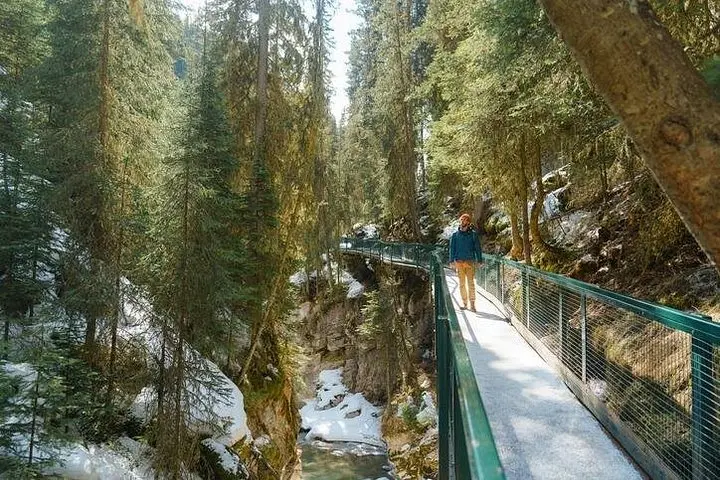
In eight efficient hours, experience the turquoise drama of Lake Louise and the cathedral-like icefalls of Johnston Canyon. This guided shuttle day trip from Banff/Canmore combines easy access, crisp winter scenery, and practical guidance for a high-reward Rockies outing.
 Related story
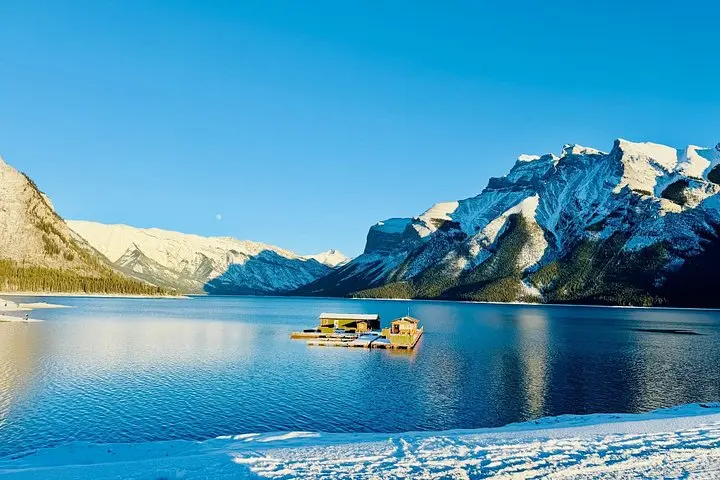
See Banff’s signature overlooks and hidden lakes in one compact, expertly guided 2.5-hour loop. Perfect for short-stay travelers who want big scenery without the driving.
 Related story
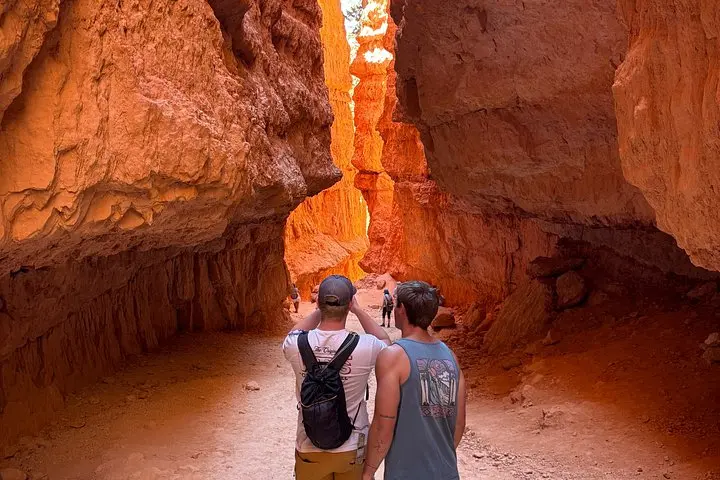
A guided sunrise hike down the Navajo Loop turns Bryce Canyon’s hoodoos from postcard scenery into an intimate geology lesson. Three miles, expert narration, and unforgettable light—this tour is the quickest way to understand how ice, time, and wind carved a city of stone.