
What the day feels like
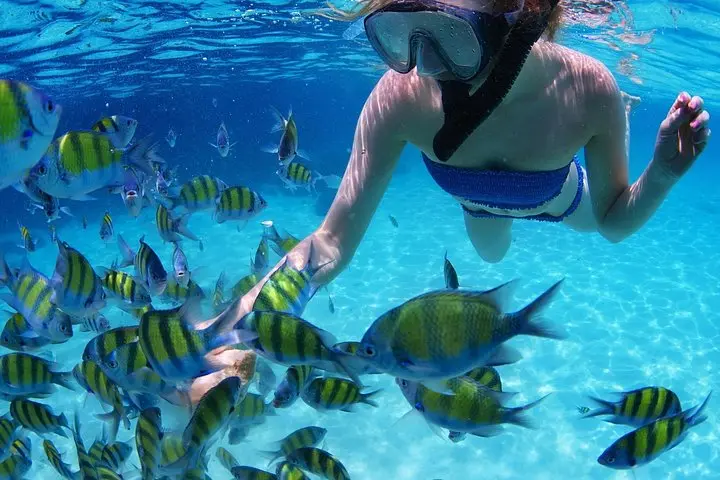
By the time the boat slips its mooring in Puerto Morelos, the town’s sleepy palms have already been left behind and the ocean is doing one thing it does best here: pulling your attention seaward. The water unspools in bands of turquoise and cobalt until the horizon blurs into sky; below the surface the reef holds its own equally dramatic world. Within minutes the engine throttles down, a handful of shutters click, and the first fins hit salt and reef. You don’t so much enter this place as become part of its motion—fish dart like punctuation, coral plates fan open like shutters, and a current nudges you along the line where waves and living stone meet.
Puerto Morelos is one of those Riviera Maya towns that prefers to be known rather than discovered. Once a fishing village tucked between Cancun and Playa del Carmen, it still keeps a low profile: a white-sand main street, a shady zócalo where fishermen mend nets, and a pier that points out to one of the Caribbean’s best-kept aquatic theaters. Roughly 300 yards off the shore the Mesoamerican Reef, the second-largest barrier reef system on Earth, runs in a ribbon—broken by channels, armored by coral heads, and populated by more than 65 fish species that the guides are proud to point out.
Geology here is patient but theatrical. The Yucatán’s porous limestone dissolves into cenotes inland while the reef forms offshore where currents and carbonate sediments create a frame for coral gardens and mangrove nursery grounds. That interplay—land giving caves and sinkholes, ocean offering coral architecture—explains why the area is as rich for snorkelers as it is for scientists. Local guides emphasize that protection: sections of the reef around Puerto Morelos are designated marine protected areas, and many operators contribute to monitoring and restoration projects.
On the practical side, this half-day trip is designed to bridge comfort and adventure. Expect around five hours total from pickup to return, with roughly 45–90 minutes of actual water time depending on tides and group pace. The reef sits shallow enough for confident floaters and beginners to see a lot without diving; deeper ledges and swim-throughs are accessible for stronger swimmers and certified divers on separate trips. The itinerary typically includes boat transport, guided snorkel stops, safety orientation, and a beachside lunch—refreshing after a morning in salt and sun.
Culturally, Puerto Morelos still moves to a gentler rhythm than its neighbors. After your swim, you’ll be dropped back near the town where small palapas serve ceviche, grilled fish, and cold beers. Visiting here benefits the local economy directly: small-boat operators are often family-run, and many guides grew up fishing these waters. Engaging with them—asking about the reef’s recent coral restoration efforts, or where the best local seafood is caught—adds texture to the excursion.
For planning: book a morning departure for the clearest water and calmest swell; afternoon winds can kick up visibility. Use reef-safe sunscreen and a UV shirt to protect both your skin and the coral. If you’re prone to seasickness, a small dose of preventative medication helps—boats are short hops but can roll on chop. Bring a snorkel you know fits well if you panic at mouthpieces; rentals are available but fit varies.
Safety and conservation intersect here. The reef is resilient but vulnerable—avoid touching or standing on coral, and do not feed fish. Many operators include a brief orientation on low-impact snorkeling; listen. If you’d like to add meaning to your experience, ask your guide about reef restoration volunteers or local beach cleanups. A tour can be both a memorable morning and a modest contribution to long-term preservation.
Why take this trip? Puerto Morelos offers a sweet-spot snorkel: spectacular marine life with a small-town feel, minimal boat time, and a low-key cultural finish back on shore. For families, it’s accessible. For repeat visitors to the Riviera Maya, it’s a reminder that the Caribbean still reserves plenty of quiet spectacle beyond the big resorts.
Practical link: For details on pickups, exact meeting points, and to book a guided half-day snorkel, see this local expert listing for snorkeling the Mesoamerican Reef off Puerto Morelos: https://app.advcollective.com/local-experts/snorkel-the-mesoamerican-reef-off-puerto-morelos-half-day-snorkel-with-transport-lunch.
When you’re planning, consider timing, sun protection, and supporting operators who emphasize stewardship. In return you get something simple and lasting: a morning where the world simplifies to warm water, curious fish, and hard, bright coral. The reef asks nothing of you but respect—and gives back a vivid, moving landscape that stays with you long after the fins are hung to dry.
Trail wisdom
Small choices, better day.
Go early
Morning departures offer the calmest seas and best visibility for spotting coral and fish.
Use reef-safe sunscreen
Chemical-free sunscreen protects marine life and reduces coral bleaching risk.
Bring a snug mask
A well-fitting mask keeps water out and extends your time comfortably observing below.
Pack motion-sickness prevention
A short boat ride can still roll—take meds beforehand if you’re sensitive.
Local knowledge
Read the place, not just the route.
Watch for native species including Parrotfish, Southern stingrays.
Keep an eye out for wildlife during the transition between areas and habitats. Respect distance guidelines.
Local operators work with marine conservation groups to support reef monitoring and coral restoration; choose companies that contribute to local protection programs.
Follow the guide's instructions on size limits, ethical handling, and leave-no-trace practices.
Snorkel small mangrove channels near the reef for juvenile fish sightings. Visit the town’s zócalo after the tour for fresh ceviche and local handicrafts
Locally recommended viewpoints and quiet spots known best to local operators.
Puerto Morelos evolved from a small fishing village into a quiet coastal town; its pier and fishing traditions remain central to local life.
Maritime roots and regional tradition shape the waterways and working coasts.
Seasonal guide
Four versions of the same landscape.
Spring
Best forCalm seas · Good visibility · Migratory bird spotting
ChallengesOccasional spring winds · Higher visitor numbers during Easter
Spring brings warm water and stable conditions—ideal for clear snorkeling but expect more tourists around holidays.
Summer
Best forWarmer water · Abundant juvenile fish · Longer daylight hours
ChallengesAfternoon storms · Hot temperatures · Increased plankton can reduce visibility
Summer is warm and lively underwater; plan morning trips to avoid afternoon squalls and lower visibility.
Fall
Best forFewer crowds · Comfortable water temps · Post-summer calm spells
ChallengesHurricane season risk (Aug–Oct) · Possible choppy seas
Fall can be a quieter window with good conditions, but stay aware of hurricane advisories.
Winter
Best forDry skies · Cooler nights · Stable marine conditions
ChallengesSlightly cooler water temps · Popular tourist season increases bookings
Winter’s dry season offers some of the clearest water and consistent conditions—book early to secure spots.
Operator details
What the booking data adds.
Included
- ✓Visit to Puerto Morelos
- ✓Reef National Park Admission
- ✓Snacks
- ✓Use of Snorkelling equipment
- ✓Air-conditioned vehicle
Not included
- —Lockers (Additional cost $5 USD)
- —marine life conservation Fee, Puerto Morelos
Good to know
- ✓Public transportation options are available nearby
- ✓Infants are required to sit on an adult’s lap
- ✓Not recommended for travelers with spinal injuries
- ✓Not recommended for pregnant travelers
- ✓Not recommended for travelers with poor cardiovascular health
- ✓Travelers should have at least a moderate level of physical fitness
Pack with intention
What to bring.
Good to know
Common questions.
No prior experience is required; guides provide a safety briefing and basic instruction, but you should be comfortable in the water and able to tread or float independently.
Plan the edges
The details that make the day easier.
The Mesoamerican Reef is the second-largest barrier reef system in the world, stretching about 1,000 kilometers from the tip of the Yucatán Peninsula to Honduras.
After the water, stroll Puerto Morelos’ shaded central square for beachside palapas serving fresh ceviche and grilled fish; local artisans sell handwoven goods nearby. A cold local beer or agua fresca at a seaside palapa feels like the perfect finish.
- Closest airport
- Cancun International Airport (CUN). Drive time: ~25–35 minutes from Cancun airport. Meeting point: Puerto Morelos marina or beachfront dock. Cell service: reliable in town, limited offshore. Permits: none for visitors but reef is protected—follow guide rules.
This reef is a protected marine area—use reef-safe sunscreen, avoid touching coral, and support operators who participate in local restoration and monitoring programs.
Explore by topic
Follow the threads.
Keep exploring
Make the story part of the trip.
 Related story
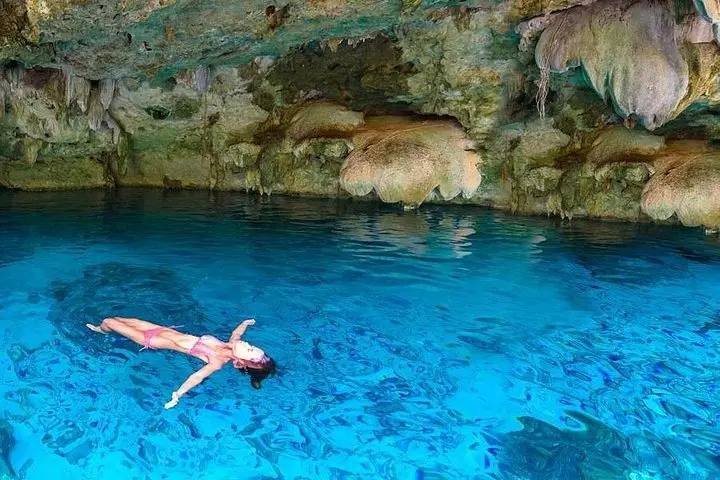
Dive into the Yucatán’s secret freshwater caverns and drift over the shallow reef gardens of Yalku Lagoon—an accessible, half-day snorkel pairing that blends geology, Mayan history, and vivid marine life.
 Related story
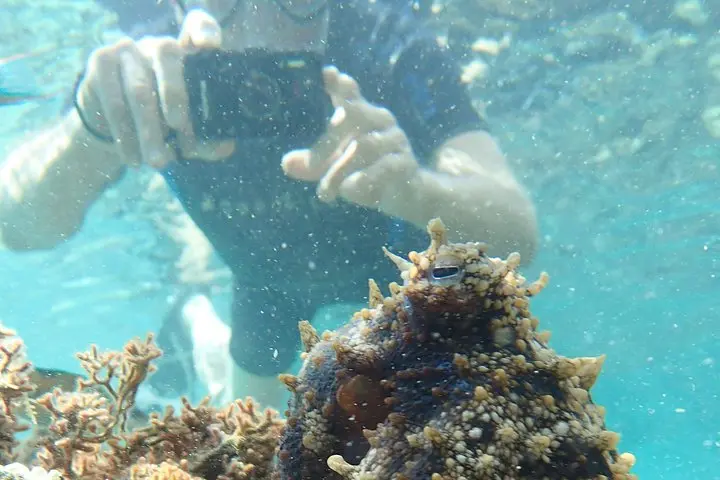
Slip beneath Porto Santo’s sunlit surface to find a mosaic of seagrass meadows, volcanic shelves, and playful schools of fish. This three-hour snorkeling tour pairs small-group access with local stewardship—ideal for travelers who value marine life over crowds.
 Related story
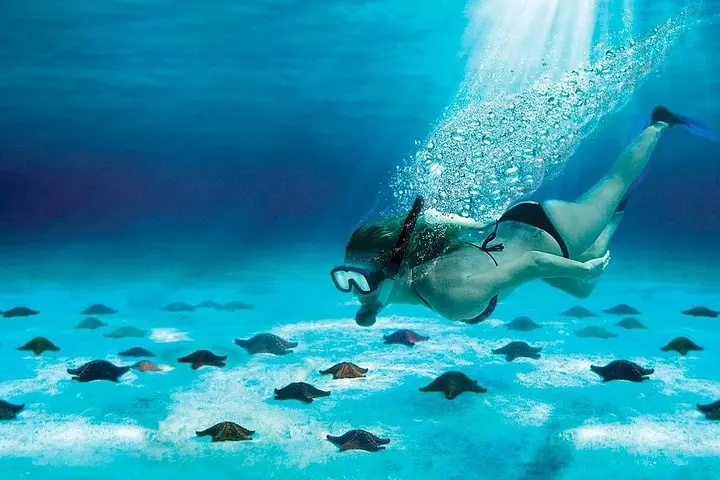
Spend a day on a high-speed boat exploring Cozumel’s famed reefs and the shallow sand flats of El Cielo. This full-day trip offers clear water, abundant marine life, and guided snorkeling at three prime sites—ideal for both first-timers and seasoned reef lovers.