
What the day feels like
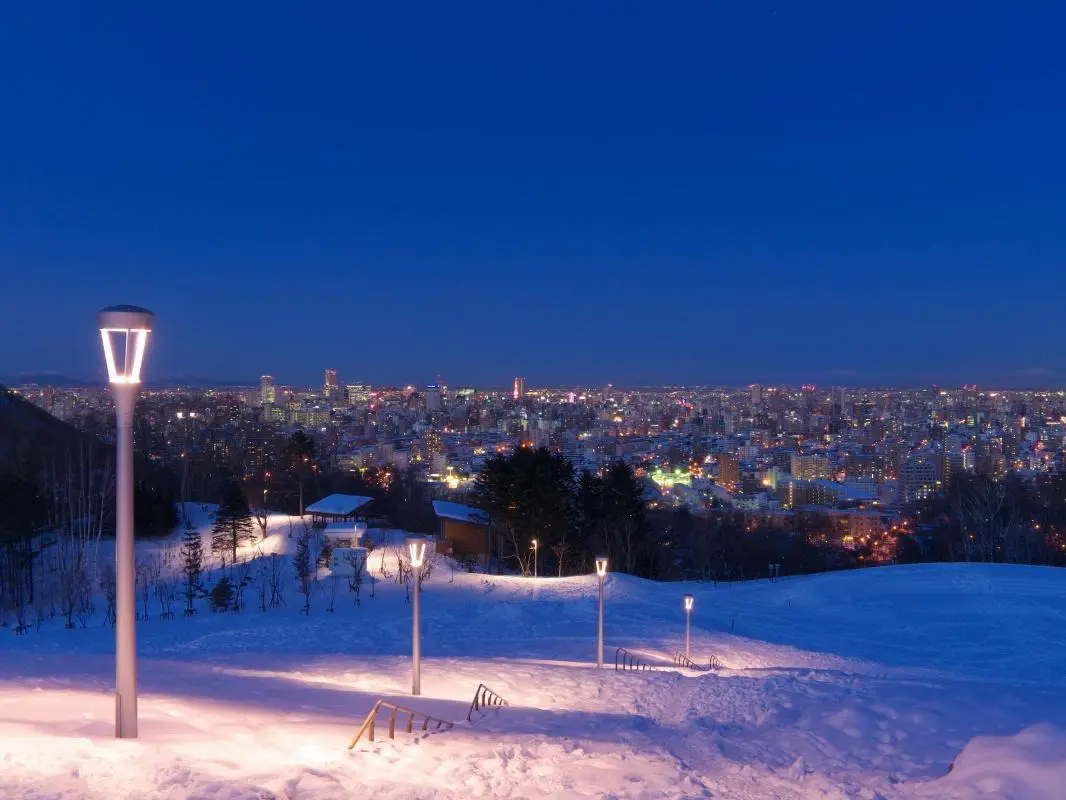
At dusk the city exhales. From the terraces of Asahiyama Memorial Park a ribbon of Sapporo spreads below—lantern-bright streets, the low blue smear of the Ishikari Plain, and in winter an obedient quilt of snow reflecting light back up. You walk a short, paved path that curves through stands of maples and pines, each tree taking on a different role as the light falls: the maples grow theatrical, the pines stoic. Locals come for the same reason visitors do—to stand above the city and watch its geometry rearrange itself as night falls.
Asahiyama Memorial Park (Asahiyama Kinen Koen) is less a single attraction than a practiced viewing posture. It occupies a tucked hilltop in Sapporo, the sort of urban green space that reads like a neighborhood landmark. It’s not dramatic—there’s no alpine summit to conquer or a waterfall to cross—but that is precisely its appeal: the park offers accessible, immediate perspective. In clear weather the panorama includes downtown rooftops and the farther silhouette of Mount Teine and the low coastline; in winter the view is a crystalline, sodium-lit postcard.
Sapporo’s parks are part of the city’s DNA. When the Hokkaido Development Commission laid out Sapporo in the late 19th century, planners prioritized wide avenues, public space, and green belts inspired by Western urbanism. Asahiyama fits that civic logic: a place for families, for amateur photographers, for couples stealing a moment at sunset, and for small tour groups who pair the park with another local favorite—Mt. Moiwa—for a double nightscape. The popularity of night-view routes underscores something fundamental about Hokkaido: the island wears its seasons plainly, and the city’s lights are beautiful because of the long, clear autumn and winter nights.
Geologically the hill is part of the gentle undulations that rim Sapporo’s central plain. You’ll find no volcanic vent here, but the slopes are typical Hokkaido: glacially smoothed loam, well-drained, and supporting mixed deciduous and conifer stands. The park is curated rather than wilderness—paved terraces, benches, and a modest observation platform—so it’s an ideal option for travelers who want a short outdoor payoff without technical trail work or an early alarm.
Locally, Asahiyama is a neighborhood place. It’s where parents push strollers to watch autumn color, where photographers scout for light, and where night-view tours will stop to let small groups stretch. The product offerings around the park reflect that mix: a private video tour that treats the park as a cinematic backdrop, and evening circuits that combine Asahiyama with Mt. Moiwa for star-worthy vistas.
Practicalities matter, and the park is flexible. Expect a short uphill approach: most visitors reach the main terrace in 10–30 minutes from nearby parking or drop-off points, and the paths are paved and family-friendly. The elevation gain is modest; bring steady shoes if you plan to wander the perimeter in winter when steps and terraces can be slick. For photographers and night-view fans, a tripod and a few spare batteries will make the difference between a snapshot and a memory worth printing.
Timing changes everything here. Arrive 30–45 minutes before sunset in autumn for a warm-hour glow followed by the cold-blue of the city lights. In winter you’ll find a quiet, snowy serenity—arrive dressed in layers and at least one down garment. Spring brings cherry buds and the gradual return of green; summer fills the park with cicadas and late light. If you’re pairing Asahiyama with other viewpoints—Mt. Moiwa is a common companion—the logistics are simple: local tours typically handle transport and time coordination so you get both panoramas in a single outing.
For travellers planning a visit: know that Asahiyama is modest by measure but generous by feeling. It’s not a full-day destination; it’s a precise choice for when you want a view, a short walk, and a local mood. Combine it with Sapporo’s food scene—soup curry, miso ramen, and seafood sashimi—to make the evening part of a larger culinary and cultural plan. And if you bring a camera, aim for the blue hour: the park’s roofline of trees and benches silhouette perfectly against the glow of the city.
Asahiyama rewards small investments: time, attention, and good gloves in winter. It’s a place to witness the way a modern city rests within a northern island’s seasonal sweep. Whether you book a private video shoot to capture your visit, or join a night-view tour that doubles up with Mt. Moiwa, you’ll leave with a clearer sense of why Sapporo’s residents make evening pilgrimages to its quiet hills.
Distance and difficulty: short paved walks (10–30 minutes to main terrace), modest elevation gain—a gentle urban hill rather than a hike. Accessibility: family-friendly, parking and short taxi rides available. Best time: sunset through early evening for layered light; winter nights for snow-lit serenity. Preparation: layered clothing, traction in winter, camera with tripod for night photography, and a small flashlight for moving between terraces after dark.
Asahiyama is a small stage with a big view—an urban ritual of watching Sapporo turn from day to night that’s both immediate and quietly memorable.
Trail wisdom
Small choices, better day.
Arrive for blue hour
Plan to reach the main terrace 30–45 minutes before sunset to capture warm light and the first city lights for night photos.
Bring traction in winter
Steps and paved paths can be icy—wear microspikes or crampons for safe footing after snowfall.
Combine with Mt. Moiwa
Book a combined evening tour or plan logistics so you can enjoy two complimentary viewpoints in one outing.
Keep noise low at night
This is a neighborhood viewpoint—respect locals and other visitors by keeping voices down and lights dimmed.
Local knowledge
Read the place, not just the route.
Watch for native species including Various songbirds and tit species, Occasional red fox or urban-adapted mammals in early morning.
Keep an eye out for wildlife during the transition between areas and habitats. Respect distance guidelines.
Respect marked paths and avoid feeding wildlife; the park is managed as an urban green space with a focus on minimizing light and noise pollution for local residents and wildlife.
Follow the guide's instructions on size limits, ethical handling, and leave-no-trace practices.
Small observation alcoves along the south terrace that frame the city in unique ways. A pocket of late-blooming cherry trees near the park entrance—best in early spring
Locally recommended viewpoints and quiet spots known best to local operators.
As part of Sapporo’s network of urban parks, Asahiyama reflects late-19th-century city planning that prioritized public green space in Hokkaido’s growing capital.
Maritime roots and regional tradition shape the waterways and working coasts.
Seasonal guide
Four versions of the same landscape.
Spring
Best forEarly cherry blossoms · Mild evening walks · Birdsong and returning green
ChallengesUnpredictable cool nights · Mud on side paths
Spring brings buds and cool evenings—layers are essential, and the park fills with the soft green of new leaves.
Summer
Best forLong daylight hours · Evening picnics · Lush foliage
ChallengesLate sunsets mean later nights · Occasional humid evenings
Summer offers relaxed, verdant views and late-night light—perfect for extended evening outings but bring mosquito repellent.
Fall
Best forAutumn colors · Crisp clear nights · Photography
ChallengesEarly nightfall as season progresses · Cool temperatures after sunset
Autumn is arguably the park’s most cinematic season: maples flare into color and the air is often sharp and clear for long-range views.
Winter
Best forSnow-lit cityscapes · Quiet, atmospheric nights · Short, scenic walks
ChallengesIcy surfaces · Very cold temperatures after dark
Winter creates a crystalline, sodium-lit panorama; dress warmly and use traction aids for safe movement on terraces and steps.
Pack with intention
What to bring.
Good to know
Common questions.
From nearby parking or drop-off points the walk to the main terrace is typically 10–30 minutes depending on pace and where you start.
Plan the edges
The details that make the day easier.
Mt. Moiwa—often visited on combined tours with Asahiyama—is ranked among Hokkaido’s top three nightscapes, a claim often cited in local travel guides.
Pair an evening at Asahiyama with Sapporo favorites—miso ramen or a warm bowl of soup curry—and visit a local izakaya afterward to taste Hokkaido seafood and seasonal sides.
Minimize light pollution—use dim flashlights, stay on paths, and avoid disturbing wildlife; local groups maintain park cleanliness through volunteer cleanups.
Explore by topic
Follow the threads.
Keep exploring
Make the story part of the trip.
 Related story
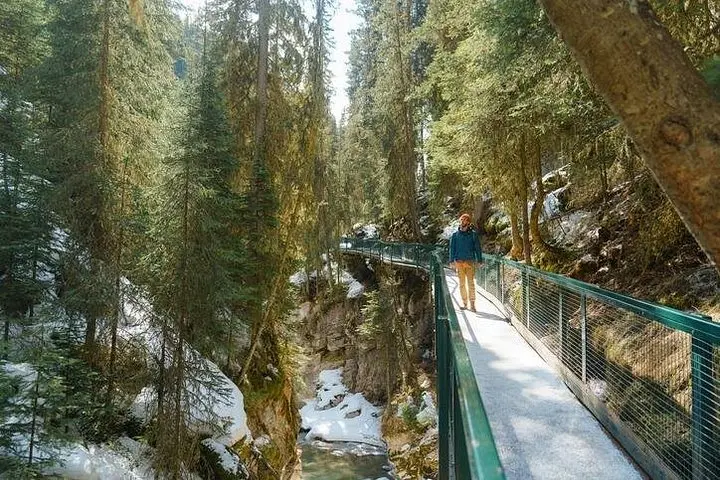
In eight efficient hours, experience the turquoise drama of Lake Louise and the cathedral-like icefalls of Johnston Canyon. This guided shuttle day trip from Banff/Canmore combines easy access, crisp winter scenery, and practical guidance for a high-reward Rockies outing.
 Related story
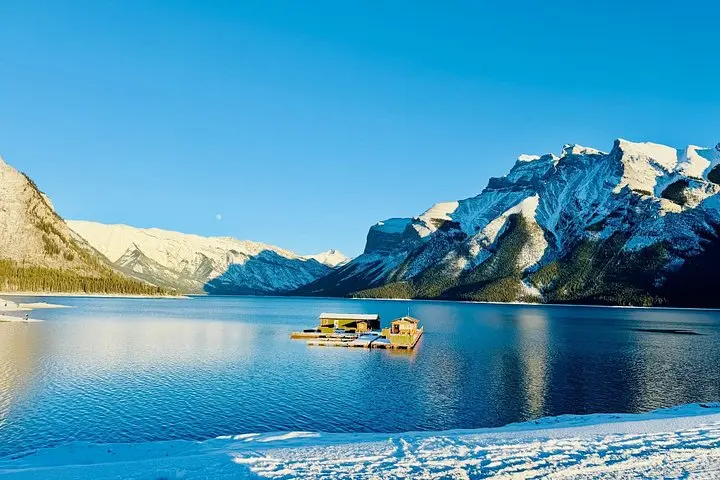
See Banff’s signature overlooks and hidden lakes in one compact, expertly guided 2.5-hour loop. Perfect for short-stay travelers who want big scenery without the driving.
 Related story
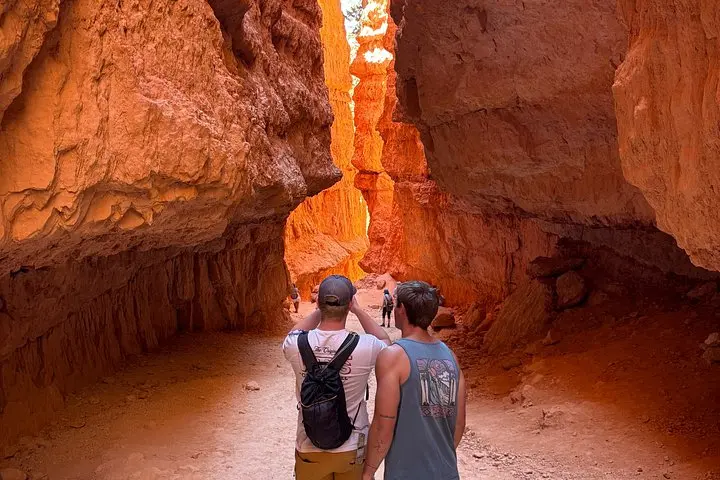
A guided sunrise hike down the Navajo Loop turns Bryce Canyon’s hoodoos from postcard scenery into an intimate geology lesson. Three miles, expert narration, and unforgettable light—this tour is the quickest way to understand how ice, time, and wind carved a city of stone.