
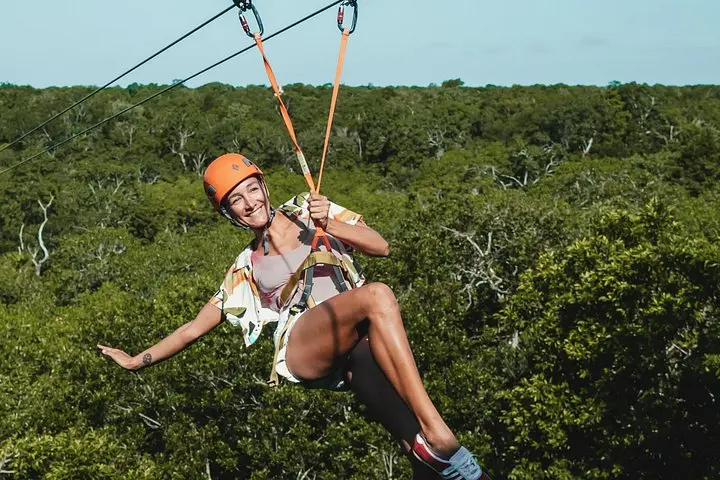
What the day feels like
The jungle has weight to it — a green, humid kind of pressure that settles over your shoulders as soon as the shuttle turns off the main road. Leaves lean in like curious neighbors; vines braid the trunks of trees that have been standing for centuries, shading a narrow path that promises something different than the Hotel Zone’s neon and shoreline. The first zip line launches you out over that canopy and for a heartbeat the jungle feels like a living, breathing thing that both holds you up and dares you forward. Below, the green pushes and folds; above, sunlight pries through in thin, burning ribbons.
This half-day Private Jungle Adventure condenses a few classic Riviera Maya highs into four kinetic hours: two zip lines that trade speed for perspective, a technical rappel that threads you down into a sinkhole, and a swim-snorkel in a cenote whose water is clear enough to see the limestone scallops on the walls. It’s adrenaline with an immediate payoff — the silence of subterranean water and the slow, strange light that filters into an underground pool.
Geology and history are part of the thrill. The Yucatán Peninsula sits on a vast limestone platform riddled with caverns and aquifers. Over millennia, rainwater dissolved the rock, creating underground rivers and the cenotes — collapsed cave roofs that Native Maya considered sacred portals to the underworld. When you lower yourself to the lip of a cenote it’s easy to feel that old reverence: the water is ancient, its current a subtle memory of storms and seasons.
Culturally, this region is a palimpsest: Mayan ruins are never far in the mind of a local guide, and many cenotes are named and treated with quiet respect, their ecosystems managed by small communities. Tour operators that prioritize small groups, local guides, and conservation fees help channel tourism money back to those communities and keep fragile sites intact.
On the practical side, the flow of the itinerary is efficient: safety briefing, harnessing, two zips that give you a taste for speed, then a rappel that transforms vertigo into curiosity as you descend into a cool hollow. A guided swim and snorkel follows, letting you pick out stalactites and submerged rock shelves. The water is fresh and often chilly at first — the kind of temperature that wakes you up properly.
Why go private? A small-group or private booking compresses time spent waiting, allows tailoring of the difficulty and pace, and gives a better window for questions about geology, flora, and fauna. The guides work as safety anchors and tour guides: one moment they’re checking ropes and harnesses, the next they’re pointing out how the light hits a rock formation or explaining how cenotes supported Mayan settlements.
For travelers weighing this against other Riviera Maya options: this is not a long hike or a technical climb; it’s a curated adventure that pairs aerial views and basic vertical skills with an immersive freshwater swim. It’s ideal for people who want a concentrated hit of nature and adrenaline without an all-day commitment.
Safety and preparation are straightforward. Wear closed-toe shoes with good grip for the approach and rappel. Bring a swimsuit and a quick-dry layer you can wear under the harness, plus biodegradable sunscreen and a small dry bag for your phone and keys. Expect intermittent cell service once you leave the main roads — that’s part of the point. Guides carry rescue and first-aid gear and lead every descent, but a calm head and a willingness to follow instruction go a long way.
Environmental responsibility matters here. Cenotes are delicate freshwater springs connected to larger aquifers. Avoid chemical sunscreens, don’t leave trash, and listen to guides about where to step and what to touch. Choosing operators that limit group size, compensate local communities, and follow conservation rules helps keep these systems healthy for the next visitor and for locals who depend on them.
At the end of the tour you’ll be dried off and likely buzzed with a mixture of quiet satisfaction and elevated heart rate. That sensation — part accomplishment, part relief — is what sells this experience. You’ve flown, you’ve rappelled, you’ve slipped beneath a shuttered roof of rock and watched sunlight move like a slow clock across water. It’s a compact, polished day in the jungle that feels bigger than its hours.
If you go: book morning departures to avoid the heaviest heat and to catch the best light in the cenote. Ask about hotel pickup; a private tour usually includes it and saves time. And bring a camera with a waterproof case or a decent smartphone with a strap — there will be moments you’ll want to keep, from the freefall first zip to the cathedral hush of the cenote.
This trip isn’t a rite of passage, it’s a deliberate handful of experiences assembled with local knowledge and safety in mind. It’s part of a new generation of Riviera Maya adventures that trade the mass-market for authenticity: small groups, engaged guides, and a genuine encounter with a landscape that is equal parts playground and sacred place.
Trail wisdom
Small choices, better day.
Morning departures win
Book early slots to avoid heat, stronger sun in the cenote, and busier mid-day crowds.
Wear closed-toe shoes
Approach trails and rappel platforms can be slippery or uneven; shoes with grip make a measurable difference.
Use biodegradable sunscreen
Cenote ecosystems are sensitive — mineral-based or biodegradable sunscreens reduce contamination.
Secure valuables
Bring a small dry bag or a waterproof case and secure straps; phones and keys are easy to drop during ziplines and swims.
Local knowledge
Read the place, not just the route.
Watch for native species including Howler monkeys (distant calls in the canopy), Tropical birds like toucans and motmots.
Keep an eye out for wildlife during the transition between areas and habitats. Respect distance guidelines.
Local cooperatives manage many cenote sites; choose tours that pay fees back to communities and follow no-touch rules to protect groundwater.
Follow the guide's instructions on size limits, ethical handling, and leave-no-trace practices.
Ask guides about small Mayan altars or offerings near cenote rims. Check for shaded picnic spots where local vendors sometimes sell fresh fruit and agua fresca
Locally recommended viewpoints and quiet spots known best to local operators.
Cenotes were central to Mayan life — water sources and ceremonial sites — and many were considered entrances to the underworld.
Maritime roots and regional tradition shape the waterways and working coasts.
Seasonal guide
Four versions of the same landscape.
Spring
Best forMild weather · Clear water visibility
ChallengesOccasional afternoon showers · Increasing visitor numbers in peak weeks
Spring offers warm days and good water clarity; plan early starts to avoid showers and crowds.
Summer
Best forLush jungle scenery · Long daylight hours
ChallengesHigh humidity and heat · Rainy season thunderstorms
Summer brings vibrant foliage but higher heat and sporadic storms — hydration and flexible scheduling are key.
Fall
Best forFewer tourists · Warm water temperatures
ChallengesHurricane-season risk window · Possible service disruptions
Fall can mean quieter sites and warm water, but watch weather forecasts during hurricane season.
Winter
Best forDry, cool mornings · Best overall conditions
ChallengesCooler water early morning · Higher tourist demand in holidays
Winter’s dry season gives stable weather and great visibility, though mornings can feel cool in the water.
Operator details
What the booking data adds.
Included
- ✓guided zipline and rappel into cenote circuit
- ✓guided snorkel and swim in underground cenote
- ✓Round trip transportation
- ✓Lifejacket + snorkel gear + zipline-rappel gear
- ✓snacks and bottled water
Not included
- —Gratuities
Good to know
- ✓Specialized infant seats are available
- ✓Not recommended for travelers with spinal injuries
- ✓Not recommended for pregnant travelers
- ✓Not recommended for travelers with poor cardiovascular health
- ✓Travelers should have at least a moderate level of physical fitness
- ✓The minimum age for the zipline and abseiling activity is 5 years or 25 kg (55 pounds)
- ✓The maximum weight limit is 120 kg (264 pounds) only if the equipment fits properly.
- ✓For toddlers in this age group, we kindly ask that one of their parents accompanies them while the rest of the group enjoys these activities. Safety is our top priority, and we appreciate your understanding in ensuring everyone's well-being during the tour.
- ✓Biodegradable sunscreen (even biodegradable) harms the coral reefs and other sealife, please apply only on exposed skin in your hotel and after water activities
Pack with intention
What to bring.
Good to know
Common questions.
The private experience runs about four hours from pickup to drop-off.
Plan the edges
The details that make the day easier.
Cenotes are part of the Yucatán’s vast underground aquifer system and were essential to Maya settlements — many cenotes contain archaeological remains and artifacts.
After your adventure, head into downtown Cancun for fresh ceviche or tacos al pastor at Parque de las Palapas, or try La Habichuela for a sit-down meal rooted in regional cuisine — both offer a taste of local life away from the Hotel Zone.
- trailhead
- Cancun International Airport (CUN); Driving distance from Hotel Zone: typically 30–60 minutes depending on exact cenote; Cell service: intermittent in jungle areas; Permits or passes: tour fees usually include site access—confirm with operator.
Cenotes are fragile freshwater springs; choose operators that limit group sizes, use biodegradable products, and contribute fees to local conservation efforts. Pack out all trash and avoid touching rock formations.
Explore by topic
Follow the threads.
Keep exploring
Make the story part of the trip.
 Related story
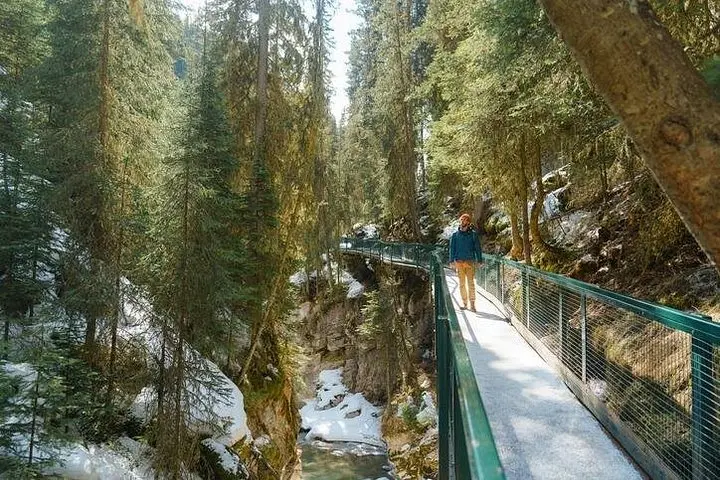
In eight efficient hours, experience the turquoise drama of Lake Louise and the cathedral-like icefalls of Johnston Canyon. This guided shuttle day trip from Banff/Canmore combines easy access, crisp winter scenery, and practical guidance for a high-reward Rockies outing.
 Related story
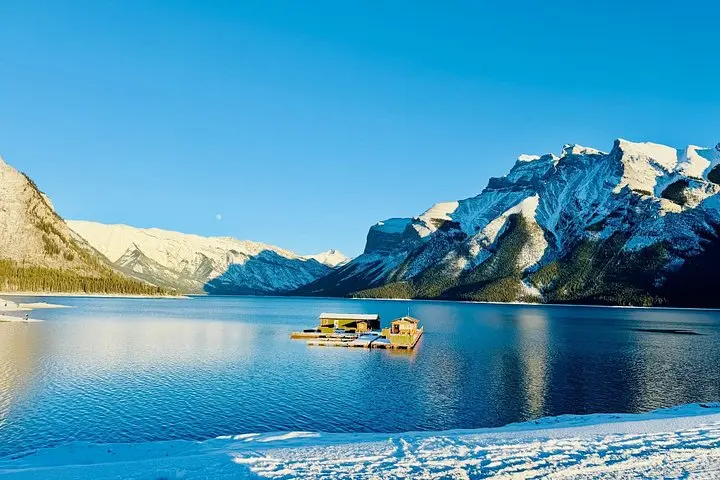
See Banff’s signature overlooks and hidden lakes in one compact, expertly guided 2.5-hour loop. Perfect for short-stay travelers who want big scenery without the driving.
 Related story
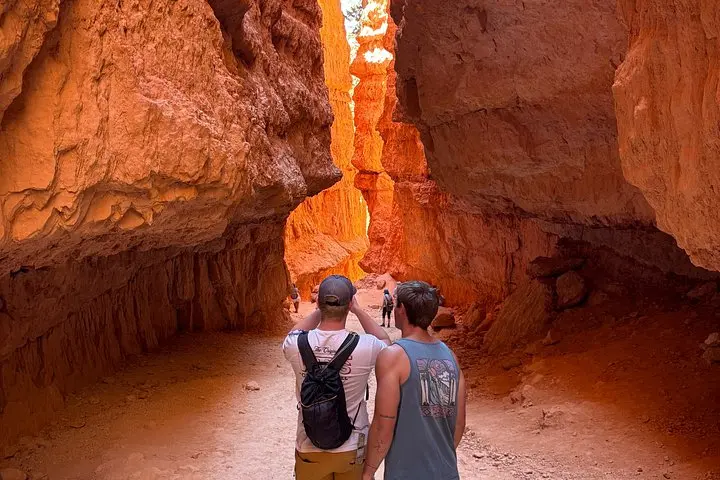
A guided sunrise hike down the Navajo Loop turns Bryce Canyon’s hoodoos from postcard scenery into an intimate geology lesson. Three miles, expert narration, and unforgettable light—this tour is the quickest way to understand how ice, time, and wind carved a city of stone.