
What the day feels like
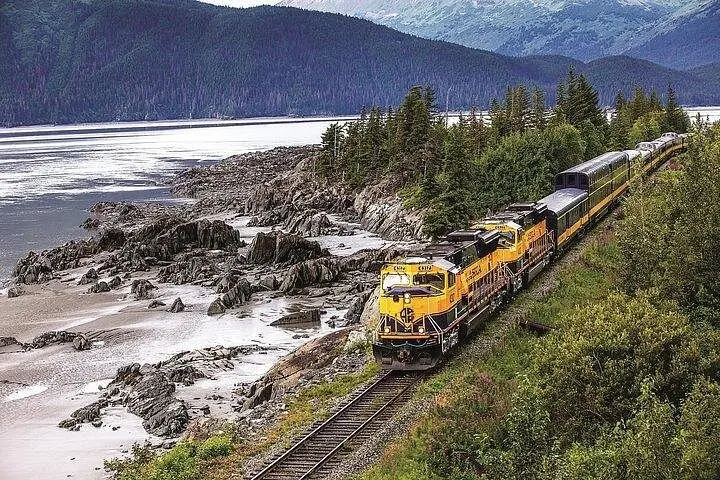
At 6 p.m., the platform in Seward hums with end-of-day energy—sea gulls stitching the sky above the harbor, salt on the breeze, a cobalt blur of mountains sharpening as the light cools. The Coastal Classic rolls in with a low metallic sigh, blue-and-gold paint catching the last flare of sun like a promise. You climb aboard and the world outside rearranges itself into a moving theater: Resurrection Bay fades, the Kenai Mountains rise to their full height, and the tracks lean into the wilderness. The evening does the rest. Turnagain Arm, patient and tidal, will soon flex its reach; glaciers will flash like a serrated grin between the peaks; waterfalls will scribble down dark rock. The train eases north and the landscape dares you to look away.
This is Alaska by rail, the clean, unhurried line that stitches two very different gateways—working-port Seward and the urban hub of Anchorage—through a backcountry corridor you can’t drive. It’s four-plus hours of curated wild, where the Chugach Mountains shoulder close to the coast and the tracks carve the quiet space between. The Alaska Railroad has been doing this since the early 20th century, when President Warren G. Harding drove the golden spike in 1923 to complete the line. Seward is Mile 0, the original saltwater door to the Interior. You feel that old purpose in the way the train moves: steady, forward, unbothered by grades that would snarl a highway.
Geology is the conductor here. The Kenai Peninsula is a wrinkled map of uplift and ice, and the train reads it out loud. As you slip into the Placer River valley, mountains crowd close; the current hustles beside you, glassy in the eddies and assertive in the runs. Glaciers hang back in blue recesses—Spencer, Bartlett, Trail—proof that ice is still editing this land. The Arm itself, named by Captain James Cook’s crew after it forced them to “turn again” in 1778, is among the most dramatic tidal theaters on the planet. When the bore tide builds, it marches down the Arm like a moving wall, the water urging forward, the mudflats breathing in and out with a 20- to 40-foot tide swing that sets the rhythm of the coast.
Wildlife has the right-of-way. In summer, Dall sheep cling to cliffs like punctuation marks you only notice once your eyes adjust to scale. Bald eagles ride the thermals and then fall like anchors. Sometimes, if the timing lines up with the tide, beluga whales ghost the brackish shallows near Beluga Point, pale forms surfacing in the pewter water. Moose work the edges of Potter Marsh near Anchorage with a casual confidence that makes you feel like the visitor you are. The train doesn’t chase these sightings; it lets them arrive. The conductor’s voice holds a smile when the animals show themselves.
There’s history, too, in the towns you skirt. Girdwood, rebuilt after the 1964 earthquake, is a mountain hamlet with ski-town energy and a taste for good food. Portage is a meditation on impermanence—its ghostly tree trunks killed by saltwater after the land dropped in the quake, their bleached fingers marking the shoreline. Anchorage, where your journey ends at 10:15 p.m., is Alaska’s largest city and a jumping-off point for everything from bush flights to glacier hikes. In midsummer you arrive in a silver dusk that refuses to call itself night.
The Coastal Classic is a trip built for travelers who like their adventure tempered with simplicity. You don’t have to wrangle switchbacks or master tides. You just sit by the wide windows, maybe step into the open-air vestibule for wind and sound, and let Alaska do what it does—move at its own pace while still feeling immense. Practicality threads the ride: there’s a dining car with hot meals and local beers; clean restrooms; friendly staff who know their mountains and the mileposts by heart. The coach seats are generous. Upgrade to GoldStar (if available) and you get glass-dome cars, an upper-level outdoor platform, and table-service dining. But coach is plenty fine; the scenery doesn’t discriminate.
For the northbound run, the left side of the train often courts the best views along Turnagain Arm, where the shoreline unfurls like a map you can trace with your finger. The right side throws elbows of mountain, ravine, and waterfall. Either way, bring layers—the vestibules can be breezy and the evening can cool fast even on hot days. Binoculars make distant ice clearer and turn specks on a far ridge into Dall sheep. A camera with a fast shutter handles the motion; shoot through clean glass or step into the vestibule and work the railings for a steady hand.
Booking is straightforward, though demand spikes in summer. The 6 p.m. departure hits that sweet spot of long light and open seats to the finale. Arrive early, check your larger bags if you want, and keep the essentials—camera, layers, water—in a daypack. This is one-way by design; many travelers ride up from Seward after a day on the water with glaciers and whales and tuck into Anchorage for the night. Others use it to reverse a road trip—drive one way, ride back by rail, watch the same mountains tell a different story.
By the time the train angles past Potter Marsh and threads into the Anchorage Rail Depot, you’ll have a little salt on your lips and a lot of landscape in your head. Turnagain Arm will have pushed and receded, the mountains will have stood their ground, and the rails will have delivered that rare thing: a big Alaskan day that asks little of you but attention. In a state that rewards grit, this ride is a reminder—sometimes the wild wants you to sit still and watch it move.
Trail wisdom
Small choices, better day.
Choose the Left Side Northbound
For the Seward-to-Anchorage leg, sit on the left side for sweeping views of Turnagain Arm; the right side leans into waterfalls and canyons.
Arrive Early for Check-In
Plan to be at the Seward depot 45–60 minutes before departure to check bags, find your car, and settle in without rush.
Layer Up for the Vestibule
Even in July, evening breezes can be brisk in the open-air vestibules—light gloves and a wind layer make photo sessions comfortable.
Mind the Tides for Wildlife
Beluga sightings near Turnagain Arm often align with incoming tides; ask staff about tide timing as you approach Girdwood and Beluga Point.
Local knowledge
Read the place, not just the route.
Watch for native species including Beluga whale, Dall sheep.
Keep an eye out for wildlife during the transition between areas and habitats. Respect distance guidelines.
Turnagain Arm’s mudflats and wetlands are sensitive habitats; enjoy wildlife from the train and avoid disturbing shorebirds and marine mammals when viewing later from pullouts.
Follow the guide's instructions on size limits, ethical handling, and leave-no-trace practices.
Beluga Point: a prime spot for bore-tide drama and beluga sightings as you near Anchorage. Potter Marsh: broad wetlands that glow in late light, often with moose or waterfowl
Locally recommended viewpoints and quiet spots known best to local operators.
The Alaska Railroad was completed in 1923, when President Warren G. Harding drove the golden spike; Seward remains Mile 0, the southern terminus on Resurrection Bay.
Maritime roots and regional tradition shape the waterways and working coasts.
Seasonal guide
Four versions of the same landscape.
Spring
Best forLower crowds · Snow-dusted peaks
ChallengesLimited early-season departures · Unpredictable weather
Shoulder-season runs begin in May with lingering snow on the Chugach and fast-changing conditions. Great visibility, but pack layers and confirm schedules.
Summer
Best forLong daylight · Peak wildlife viewing
ChallengesHigh demand · Glare through windows at golden hour
From mid-May to mid-September, the Coastal Classic is in full swing. Book ahead, bring polarized sunglasses, and expect dramatic evening light.
Fall
Best forAutumn colors · Cooler temps
ChallengesReduced service after mid-September · Shorter days
Late September can deliver gold birch and quieter cars, but verify the seasonal schedule and be ready for early sunsets.
Winter
Best forAlternate winter routes · Northern lights (elsewhere on the line)
ChallengesThis segment typically does not operate in winter
The Seward–Anchorage Coastal Classic is a summer service; consider the Aurora Winter Train between Anchorage and Fairbanks for a cold-season rail experience.
Operator details
What the booking data adds.
Included
- ✓Optional dining and snack bar
- ✓One-way rail transportation from Seward to Anchorage departing 600pm arriving 1015pm
- ✓Comfortable reserved seating
- ✓Alaskan tour guide providing narration throughout journey
Not included
- —Accommodation and/or tours and activities in Anchorage
- —Return transportation
- —These options can be booked independently or through Alaska Railroad directly after booking.
Good to know
- ✓Wheelchair accessible
- ✓Infants and small children can ride in a pram or stroller
- ✓Service animals allowed
- ✓Public transportation options are available nearby
- ✓Infants are required to sit on an adult’s lap
- ✓Transportation options are wheelchair accessible
- ✓Suitable for all physical fitness levels
- ✓Children must be accompanied by an adult
- ✓Infants (0-1) may be added to a reservation as lap children (not requiring a paid, reserved seat) but they must be registered in the booking. To register an infant as a lap child, please indicate so in the “Special Requests” option in the final checkout and include the infant’s name, age and gender.
Pack with intention
What to bring.
Good to know
Common questions.
Left side generally offers expansive Turnagain Arm views heading to Anchorage, while the right side highlights canyons and waterfalls. Both sides are scenic.
Plan the edges
The details that make the day easier.
Turnagain Arm has one of the world’s largest tidal ranges—often over 30 feet—and can produce a bore tide that travels up to 10–15 mph along the inlet.
In Seward, grab fresh halibut tacos at the harbor before boarding. Post-ride in Anchorage, celebrate with a locally brewed pint and wood-fired pizza at 49th State Brewing’s rooftop as the city glows in late light. Coffee the next morning? Dark Horse or SteamDot to keep the Alaskan day rolling.
- Closest major airport
- ANC (Ted Stevens Anchorage International). Seward depot is about a 2.5-hour drive from Anchorage via the Seward Highway. Cell service is spotty along backcountry sections; stronger near Girdwood and Anchorage. No permits required—just your rail ticket. Check-in 45–60 minutes early; luggage check available.
This corridor skirts sensitive tidal flats and wetlands—view wildlife from a respectful distance and keep trash secured. Choose reusable bottles and minimize single-use plastics onboard.
Explore by topic
Follow the threads.
Keep exploring
Make the story part of the trip.
 Related story
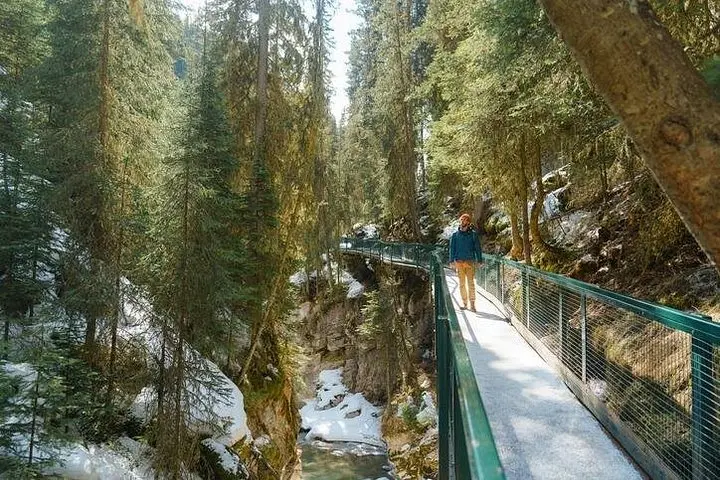
In eight efficient hours, experience the turquoise drama of Lake Louise and the cathedral-like icefalls of Johnston Canyon. This guided shuttle day trip from Banff/Canmore combines easy access, crisp winter scenery, and practical guidance for a high-reward Rockies outing.
 Related story
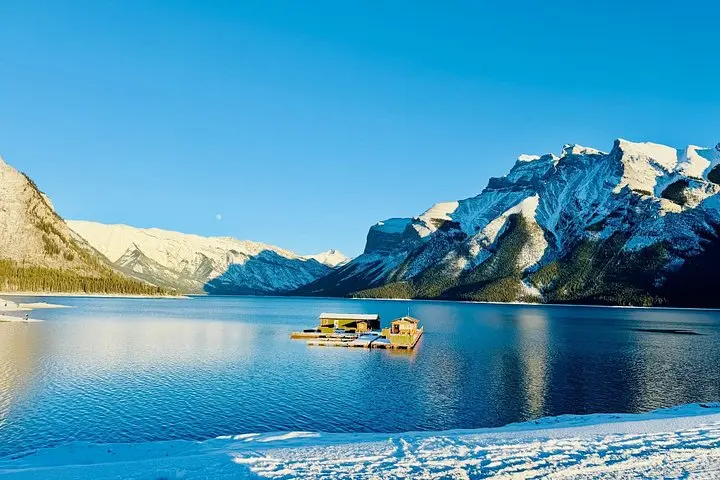
See Banff’s signature overlooks and hidden lakes in one compact, expertly guided 2.5-hour loop. Perfect for short-stay travelers who want big scenery without the driving.
 Related story
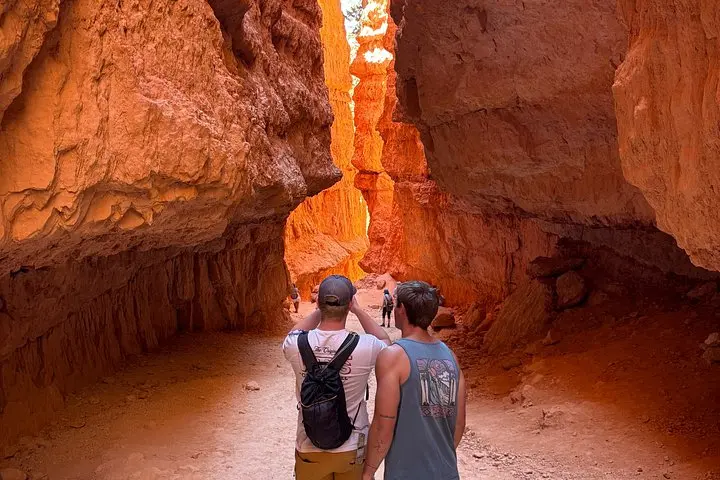
A guided sunrise hike down the Navajo Loop turns Bryce Canyon’s hoodoos from postcard scenery into an intimate geology lesson. Three miles, expert narration, and unforgettable light—this tour is the quickest way to understand how ice, time, and wind carved a city of stone.