
What the day feels like
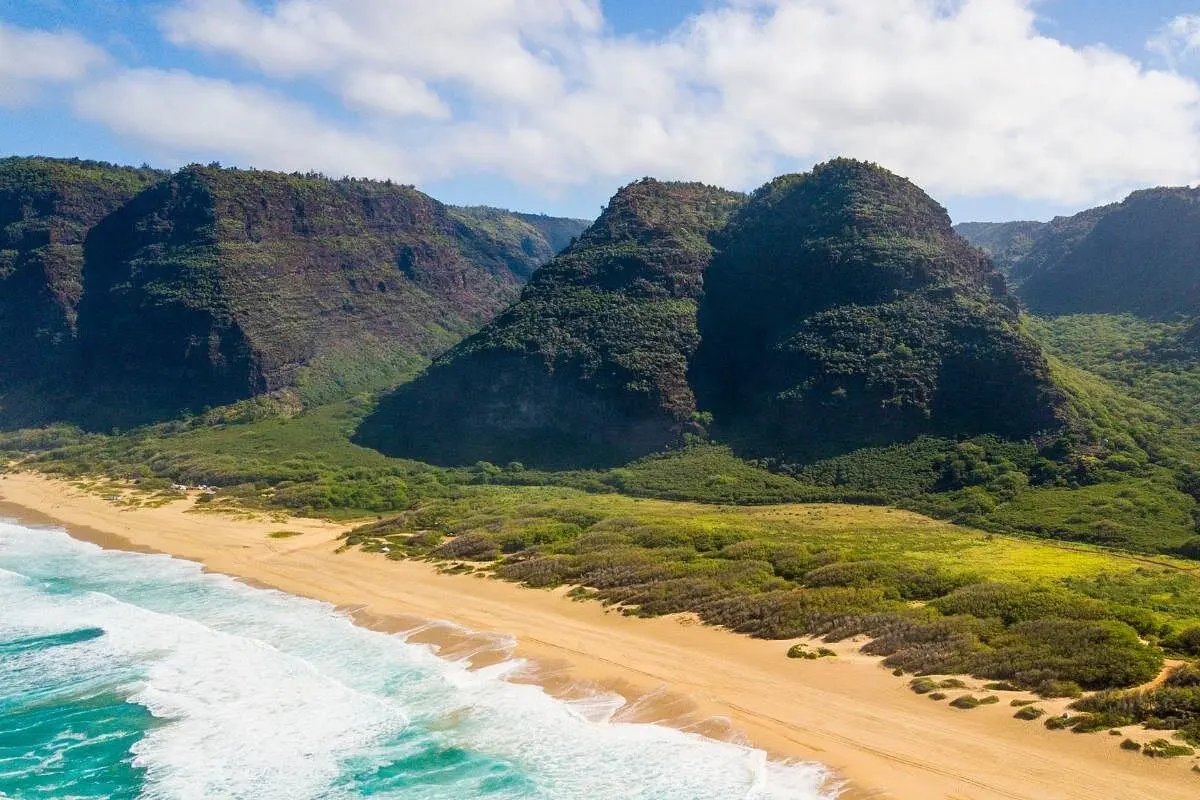
The pavement ends where the island exhales. Beyond Kekaha, the highway fades to sugarcane memories and red-dirt ruts, the kind that rattle your coffee and test your nerves. Kiawe branches claw the sky. Heat radiates from the ground. Then the road relents, and Polihale opens like a secret kept too long: a seven-mile scimitar of sand where the Pacific throws its weight at shore and the Na Pali cliffs lift to the northwest, shouldering the horizon.
This is Kauai at the edge—the dry, sun-baked counterpoint to the island’s famed waterfalls and rainforests. The dunes rise like sleeping whales, wind-sculpted and fragile. The ocean roars, unfiltered by reef, daring you to underestimate it. Even the tradewinds feel different here, less polite, more insistent, pushing you forward toward dusk and whatever comes after. If you’ve come for solitude, you’ve found it. If you’ve come for drama, the stage is set.
Polihale translates loosely to “house of the spirit world,” and it carries that weight. In Hawaiian tradition, this western rim of Kauai was a place where souls were said to leap into the afterlife. Today, it’s where travelers come to feel completely small—in the best way. The park’s dunes, among the tallest in Hawai‘i, protect hardy endemic plants and form a buffer that keeps the beach wild and mostly undeveloped. Facilities are minimal; amenities, scarce. That’s the appeal. You bring what you need, pack out what you brought, and earn every minute of it.
Reaching Polihale is part of the experience. From Waimea, budget 45–60 minutes depending on conditions. The final stretch is an unpaved, washboard road that turns muddy after rain and sandy during dry spells. High-clearance and 4WD are recommended when the weather goes south; when it’s dry, patient driving and good judgment suffice. Either way, deflate your expectations of convenience. Polihale keeps crowds at bay by design.
Day visitors scatter among pullouts and pavilions, often settling near Queen’s Pond, where a partial reef can soften the blow of surf on calmer days. Even here, respect the ocean. Polihale’s shorebreak is infamous—powerful, steep, and deceptive. There’s no lifeguard, and the current has no patience for bravado. When the sea says no, listen. Walk the beach instead. Trace the stitching of sandpipers. Watch the cliffs kindle in late light. On clear evenings, Ni‘ihau sharpens on the horizon, and the channel between the islands pulls a train of whitecaps like a river.
This coastline is a launchpad—psychologically and literally—for exploring the Na Pali. If Polihale is the gateway, the Na Pali Coast is the journey itself, an amphitheater of green ribs and cathedral spires best seen from the water. Base on the west side and you’re well-placed to trade sand for spray on a boat day. For a sunset of the big-canvas variety, the Leila Na Pali Sunset Dinner Sail pairs golden-hour views with stories, local beverages, and a front-row seat to those 4,000-foot cliffs exhaling the day. When the wind fills the sails and the catamaran leans into it, you feel the coastline come alive—valleys glowing, waterfalls stitching silver down vertical walls.
If your version of adventure includes mask, fins, and the chance of swimming alongside a honu, the Na Pali Coast Kauai Snorkel and Sail is a five-hour sampler of sea caves, wildlife, and undersea color. On calmer summer mornings, visibility can be stellar, and the crew—seasoned and patient—makes the experience beginner-friendly. For the high-throttle clan, the Na Pali Coast Super Raft Adventure with Snorkel takes you closer to the cliffline, nimble enough to nose into sea caves when conditions allow. And if you want to go big, the Ni‘ihau and Na Pali Coast Snorkel Boat Tour crosses the Kaulakahi Channel to Lehua Crater’s teal bowl and the remote waters off “the Forbidden Island,” where you’re as likely to see pelagic life as coastline drama.
Back on land, Polihale rewards a slow itinerary. Bring shade; there’s precious little. Bring more water than you think you need; there’s none onsite. Spend the afternoon letting time stretch, the way the beach does. As sunset approaches, the na pali ridgelines catch and hold the last light until it slides out to sea. The sky keeps the show going long after the sun drops, and on moonless nights the Milky Way unfurls overhead in a sweep you can feel in your ribs. The wind calms. The surf keeps breathing. The park invites you to stay—legally, if you’ve secured a camping permit in advance. Falling asleep here, the ocean is your metronome; waking, the dunes glow soft and gold.
Polihale asks for a little humility and rewards it generously. Treat the dunes like the living structures they are. Stay on established paths and avoid trampling vegetation that anchors this shifting world. Give space to monk seals if you’re lucky enough to see one hauled out on the sand. Pack out every scrap. The park’s raw beauty depends on our restraint.
Practicalities: Day use at Polihale doesn’t require a permit, but camping does—and they go fast in summer. Cell service is spotty at best; download offline maps before you leave Waimea. After rain, the access road can close; check Hawai‘i State Parks updates before committing. Fuel up and grab poke in town; arrive with full tanks—gas, water, and patience. And while Polihale has all the ingredients for the perfect beach day, don’t treat it like a resort. It’s a wilderness beach that just happens to be reachable by car. That’s the magic.
Pair this beach day with a Na Pali boat experience and you’ll stitch together Kauai’s west side into a story that makes sense: the island’s dry, radiant edge at your feet; its vertical heart unfurling at sea. When you drive out again, the red dirt will cling to your floor mats. Leave it there. It’s Polihale reminding you the edge is often where the best journeys begin.
Trail wisdom
Small choices, better day.
4WD—or honest weather check
The final road to Polihale is unpaved and can be muddy or sandy; high-clearance is recommended after rain. Check closure updates and your rental car policy before you go.
Respect the shorebreak
Polihale’s surf is powerful with steep shorebreak and strong currents. Swim only when conditions are calm and consider Queen’s Pond; there’s no lifeguard.
Beat the heat with shade and footwear
There’s virtually no natural shade and the sand gets scorching—bring a sun shelter and wear sandals or light hikers to protect your feet.
Time sunset—and your exit
Arrive early to claim space and plan your exit in daylight if you’re unfamiliar with the road. If staying for stargazing, carry a headlamp and drive out slowly.
Local knowledge
Read the place, not just the route.
Watch for native species including Hawaiian monk seal (give 50+ feet of space), Humpback whales offshore in winter.
Keep an eye out for wildlife during the transition between areas and habitats. Respect distance guidelines.
The dunes are living structures that protect rare plants and shorebirds; stay on established access routes and avoid trampling vegetation. Pack out all trash and give wildlife generous space.
Follow the guide's instructions on size limits, ethical handling, and leave-no-trace practices.
Queen’s Pond area for calmer wading when conditions allow. Dune-top overlooks at day’s end for sweeping Na Pali silhouettes (stay off vegetation)
Locally recommended viewpoints and quiet spots known best to local operators.
Polihale—“house of the spirit world”—is a storied place in Hawaiian tradition and home to significant cultural sites; tread lightly and respect closures. The surrounding west side also reflects Kauai’s plantation past and long-standing community ties.
Maritime roots and regional tradition shape the waterways and working coasts.
Seasonal guide
Four versions of the same landscape.
Spring
Best forLong beach walks · Cooler evenings
ChallengesVariable winds · Lingering north swell
Spring brings mixed conditions—beautiful light and pleasant temps, but surf can still be punchy. Great for sunsets and shoulder-season solitude.
Summer
Best forCalmer seas · Snorkel boat days
ChallengesIntense heat · Soft, windblown sand
Summer is prime for west-side beach days and Na Pali cruises; the trade-off is sun exposure and hot sand. Start early, bring shade, and hydrate.
Fall
Best forFewer crowds · Warm water
ChallengesTropical downpours · Road closures after storms
Fall can be mellow with warm water and gentler winds, but passing storms can turn the access road rough. Check conditions before committing.
Winter
Best forWhale watching from shore · Electric sunsets
ChallengesLarge surf—dangerous for swimming · Muddy access road
Winter surf is powerful and usually unsafe for swimming; stick to beachcombing and views. Humpbacks often show offshore from December to April.
Pack with intention
What to bring.
Good to know
Common questions.
The final stretch is an unpaved, washboard road that can become muddy or sandy; high-clearance is helpful after rain. Many rental contracts prohibit unpaved roads—check your policy and current conditions.
Plan the edges
The details that make the day easier.
Polihale’s coastal dune system is among the largest in Hawai‘i, with sections rising over 100 feet—crucial habitat for native plants like ‘ōhai and anchoring the beach against winter surf and wind.
Post-beach, head to Waimea for local staples: poke at Ishihara Market, plate lunches at The Shrimp Station, and a towering shave ice at JoJo’s. Stroll Waimea’s plantation-era storefronts and, if you’re overnighting, the rustic charm of Waimea Plantation Cottages pairs well with west-side sunsets.
- Drive time from Waimea
- 45–60 minutes; final segment is unpaved. Amenities: composting toilets, no potable water. Safety: no lifeguard, strong shorebreak. Camping: by permit only via Hawai‘i State Parks. Connectivity: poor cell service—download maps.
Use reef-safe sunscreen, pack out all waste, and stay off vegetated dunes to protect fragile habitat. Give monk seals and nesting shorebirds wide berth and keep noise low after dark—this coastline belongs to more than just us.
Explore by topic
Follow the threads.
Keep exploring
Make the story part of the trip.
 Related story
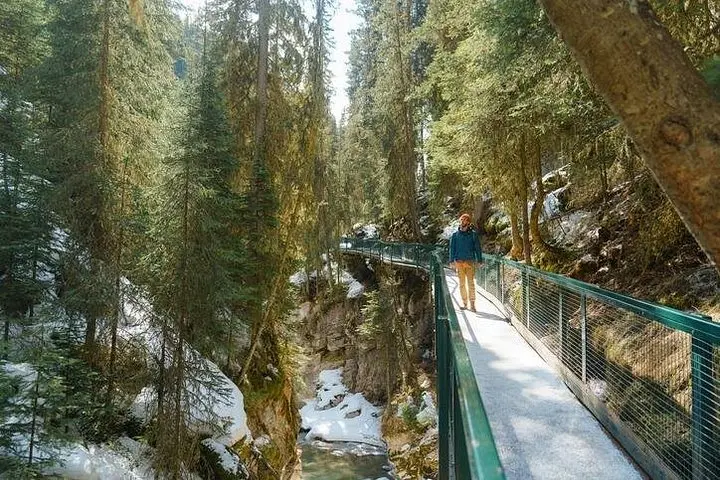
In eight efficient hours, experience the turquoise drama of Lake Louise and the cathedral-like icefalls of Johnston Canyon. This guided shuttle day trip from Banff/Canmore combines easy access, crisp winter scenery, and practical guidance for a high-reward Rockies outing.
 Related story
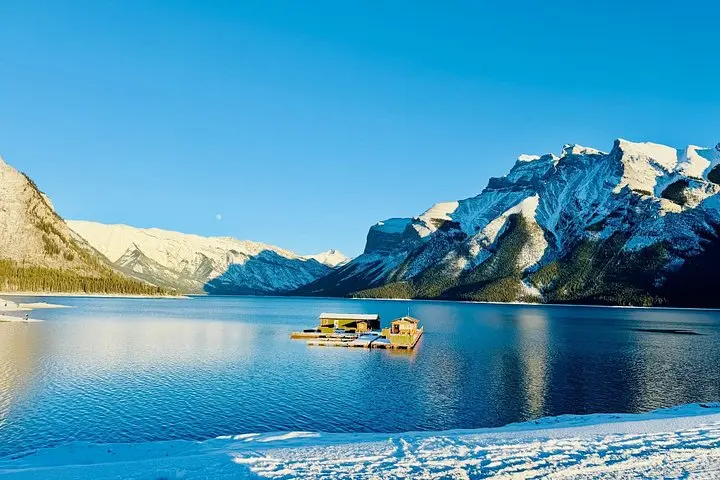
See Banff’s signature overlooks and hidden lakes in one compact, expertly guided 2.5-hour loop. Perfect for short-stay travelers who want big scenery without the driving.
 Related story
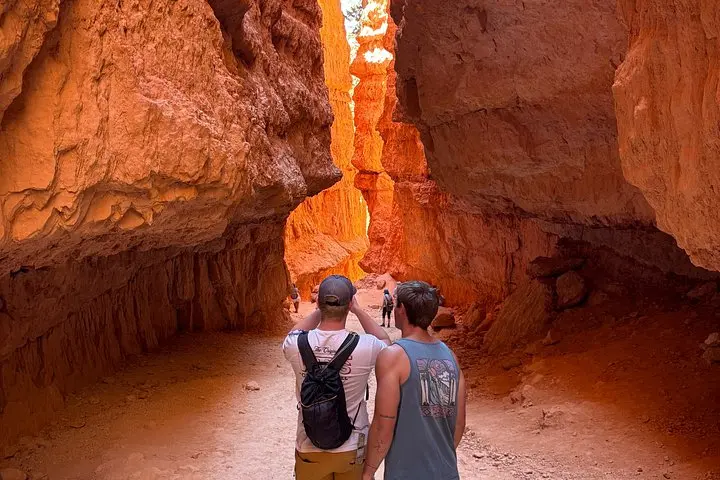
A guided sunrise hike down the Navajo Loop turns Bryce Canyon’s hoodoos from postcard scenery into an intimate geology lesson. Three miles, expert narration, and unforgettable light—this tour is the quickest way to understand how ice, time, and wind carved a city of stone.