
What the day feels like
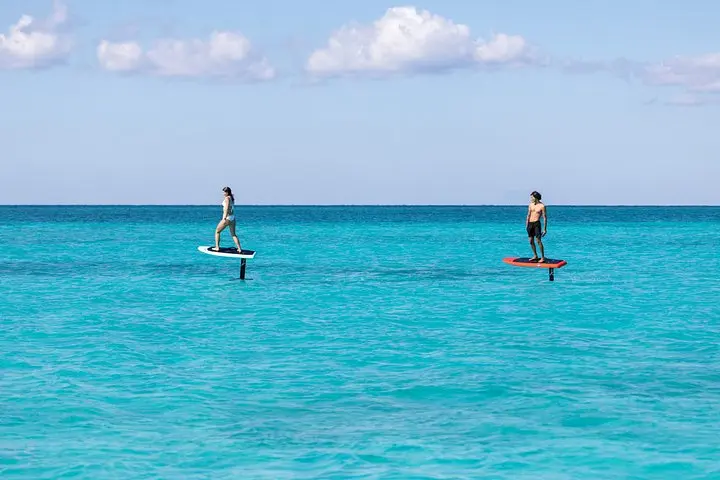
On a calm morning in Camp de Mar the sea looks like a stretched sheet of glass, pale turquoise out by the shallows and deeper sapphire toward the horizon. The island wakes slowly; fishermen unload last night's catch at the port a few coves over, café shutters are opening, and the Tramuntana ridge to the north casts a clean, cooling shadow. You walk down a short wooden jetty, feel the salt sting in the air, and then the water speaks: not with crashing force but with a gentle invitation, a current that seems to be daring you to rise above it. That dare is the point of an eFoil lesson — learning to stand, feel speed and lift, and let the machine and the sea find a rhythm together.
Camp de Mar is compact and unshowy, which is exactly why it makes for an ideal learning bay. Sheltered by low limestone headlands and dotted with small rock islets, the cove softens wind and chop while the water stays clear enough to see the seagrass beds below. The lesson here is private and focused: two hours of one-on-one coaching on premium Lift eFoil equipment gives beginners and returning riders the time to get comfortable with the throttle, the balance, and the strange, ecstatic sensation of flying a few feet above the water.
Mallorca’s southwest coast, where Camp de Mar sits, is a study in contrasts. Geologically, the Tramuntana mountains are a limestone spine carved by millennia of rain and sea, spilling scree and cedar terraces down toward beaches and coves. Culturally, the island layers are equally complex: Roman roads once carved the interior, Moorish irrigation shaped terraced farms, and centuries of fishermen and merchants left a quiet vocabulary of stone houses, tile roofs, and salted recipes. Today, the cove’s calm turquoise conceals a living seascape — beds of Posidonia meadows that sequester carbon and shelter juvenile fish, and schools of small fish that flick like mirrors as you glide above them.
The lesson itself is straightforward and intentionally pragmatic. Your instructor will run you through safety and basic controls onshore, fit you with a leash and flotation gear, and teach throttle modulation on a sup or trainer board before you try the foil. Expect a progression: kneeling to stand, slow controlled runs to learn balance, then longer laps with confident turns. The two-hour format prioritizes time on the water; you won’t be rushed through an intro. The private, manual-confirmation booking means operators tailor each session to wind and sea conditions, so your morning might be swapped for late afternoon if the marine forecast looks better.
Why travel here to learn instead of closer to home? For many, it’s about context as much as instruction. Mallorca’s clear waters, predictable summer thermals, and sheltered coves are forgiving when you’re learning a motorized board. Beyond that, it’s a coastal holiday: between runs you can take in local cuisine, explore nearby Port d’Andratx’s small-boat harbor, and watch the sea shift colors as the sun moves west.
Practical notes you’ll want to lock in: the session runs about two hours. The skillset required is modest but real — basic swimming ability and comfort falling into open water. Footwear that won’t slip, reef-safe sunscreen, and a light rash guard are musts. If you want calmer water, aim for early morning; if you prefer slightly stronger wind and a bit more speed, late afternoon can deliver better lift and longer runs. The experience is offered as a private lesson, and pricing starts from about $474, which reflects individualized coaching and top-tier Lift eFoil gear.
Respect the sea and the seagrass. In Mallorca, Posidonia oceanica meadows are protected, and anchors or careless riding in shallow meadows can damage them. Your instructor will set boundaries; keep to them. Be aware that while dolphins are sometimes seen offshore, they are wild and unpredictable — give them space and never chase.
Camp de Mar’s simplicity is part of its charm. After a lesson, walk the tiny promenade, order a plate of freshly grilled fish in Port d’Andratx, and let the afternoon dissolve into the kind of slow Mediterranean rhythm that made sailors and cartographers linger here for centuries. Then imagine your next lesson, when turns come easier and the lift feels less like a machine and more like a conversation between your body and the sea.
If you’re the kind of traveler who wants a safe, high-adrenaline taste of something new but within reassuring confines, a two-hour eFoil lesson in Camp de Mar is an efficient, joyful investment. It’s not just learning to ride; it’s learning how to read a bay, how to respect a living seascape, and how to feel a new version of speed that’s both intimate and airborne.
Trail wisdom
Small choices, better day.
Arrive Early for Calm Water
Morning sessions usually have the gentlest conditions for learning balance and throttle control.
Protect Local Seagrass
Avoid shallow areas and follow instructor boundaries to prevent damage to Posidonia beds.
Bring a Reusable Water Bottle
Two hours on the water in sun and salt dries you out quickly; hydrate before and after sessions.
Footwear Matters
Grip-friendly water shoes help during launches and when climbing back on the board.
Local knowledge
Read the place, not just the route.
Watch for native species including Bottlenose dolphins (offshore sightings), Seabirds such as Audouin’s gull.
Keep an eye out for wildlife during the transition between areas and habitats. Respect distance guidelines.
Posidonia oceanica meadows around Mallorca are protected; riders should avoid shallow meadows and follow operator guidelines to prevent habitat damage.
Follow the guide's instructions on size limits, ethical handling, and leave-no-trace practices.
Sunset promenade and tapas in Port d’Andratx for after-lesson seafood and local atmosphere. Boat trip to Sa Dragonera island nature reserve for sea caves and native flora
Locally recommended viewpoints and quiet spots known best to local operators.
Camp de Mar developed from a small fishing cove; the southwest coast bears layers of Roman and Moorish influence visible in local architecture and irrigation terraces.
Maritime roots and regional tradition shape the waterways and working coasts.
Seasonal guide
Four versions of the same landscape.
Spring
Best forFewer crowds · Mild water temperatures · Early-season instruction
ChallengesVariable winds · Cooler water temperatures
Spring offers low-season calm but cooler seas; a short wetsuit or full rash guard helps, and instructors may time sessions around milder wind windows.
Summer
Best forWarm water · Consistent weather · Long daylight hours
ChallengesHigher visitor numbers · Stronger midday sun
Summer is peak season for predictable conditions and warm water; book mornings for quieter bays and remember reef-safe sunscreen.
Fall
Best forWarm sea after summer · Less crowded beaches · Extended daylight
ChallengesOccasional storms later in season
Early fall retains summer warmth with thinner crowds—ideal for learners who want reliable conditions and quieter marinas.
Winter
Best forLow season pricing · Quiet shoreline · Technical training in varied wind
ChallengesCool water and air · Reduced service availability
Winter sessions require thicker wetsuits and flexibility with scheduling but offer solitude and focused coaching when operators run lessons.
Operator details
What the booking data adds.
Included
- ✓Safety Equipment
Good to know
- ✓Public transportation options are available nearby
- ✓Suitable for all physical fitness levels
Pack with intention
What to bring.
Good to know
Common questions.
No prior eFoil experience is required; basic swimming ability and comfort in the open water are recommended, and the instructor will coach balance and throttle technique from the ground up.
Plan the edges
The details that make the day easier.
The Serra de Tramuntana north of Camp de Mar is a UNESCO World Heritage Site, recognized for its cultural landscape of terraced farming and historic water-management systems.
After your lesson head to Port d’Andratx for seafood pla i plat, try local ensaimada pastries for breakfast, and sip a cold local beer or a copa of Mallorcan wine while watching the harbor—it’s a small-town end to an airborne day.
- Closest airport
- Palma de Mallorca (PMI) — ~35–45 min drive; Nearest trailhead
- meeting point
- Camp de Mar jetty
- promenade; Cell service
- generally good along the coast but variable offshore; Permits: none required for tourist lessons, but operators enforce protected-area boundaries to protect Posidonia.
Posidonia meadows are vital and protected in the Balearics—avoid shallow meadows, use designated launch areas, and bring reef-safe sunscreen to reduce harm to marine ecosystems.
Explore by topic
Follow the threads.
Keep exploring
Make the story part of the trip.
 Related story
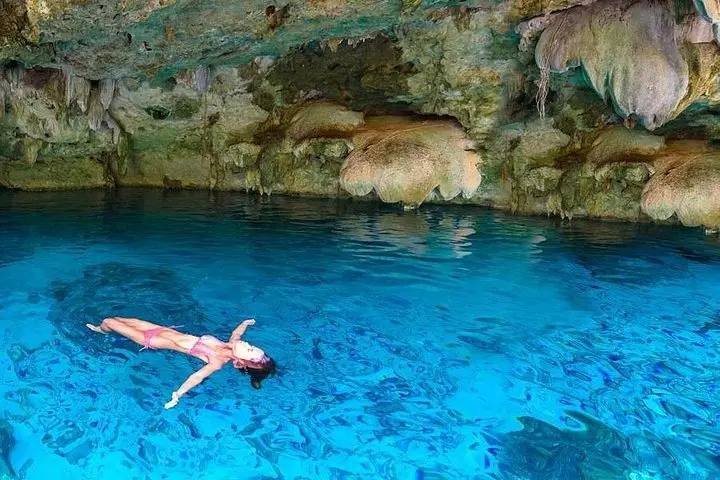
Dive into the Yucatán’s secret freshwater caverns and drift over the shallow reef gardens of Yalku Lagoon—an accessible, half-day snorkel pairing that blends geology, Mayan history, and vivid marine life.
 Related story
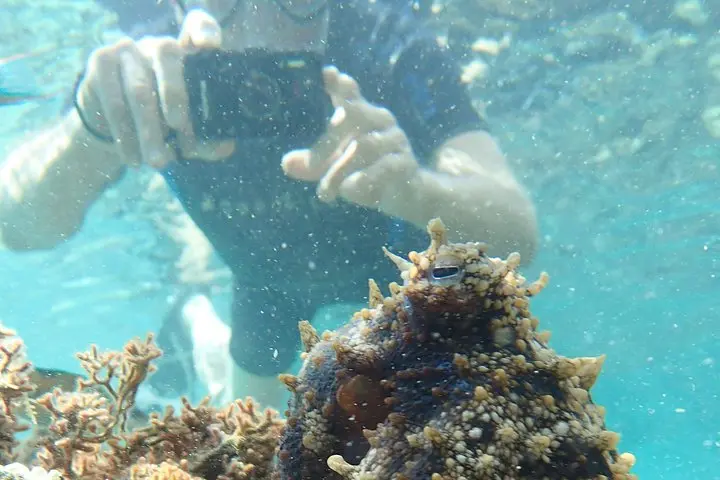
Slip beneath Porto Santo’s sunlit surface to find a mosaic of seagrass meadows, volcanic shelves, and playful schools of fish. This three-hour snorkeling tour pairs small-group access with local stewardship—ideal for travelers who value marine life over crowds.
 Related story
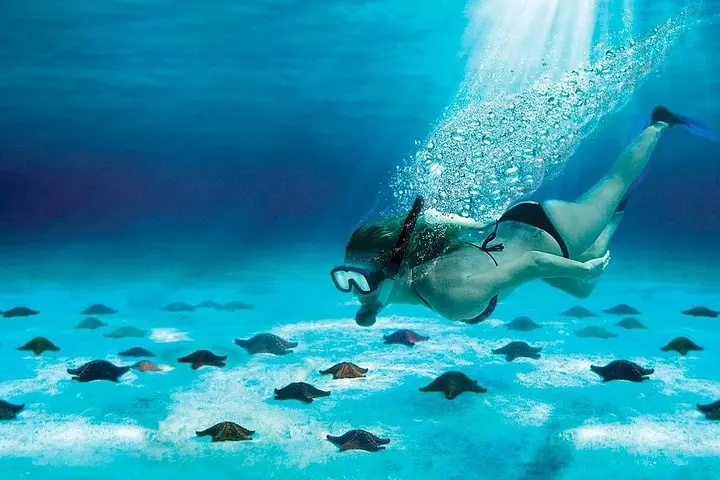
Spend a day on a high-speed boat exploring Cozumel’s famed reefs and the shallow sand flats of El Cielo. This full-day trip offers clear water, abundant marine life, and guided snorkeling at three prime sites—ideal for both first-timers and seasoned reef lovers.