
What the day feels like
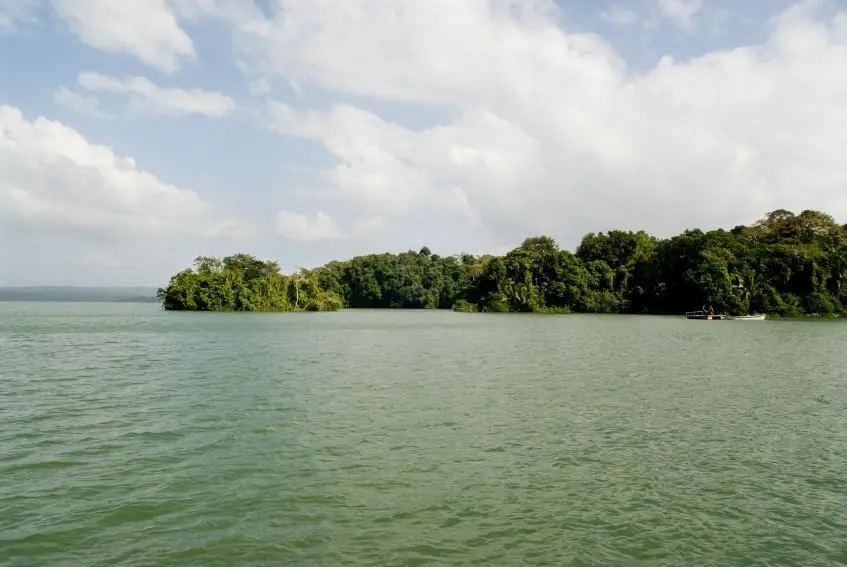
You step off the skiff with the sound of the Panamanian lake folding back into itself — a low, constant susurration of insect, leaf and bird. The boat pulls away and Gatun Lake opens behind you, a placid sheet dotted with freighter wake and the occasional black crown of mangrove. Ahead, Barro Colorado Island rises like a green brain: compact ridges, steep slopes and an interior that has been watched closely by scientists for a century.
Barro Colorado is not a postcard island; it is a living laboratory. Created when engineers dammed the Chagres River to form Gatun Lake in 1914, the island’s old-growth canopy and tangled understory were cut off from the mainland soon after. That isolation made it a perfect place to study tropical biology, and today the Smithsonian Tropical Research Institute’s long-running field station sits at the island’s edge, a modest complex of labs, bunks and trails where generations of researchers have cataloged birds, monkeys, frogs and the invisible ecology of rainforest soils.
Walking the island is like following the annotations of a scientist’s field notebook. Trails are narrow and often slick; roots lift like vertebrae across the path, and every half-mile reveals something worth slowing for — a brilliantly colored tanager flitting in the canopy, a trio of howler monkeys that sound closer than they are, a bright red tree frog poised on a leaf like punctuation. The island’s summit trail crests at a ridge where the views are more subtle than sweeping: a patchwork of neighboring islets, the glint of distant freighters, and an intense, contained sense of tropical abundance.
Geology and history anchor the experience. Barro Colorado’s raison d’être is human engineering — Gatun Lake is a reservoir that made the Panama Canal possible — and the island’s isolation has produced ecological patterns that are both textbook and surprising. Species composition, predator-prey dynamics and seed dispersal operate on a smaller, denser stage than on continuous mainland forest. For naturalists this is a rare chance to watch evolutionary and ecological processes at a human scale.
Culture around the island is threaded through wider Canal-zone life. The nearest staging ground is Gamboa, a riverside town that still echoes with Canal history and serves local guides and boat operators. Many visitors arrive on multi-day Chagres River expeditions or as part of canal transit voyages that linger near Gatun Lake. Indigenous Embera communities live upriver on the Chagres and sometimes host visitors on cultural exchanges; their presence is a reminder that the human story here is older than the canal.
Practicalities matter on Barro Colorado. Access is controlled — the island is primarily for researchers — so most visitors go by joining an organized tour or securing permission through the Smithsonian. Once ashore, the forest demands attentive footwear and steady hydration. Trails are well-defined but rugged; mosquitoes and heat are a constant. A quiet approach rewards you with close wildlife encounters: motmots sunning on low branches, agoutis darting across the path, and the famous orchestra of dawn and dusk bird calls.
If you like your nature with a double shot of context — a place where human engineering intersects with raw ecology — Barro Colorado is a rare field trip. Scientific placards and the research station’s modest displays give texture to what you see in the trees: long-term studies on bird population dynamics, canopy research that revealed unexpected insect-plant interactions, and decades of data that make the island globally important to conservation science.
What to do: join a guided natural history walk with a Smithsonian-affiliated guide, include Barro Colorado as a stop on a Chagres River paddling route that crosses Gatun Lake, or pair a canal transit with a short landing. On a half-day visit you can walk core trails, visit the small research museum and watch the lake edge for crabs, herons and caiman. Multi-day Chagres itineraries let you contrast island ecology with riverside communities and the wider Central American tropical ecosystem.
Getting ready: aim for dry-season mornings when trails are less slippery and bird activity is high. Bring binoculars, a lightweight rain shell, good trail shoes, and insect repellent. Move quietly on the trails; the island’s density magnifies sound and the best sightings come to the patient and unobtrusive.
Barro Colorado is not a theme-park jungle. It’s a study in limits and abundance, where human intervention birthed a space that biologists keep returning to — not to tame, but to learn. Visiting feels like sidling into a long-running conversation between species, mystery and method. For travelers who want nature that teaches as well as dazzles, a day on Barro Colorado is a clear, uncompromising education.
Length & Logistics: Expect a half-day to full-day visit depending on permission, guided options and whether you combine the island with river or canal travel. Expect humid heat, steep trail sections and rewarding, close-up wildlife viewing that photography books are made from.
Why go now: long-term research on the island provides a living timeline to observe. Bringing the right gear, a respectful attitude and a guide connects you not only to wildlife but to a century of tropical science — and to the unusual story of how a watery engineering feat created one of the world’s most important ecological observatories.
Trail wisdom
Small choices, better day.
Book a guided visit
Access is controlled — join an STRI-affiliated or licensed guide to ensure permission and the best wildlife viewing.
Go early for birds
Dawn and the first two hours after sunrise are prime for tanagers, motmots and mixed-species flocks.
Expect slick roots and steep sections
Wear grippy trail shoes and use a trekking pole if you have one; steps can be slippery after rain.
Stay quiet and slow
Close wildlife encounters come to patient, unobtrusive observers; keep group sizes small and voices low.
Local knowledge
Read the place, not just the route.
Watch for native species including Howler monkeys, Toucans.
Keep an eye out for wildlife during the transition between areas and habitats. Respect distance guidelines.
The island’s research status means strict rules about staying on trails, not collecting specimens and keeping group sizes small to minimize disturbance; supporting licensed guides helps fund local conservation efforts.
Follow the guide's instructions on size limits, ethical handling, and leave-no-trace practices.
Shoreline observation points near the research station for caiman and wading birds at low light. Short ridge viewpoints that offer layered views of Gatun Lake and nearby islets
Locally recommended viewpoints and quiet spots known best to local operators.
Barro Colorado became an island after the creation of Gatun Lake in 1914 and later developed into a key research site for the Smithsonian Tropical Research Institute.
Maritime roots and regional tradition shape the waterways and working coasts.
Seasonal guide
Four versions of the same landscape.
Spring
Best forbirdwatching · drier trails
Challengesoccasional heavy showers late in the season · high insect activity
Spring (March–May) overlaps Panama’s dry-to-wet transition; mornings are still excellent for birds but bring rain gear for afternoon showers.
Summer
Best forlush forest photography · frog and insect diversity
Challengesfrequent afternoon rain · hot, humid conditions
Summer is wetter and greener: trails can be muddier but the forest hums with insect and amphibian life for photographers.
Fall
Best formix of dry conditions and migrating birds · fewer tour groups
Challengesincreasing rainfall as the season progresses · limited landing windows during storms
Fall offers a balance between visitor comfort and biological activity; plan for intermittent showers and flexible boat schedules.
Winter
Best forreliable dry-season access · clearer trails
Challengeshigher visitor numbers · strong sun in exposed areas
Panama’s dry season (December–April) is the most predictable time for visits — cooler mornings and easier trail conditions but busier landing schedules.
Pack with intention
What to bring.
Good to know
Common questions.
Yes, but access is limited — most visitors go with an organized tour or secure permission via the Smithsonian Tropical Research Institute; landing is often coordinated through Gamboa-based operators.
Plan the edges
The details that make the day easier.
Barro Colorado Island was formed when the Chagres River was dammed to create Gatun Lake for the Panama Canal in 1914, and it became one of the world’s most intensively studied tropical forest reserves.
Gamboa’s riverside eateries and small-market stalls are the closest taste of Panamanian canal-town life; pair a Barro Colorado visit with a Chagres River excursion to meet Embera communities and sample river-fresh fish and coconut-based dishes.
- Closest city
- Panama City (drive to Gamboa ~45–60 min), boat transfer required, guided visits recommended, limited facilities on-island, book in dry season for best trail conditions.
Visits should support licensed local guides and respect STRI rules — no off-trail wandering, no collection of specimens, and minimal noise to protect long-term research and wildlife.
Explore by topic
Follow the threads.
Keep exploring
Make the story part of the trip.
 Related story
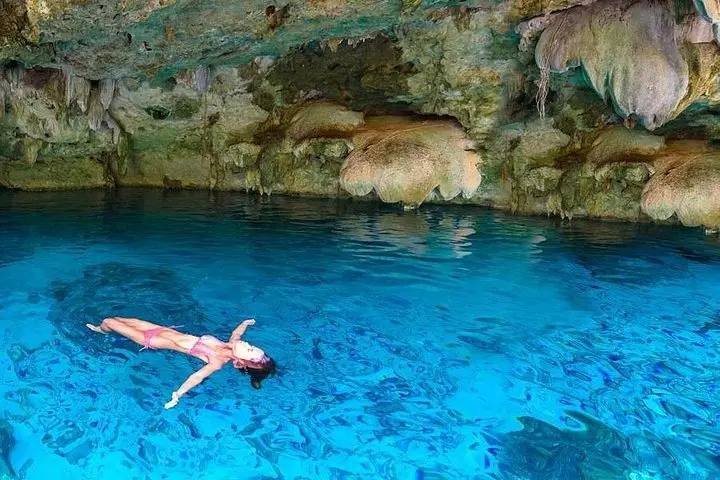
Dive into the Yucatán’s secret freshwater caverns and drift over the shallow reef gardens of Yalku Lagoon—an accessible, half-day snorkel pairing that blends geology, Mayan history, and vivid marine life.
 Related story
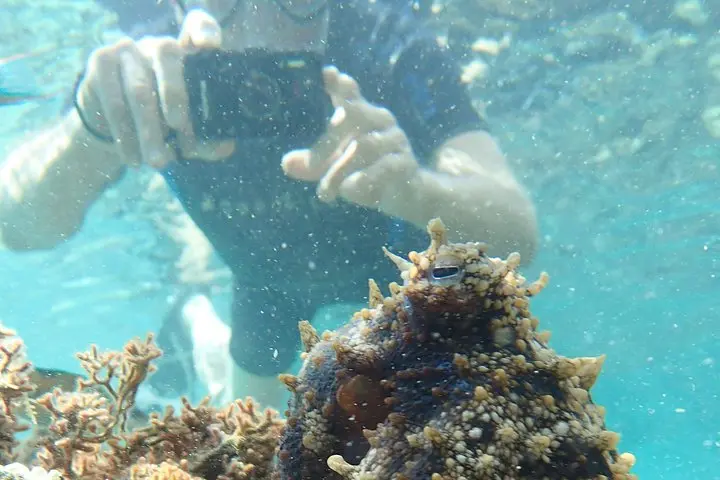
Slip beneath Porto Santo’s sunlit surface to find a mosaic of seagrass meadows, volcanic shelves, and playful schools of fish. This three-hour snorkeling tour pairs small-group access with local stewardship—ideal for travelers who value marine life over crowds.
 Related story
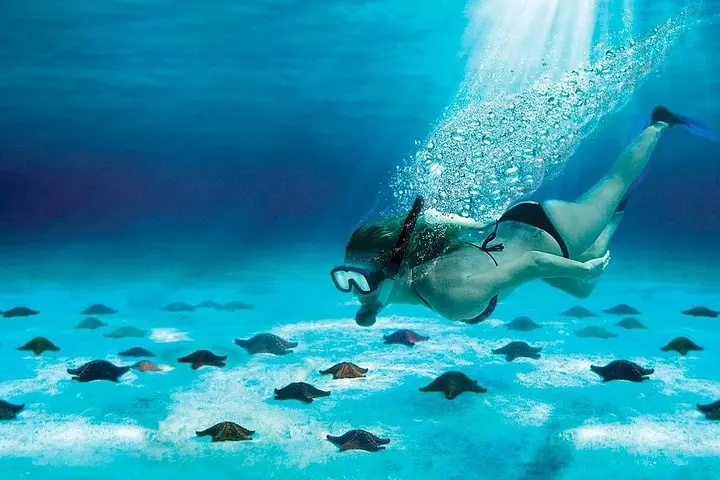
Spend a day on a high-speed boat exploring Cozumel’s famed reefs and the shallow sand flats of El Cielo. This full-day trip offers clear water, abundant marine life, and guided snorkeling at three prime sites—ideal for both first-timers and seasoned reef lovers.