

What the day feels like
You push off from a low wooden jetty and the lagoon breathes—slow, brackish, patient. Palms lean like watchful sentries, mangrove roots knot the water into shadowed corridors, and the boat’s hum is small against the chorus of birds. Within minutes the shoreline thins and the city falls away; the world becomes tide, birdcall and the soft slap of oars against the hull. This is the heart of the Negombo lagoon: an intimate 90-minute window into Sri Lanka’s coastal wildlife where the landscape is both hospitable and exacting, and everything seems to be watching back.
Negombo’s lagoon is less a single sheet than a braided ecosystem—mangrove islets, tidal channels and shallow flats where fish and crustaceans pulse in seasonal rhythms. For centuries the lagoon has been a working landscape for local fishermen, whose stilted nets and catamarans are as much a part of the scenery as the ibis and cormorant. The Portuguese, Dutch and British each left traces here: the town of Negombo still bears colonial-era sluices and a network of canals that once moved goods inland. Today the lagoon is a quiet refuge, where migratory shorebirds and resident waterfowl share the same roosts that fishermen rely upon for bait and seasonal catches.
Geologically, the lagoon is a coastal estuary shaped by lagoonal deposition and longshore drift. Its mix of saline and freshwater habitats produces a high density of life—mudflats that host feeding flocks, mangroves that cradle juvenile fish, and reed beds that hide nesting rail species. Culturally, the lagoon is tethered to Negombo town: a fishing community with a Catholic heritage (a legacy of Portuguese rule), a lively fish market and a tradition of boatbuilding that still supplies the small wooden craft you ride in.
The practical appeal is plain: in 90 minutes you’ll pass under low bridges, slide by mangrove tunnels and drift across open water where egrets hunt like punctuation marks against the sky. The tour’s tempo is forgiving—slow enough for birdwatching and conversation, brisk enough to cover a variety of habitats. For first-time visitors to Sri Lanka, it’s a tidy introduction to the island’s coastal ecology; for returning birders, it’s an efficient half-day investment that can yield rare sights during migratory season.
When to go: the best window runs December through April, when the lagoon is calmer and migratory birds swell the ranks. Early morning trips deliver the most active wildlife and cooler temperatures; late afternoon can offer golden light and dramatic silhouettes but expect more boat traffic. Bring a lightweight rain shell during the monsoon pulses—tropical squalls can arrive suddenly.
What to expect on the water: boats are modest and stable, usually open-sided with bench seating. Guides are local, many from fishing families, and they know the lagoon the way a farmer knows his fields—where the herons will feed at low tide, which channels hold kingfishers, and which mangrove fringes shelter nesting terns. Expect narrative that mixes natural history with local anecdotes: the same hands that mend nets will point out a nesting site or identify a bird call by sound alone.
Practicalities: trips run about 90 minutes and are instant-confirmation bookings; fares are modest and often include pickup from nearby hotels. Wear sensible shoes (you’ll board from a low dock), sun protection and bring binoculars or a camera with a tele lens if you want detailed photos. Hydrate: the lagoon is a low-lying, humid place.
Conservation and etiquette are straightforward. Mangroves are fragile—avoid standing on root networks or tossing waste into channels. Wildlife is easily stressed by loud engines and close approaches; follow the guide’s lead on distance. Supporting local boat operators helps sustain both livelihoods and stewardship, so choose operators who practice responsible navigation and respect nesting areas.
For travelers who want to combine this trip with other local experiences, Negombo’s fish market is a sensory offset: early-morning auctions, salted fish drying in the sun, and vendors who will happily show you the catch of the day. After the ride, sample local coconut sambol or a freshly grilled fish by the waterfront. It’s the kind of place where the day’s wildlife and the day’s catch are part of the same story.
If you’re ready to plan, this 90-minute wildlife cruise is bookable online and is an efficient, accessible way to add nature to any Sri Lanka itinerary. For a direct link to local operators and to compare departure times, check this Negombo lagoon boat ride listing and reserve a place with a trusted local guide: https://app.advcollective.com/local-experts/negombo-lagoon-boat-ride-90-minute-wildlife-birdwatching-tour.
Whether you are a casual traveler who wants a tranquil morning or an avid birder chasing seasonal migrants, Negombo’s lagoon feels immediate and intimate. It’s not a grand canyon or a towering peak, but in a world that often prizes scale, there is a particular pleasure in a place that holds you close—where the tide tells you when to move and the birds narrate your passage. The ride is brief, the memory long: a quiet map of salt and mangrove you’ll revisit in the mind’s catalog long after you’ve left Sri Lanka’s shoreline.
Trail wisdom
Small choices, better day.
Time your ride for low light
Early morning yields the most active birdlife and cooler temperatures; aim for the first departures.
Bring optics
A pair of binoculars or a 200mm+ zoom lens will transform distant dots into identifiable species.
Respect mangroves
Avoid leaning into root systems or making loud noises near nesting areas—let the guide set viewing distance.
Protect gear from spray
Use dry bags or zip-locks for cameras and phones—saltwater spray and sudden rain are common.
Local knowledge
Read the place, not just the route.
Watch for native species including Indian Pond Heron, White-bellied Sea Eagle (occasionally).
Keep an eye out for wildlife during the transition between areas and habitats. Respect distance guidelines.
Mangrove restoration and responsible fishing practices are local priorities; choose operators who avoid nesting areas and minimize engine disruption.
Follow the guide's instructions on size limits, ethical handling, and leave-no-trace practices.
Early-morning visit to Negombo Fish Market for a lively auction and fresh catch. Short walk to the mangrove boardwalk on the lagoon’s northern fringe for close-up views without a boat
Locally recommended viewpoints and quiet spots known best to local operators.
Negombo’s waterways were integral to colonial trade; Dutch-era canals and sluices still influence local fishing routes.
Maritime roots and regional tradition shape the waterways and working coasts.
Seasonal guide
Four versions of the same landscape.
Spring
Best forCalmer waters in transition · Seeing late migrants · Photography in soft light
ChallengesHeat building in late spring · Occasional inter-monsoon showers
Spring (March–May) warms quickly—expect good bird activity early in the day and the chance of brief heavy showers later.
Summer
Best forLush mangrove growth · Fewer tourists · Warm evenings
ChallengesSouthwest monsoon rains (May–September) · Choppy conditions during storms
Summer brings heavier rains and wind at times; plan trips on clear days and heed local weather updates.
Fall
Best forMigratory passage begins · Golden-hour photography · Quieter waterways
ChallengesUnpredictable inter-monsoon squalls · Variable water levels
Fall (September–November) is a transitional period—excellent bird movement but variable weather.
Winter
Best forPeak migratory bird populations · Cooler, drier conditions · Smooth boating
ChallengesHigher demand for tours (Dec–Feb) · Limited last-minute availability
Winter is the prime season for birdwatching and calm waters—book early for mornings during December–February.
Operator details
What the booking data adds.
Included
- ✓Safety Gear
Good to know
- ✓Not recommended for travelers with spinal injuries
- ✓Not recommended for travelers with poor cardiovascular health
- ✓Not recommended for pregnant travelers
- ✓Public transportation options are available nearby
- ✓Suitable for all physical fitness levels
Pack with intention
What to bring.
Good to know
Common questions.
The standard tour lasts approximately 90 minutes and covers multiple lagoon habitats including mangrove creeks and open flats.
Plan the edges
The details that make the day easier.
Negombo Lagoon is one of Sri Lanka’s largest estuarine systems and supports a rich assemblage of waterbirds, including several migratory species during the northern winter months.
After the ride, head to Negombo’s fish market for fresh grilled fish and coconut sambol, then find a roadside café for king coconut water; evenings pair well with a walk along the Dutch Canal and a cold Lion beer at a local waterfront eatery.
- trailhead
- Bandaranaike International Airport (CMB) ≈ 15–20 minutes drive; Driving distance from town center: 5–15 minutes depending on dock; Cell service: Generally good near town, patchy in confined channels; Permits: None required for tourist boat rides
Respect mangrove roots, avoid single-use plastic, and choose operators who follow no-approach rules for nesting sites to help preserve the lagoon’s fragile habitats.
Explore by topic
Follow the threads.
Keep exploring
Make the story part of the trip.
 Related story
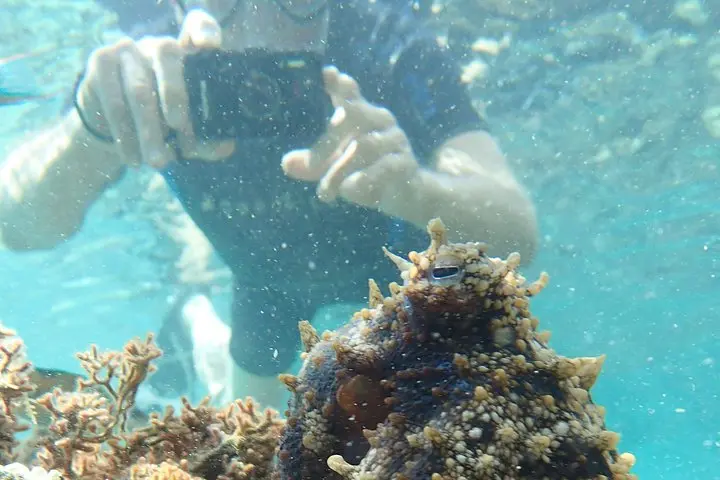
Dive into the Yucatán’s secret freshwater caverns and drift over the shallow reef gardens of Yalku Lagoon—an accessible, half-day snorkel pairing that blends geology, Mayan history, and vivid marine life.
 Related story
Slip beneath Porto Santo’s sunlit surface to find a mosaic of seagrass meadows, volcanic shelves, and playful schools of fish. This three-hour snorkeling tour pairs small-group access with local stewardship—ideal for travelers who value marine life over crowds.
 Related story
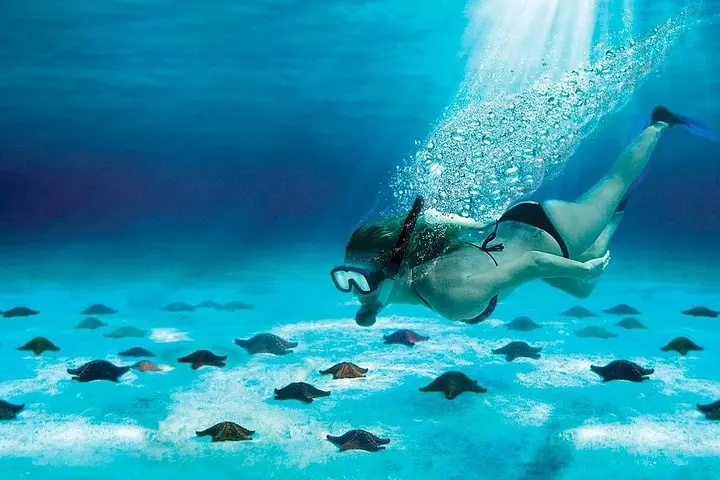
Spend a day on a high-speed boat exploring Cozumel’s famed reefs and the shallow sand flats of El Cielo. This full-day trip offers clear water, abundant marine life, and guided snorkeling at three prime sites—ideal for both first-timers and seasoned reef lovers.