
What the day feels like
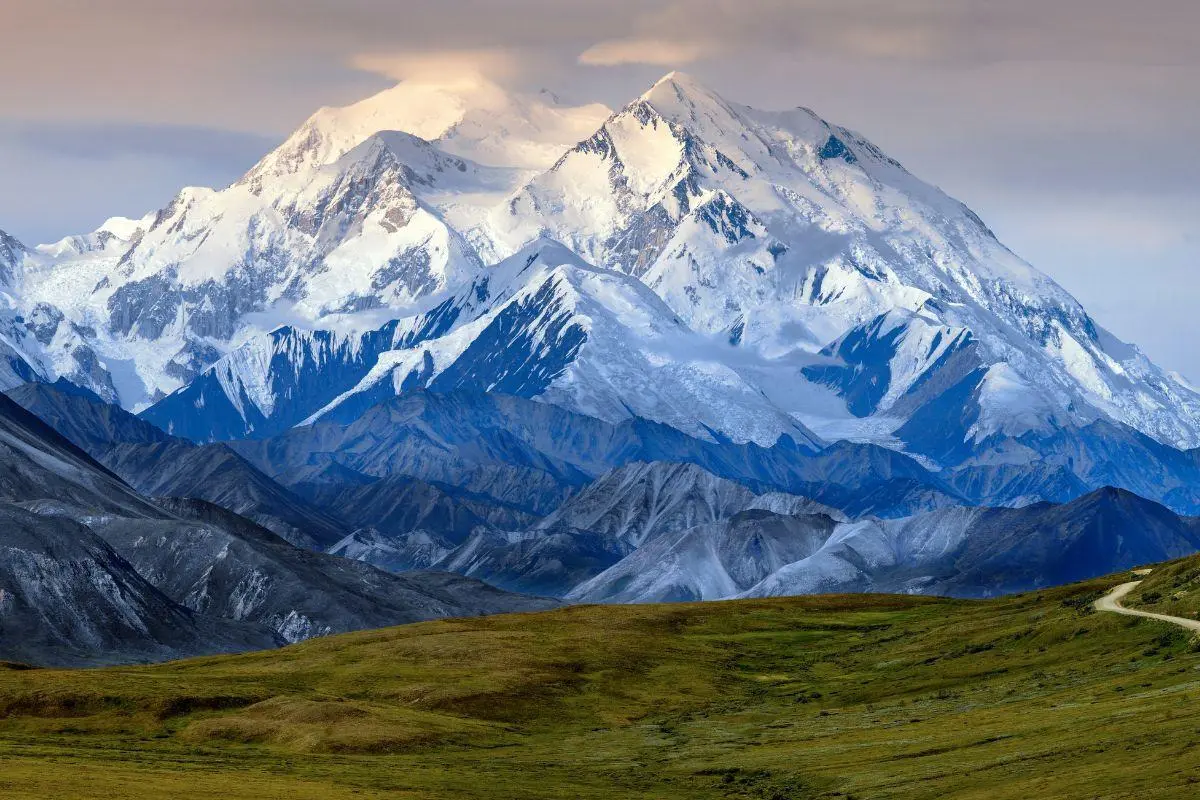
On a cold-blue morning the Alaska Range pins the horizon like a promise. Low cloud fingers curl off a serrated skyline and the air smells of spruce and distant snowmelt. You stand at the lip of the taiga where trees thin to scrub, and beyond lies tundra—an open country that reads like an old map, at once empty and loaded with story. Denali doesn't whisper; it asserts itself with wind and scale. The mountain, the park, the valley—all of it compels a forward step.
Denali is more than a single peak. It’s a convergence of ecosystems: boreal forest giving way to alpine tundra, braided rivers, and the stark, glacially carved faces of the Alaska Range. The mountain itself—20,310 feet of granite and ice—dominates the narrative and serves as a magnet for photographers, hikers, and anyone who wants to measure themselves against a big, raw landscape. Yet the most memorable hours here are often quieter—muddy boot steps across tundra, a sudden moose silhouette in a river bend, the muffled click of sled-dog harnesses in winter.
History and geology explain some of Denali’s gravity. The Alaska Range is young by geological standards, a place where tectonic plates still argue. Glaciers have ground the landscape into valleys and moraines and left behind the vast, flat shelves of tundra where lichens and low shrubs hold stubbornly to life. Culturally, the area has been home to Athabascan people for millennia, who named the mountain Denali—'the high one'—long before it was labeled Mount McKinley on Western maps. Today the park balances subsistence traditions with a tourism economy that funnels people into the fold every summer.
Denali is surprisingly achievable for travelers. If you want speed and dust, take a guided ATV tour across alternate trails that skirt Otto Lake and sweep through Healy Valley. These 2.5-hour outings push up to 30 mph, splash creek beds, and pause for 360-degree views of the Alaska Range. They’re perfect when you have limited time but want an adrenaline injection and immediate landscape immersion.
If you prefer to slow down, the Denali Nature Hike is the counterpoint: earned kilometers of walking through taiga and tundra with an expert guide who reads animal sign and explains plant adaptations. These hikes are a lesson in resilience—how a tree-lipped slope holds snow, how ground-hugging willows capture sunlight. You’ll walk through scent and color rather than roar across it, and the payoff is direct: expansive views, intimate wildlife encounters, and a deeper understanding of how life organizes itself on the ragged edge of the North.
For those whose primary compass is the lens, the three-day private Denali photo workshop is a concentrated study in light and scale. Timing, composition, and patience are the curriculum. The workshop routes often include the Denali Highway and carefully chosen pullouts for dawn and dusk light—moments in which the mountain changes personality entirely and rewards anyone who has learned to wait.
Practicalities follow the poetry. Weather here is famously variable; pack for layers and wet weather even in July. Trails on the tundra are often unmarked and wet—expect muddy boots and occasional boardwalks over saturated ground. Wildlife is a key factor: moose, caribou, Dall sheep, and bears all move through these habitats. Your guide will brief you on safe distances and closure rules. For the park proper, private vehicles are limited; much of Denali's best roadside viewing is accessed by seasonal shuttle buses, guided vehicles, or private tour operators.
The personality of Denali is interactive. Rivers dare you to respect them: currents that carry winter’s snowmelt push sideways, rework banks, and create wetlands that teem with unseen life. The tundra meets you with an economy of form—low plants that conserve water, rocks that hold warmth at night—each feature a small miracle of survival. This is not a manicured landscape; it’s one that requires humility.
Timing matters. High-summer offers the longest, warmest days and the most accessible services from Healy and nearby lodges. Shoulder seasons—late spring and early fall—bring dramatic light and fewer crowds but also more unpredictable access. Winters are a different country: dog-sledding kennels in the Mat-Su Valley keep the mushing tradition alive, and the quiet is absolute.
Plan with purpose. For ATVs, wear protective gear and follow the guide’s briefing—these machines are forgiving but fast. On hikes, bring waterproof boots and gaiters; tundra bogs are efficient at finding gaps in your socks. For photography workshops, bring a telephoto for wildlife, a wide-angle for the mountain, and a sturdy tripod for low-light scenes. And remember: sightings are never guaranteed. Weather and animal movement are beyond human schedules; the reward is the attempt and the landscape itself.
On the drive out of the park, give yourself time to stop. A moose at the roadside or a late-light halo on the range can be as instructive as any planned activity. Denali’s rhythms are slow and patient. If you mirror that cadence—pack less, wait longer, listen more—you’ll come away with something durable: a sense of scale, a sharpened eye for subtlety, and stories that don’t need embellishment.
Denali invites you to a kind of practical reverence. It asks little of you beyond attention and common sense, and it returns far more: vast horizons, encounters with species that have adapted to extremes, and the rare kind of quiet that resets perspective. Whether you ride across Healy Valley on an ATV, step lightly across tundra on a guided nature hike, or spend three days chasing light with a small group of photographers, the mountain and its park offer a clear formula: show up, move thoughtfully, and let the landscape do the work.
Trail wisdom
Small choices, better day.
Layer for changeable weather
Temperatures can swing quickly; pack a breathable base, insulating mid-layer, and waterproof outer layer even in summer.
Respect wildlife distances
Bears and moose can be unpredictable—stay with your group, never approach animals, and follow your guide’s instructions.
Protect your boots from bogs
Tundra is often wet and muddy—gaiters and waterproof boots reduce soaked socks and blisters.
Book photography sessions around light
Dawn and dusk offer the most dramatic mountain light; schedule workshops and shoots accordingly.
Local knowledge
Read the place, not just the route.
Watch for native species including Moose, Grizzly bear.
Keep an eye out for wildlife during the transition between areas and habitats. Respect distance guidelines.
Denali National Park emphasizes Leave No Trace practices and restricts private vehicle access to reduce habitat disturbance; use guided services and park shuttles to minimize impact.
Follow the guide's instructions on size limits, ethical handling, and leave-no-trace practices.
Otto Lake overlooks for quiet reflections and birdlife. Small talus fields off secondary trails where Dall sheep graze at eye level
Locally recommended viewpoints and quiet spots known best to local operators.
Denali’s name was restored officially in 2015 from Mount McKinley to honor indigenous Athabascan heritage and its original name meaning 'the high one.'
Maritime roots and regional tradition shape the waterways and working coasts.
Seasonal guide
Four versions of the same landscape.
Spring
Best forspring wildlife calves · icy landscapes for photography · fewer crowds
Challengesunpredictable road access · cold nights · patchy services
Late spring brings melting snow, newborn wildlife, and big light contrasts; expect mud and limited services early in the season.
Summer
Best forfull access to park roads · long daylight hours · guided hikes and ATV tours
Challengesmost crowded time · variable afternoon storms · bug season in wet areas
Summer is the most accessible season for tours and hikes with long days and generally stable conditions, but expect more visitors.
Fall
Best foraurora potential at night · dramatic fall colors in tundra · fewer tourists
Challengesrapidly cooling temps · shortening days · possible early snow
Autumn tightens the season—brilliant tundra color and quieter trails, but prepare for colder weather and early closures.
Winter
Best fordog sledding culture · Northern Lights viewing · true solitude
Challengeslimited vehicle access · extreme cold · many services closed
Winter transforms the park into a hushed, snowy expanse ideal for mushing and aurora hunts, but travel becomes an exercise in winter logistics.
Pack with intention
What to bring.
Good to know
Common questions.
Accessibility to the mountain depends on visibility and the location of services; bus routes and viewpoints in the park provide strong perspectives, but summit views are weather-dependent—plan multiple viewing attempts.
Plan the edges
The details that make the day easier.
Denali is the tallest mountain in North America at 20,310 feet (6,190 meters), and its prominence makes its summit rise dramatically from nearby lowlands, one of the greatest vertical reliefs on Earth.
Healy and nearby Talkeetna serve as gateways—expect hearty Alaskan fare (salmon, reindeer sausage), local craft shops, and community-run mushing kennels that share stories of long-distance racing.
Travelers should use established trails and shuttles, pack out all waste, and follow wildlife viewing regulations to protect fragile tundra and minimize disturbance to animals.
Explore by topic
Follow the threads.
Keep exploring
Make the story part of the trip.
 Related story
Step beyond Canal Street and into a dense, sensory world where food, language, and history overlap. This is Chinatown: compact, storied, and urgently alive. Learn how to move through it like a neighbor — and why every corner tells a story.
 Related story
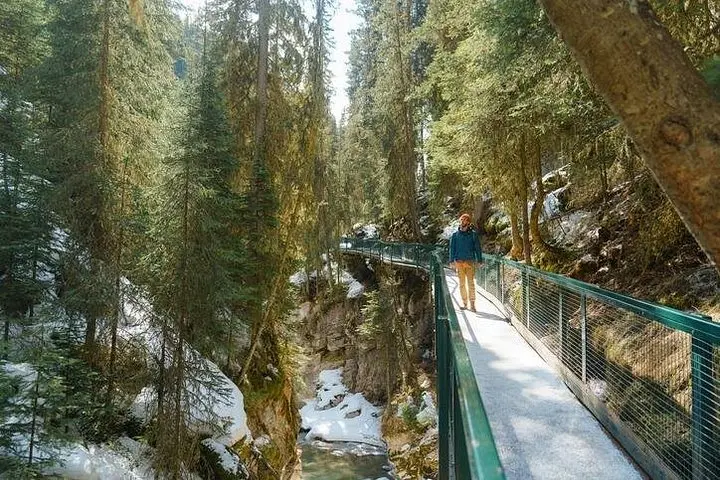
In eight efficient hours, experience the turquoise drama of Lake Louise and the cathedral-like icefalls of Johnston Canyon. This guided shuttle day trip from Banff/Canmore combines easy access, crisp winter scenery, and practical guidance for a high-reward Rockies outing.
 Related story
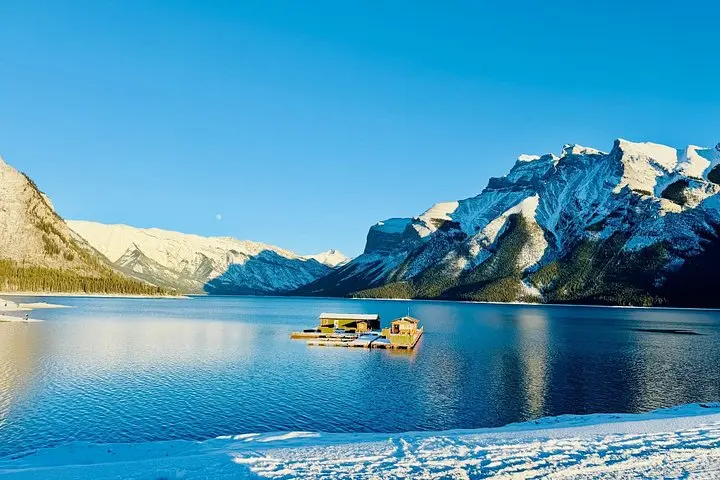
See Banff’s signature overlooks and hidden lakes in one compact, expertly guided 2.5-hour loop. Perfect for short-stay travelers who want big scenery without the driving.