
What the day feels like
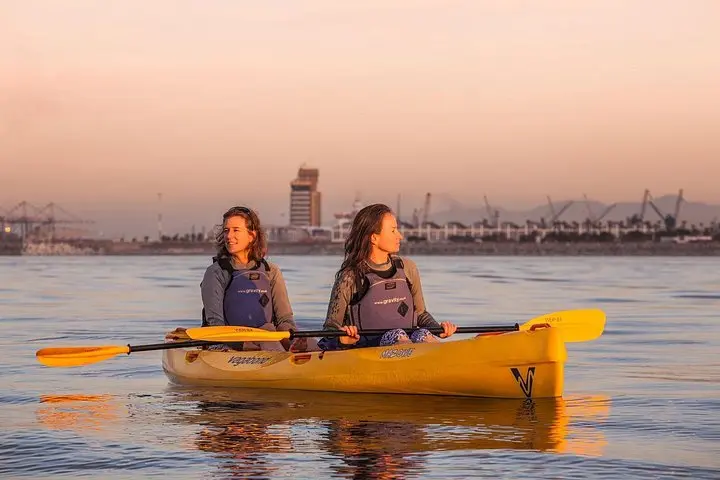
Before sunrise, the city exhales. The V&A Waterfront’s cranes stand like quiet sentinels, and a thin wash of pink slides off Table Mountain’s broad shoulder. You push a kayak away from the quay and the harbor noise falls behind you; the ocean’s first breath meets your paddle. In these early moments Table Bay feels like a secret—water that reflects the mountain, and a horizon that seems to hold the whole Cape in one long look. Dolphins curve through the glassy swell like punctuation marks; sometimes a spout rises in the distance and the guide points, smiling with the kind of authority that only repeated mornings on this water can buy. This is sea kayaking Table Bay: a short excursion on paper—roughly two hours—but one that reshapes your view of Cape Town.
Geology and history are stacked into the skyline. Table Mountain is an ancient table of sandstone layered on Cape Fold Belt schist; its flat top was the stage for millennia of wind and water. The bay you paddle is the same maritime corridor that drew the first European ships to the Cape, then anchored a complex history of trade, colonialism, and cultural exchange. Off the water you can see Robben Island—its whitewashed facades a compact archive of South Africa’s more recent past. From your kayak, history feels immediate: a coastline shaped by geological time, watched by a city whose identity is braided from those rocks and the people who live around them.
The ecology here is focused and fierce. The Cape Floristic Region, a UNESCO World Heritage Site, turns the mountain slopes into a tapestry of fynbos—small-leaved shrubs rich in color and scent. On the water, marine life takes center stage: Cape fur seals lounge on rocky outcrops, harbor porpoises flicker in the chop, and in season (June–November) migrating southern right whales and humpbacks pass within sight of shore. Guides know the animals' rhythms and where they’ll be most likely to appear; early-morning paddles increase your chances, and calm afternoons make for dramatic light on the mountain’s cliffs.
Culturally, the route is stitched to Cape Town’s flavors. Launching from the V&A Waterfront keeps the rhythm urban—cafés for a last espresso, a fish market for the smell of smoke and salt—and places you within sight of neighborhoods that hold Cape Malay kitchens, contemporary galleries, and working harbors. Local guides are storytellers as much as boat leaders; they’ll point to landmarks and tell compact histories—of shipwrecks, of colonial trade routes, and of modern conservation battles—so your paddle is as much a guided conversation as it is exercise.
Practicalities are straightforward but essential. The typical commercial tour is about two hours and priced from roughly USD 76.82, with operators offering everything from beginner-friendly doubles to single kayaks for more confident paddlers. Expect 4–8 kilometers of paddling depending on your route and the sea state; elevation gain is negligible because you’re on flat water but energy expenditure is real—wind, waves, and current add resistance. The notorious south-easterly “Cape Doctor” wind can kick up in summer and chop your return; for the calmest conditions aim for an early-morning departure outside the summer wind window.
Safety and comfort hinge on three decisions: timing, clothing, and a sensible guide. Morning trips are calmer and more likely to intersect dolphins; whale season runs June to November but sightings aren’t guaranteed. Wear a wicking base layer, a light waterproof shell for spray, and a wide-brimmed hat or buff for sun. Footwear can be simple neoprene booties or old sports shoes—the smallest comforts matter when you’re getting in and out of a kayak. Most commercial trips include PFDs and a short skills briefing; if you’re a novice, sign up for an operator that emphasizes technique and has experience with the local swell patterns.
If you’re planning it: book ahead during high season, confirm whether the operator provides waterproof phone cases or dry bags (many do), and arrive with enough time to grab a coffee and do a quick bathroom stop. Cell service is reliable near the waterfront but thin on the open water; bring a printed meeting point and a backup plan for returns.
Why do it? The view from a kayak is democratic: no cable car, no ticketed terrace—just you, the sea, and Table Mountain occupying the same frame. It’s an accessible way to encounter marine life and the city’s coastline without needing advanced skills. For photographers, the angle is different: tide-lit cliffs, the mountain’s shadow folding into the bay, and the sudden mathematics of a dolphin’s wake. For anyone with a taste for short, intense encounters with place, two hours here is enough to recalibrate your internal map of Cape Town.
If you have more time, link the paddle with a longer shore-side itinerary: breakfast at the V&A Waterfront, a walk through the Company’s Garden, or a short drive to Camps Bay to watch the late-afternoon light. Above all, let the water set the pace. Table Bay won’t hurry you; the coastline will let you decide whether to skim along the harbor wall or push toward the open swells, and either option is generous with rewards.
For booking and local expertise, consider an experienced operator who runs small groups and emphasizes marine conservation and wildlife etiquette—approaching whales and dolphins with a combination of curiosity and distance keeps these encounters timeless. If you want the particulars—specific launch points, exact routes, and booking windows—there’s a reliable local partner that runs guided sea-kayak trips along Table Bay; find details and local guides at this sea kayaking Table Bay link to plan your paddle with mountain views and marine life in Cape Town: <a href="https://app.advcollective.com/local-experts/sea-kayaking-table-bay-paddle-table-mountain-views-marine-life-cape-town">Sea Kayaking Table Bay</a>.
Two hours is short, but the place is durable. You leave with wet hands, a clearer sense of the city’s margins, and a small stack of images—a mountain, a wake, a ferry pulled into the harbor—and the knowledge that Cape Town’s geography is best felt from the water.
Trail wisdom
Small choices, better day.
Go Early
Launch at first light for calmer seas and the best chances of seeing dolphins and seabirds.
Dress in Layers
Wind can make the air chilly; wear a wicking base layer and a lightweight waterproof shell.
Protect Your Tech
Use a dry bag or waterproof phone case—spray and sudden splashes are common.
Listen to Your Guide
Follow briefings on wildlife etiquette and paddling technique to stay safe and avoid disturbing animals.
Local knowledge
Read the place, not just the route.
Watch for native species including Common dolphins, Cape fur seals.
Keep an eye out for wildlife during the transition between areas and habitats. Respect distance guidelines.
Commercial operators work under local maritime rules; practice respectful viewing distances for whales and dolphins and avoid feeding or approaching wildlife to minimize disturbance.
Follow the guide's instructions on size limits, ethical handling, and leave-no-trace practices.
Sunrise paddle routes that hug the mountain’s lee for calmer water. Short post-paddle walks along the Battery Park promenade for up-close views of harbor seals
Locally recommended viewpoints and quiet spots known best to local operators.
Table Bay has been a strategic maritime harbor for centuries, serving early trading routes and as the approach to Cape Town—a place where geology and colonial history intersect.
Maritime roots and regional tradition shape the waterways and working coasts.
Seasonal guide
Four versions of the same landscape.
Spring
Best forMilder winds · Wildflower views onshore · Increased whale activity late in the season
ChallengesUnpredictable showers · Variable wind windows
Spring (Sept–Nov) brings warming temperatures and frequent whale pass-bys; pick early-morning slots for the calmest conditions.
Summer
Best forLong daylight hours · Warmer water temperatures
ChallengesStrong south-easterly winds (the 'Cape Doctor') · Busy waterfront and more tour traffic
Summer (Dec–Feb) offers warm light but can be wind-prone—check wind forecasts and prefer morning departures.
Fall
Best forStable weather · Less crowded tours · Clear visibility
ChallengesCooling evenings · Occasional swells from the Atlantic
Autumn (Mar–May) often provides steady conditions and vivid light—ideal for photographers and calmer paddles.
Winter
Best forPrime whale-watching (June–Aug) · Dramatic storm-scapes
ChallengesColder water and air · Rougher seas on open stretches
Winter (Jun–Aug) increases whale sightings but can bring choppy conditions; book with experienced guides and expect cooler temps.
Operator details
What the booking data adds.
Included
- ✓Kayak gear including boat, paddles and PFD (lifevest)
Not included
- —Personal gear (swimming costume, paddle shorts, wind breaker, sun hat, sunscreen)
Good to know
- ✓Public transportation options are available nearby
- ✓Travelers should have at least a moderate level of physical fitness
Pack with intention
What to bring.
Good to know
Common questions.
Most guided tours last about two hours; the exact paddling distance varies by route and sea conditions—expect roughly 4–8 kilometers.
Plan the edges
The details that make the day easier.
Table Mountain and the surrounding Cape Floral Region are part of a UNESCO World Heritage Site—the Cape Floristic Region—home to more plant species than the entire British Isles.
After a paddle, head to the V&A Waterfront for freshly grilled fish or a Cape Malay curry; try a craft beer at a nearby microbrewery or a seaside café with views of Table Mountain to unwind.
- Closest airport
- Cape Town International Airport (CPT) — ~25–30 minutes drive to the V&A Waterfront; Launch point: V&A Waterfront harbor; Driving distance from nearest town (central Cape Town): typically under 15 minutes; Cell service: reliable near shore, patchy further out; Permits: none for recreational commercial tours, but operators follow maritime and wildlife guidelines; Booking: manual confirmation is common—check cancellation policy (many offer free cancellation).
This area sits adjacent to protected marine habitats—avoid single-use plastics, maintain respectful distances from whales and dolphins, and follow your guide’s instructions to minimize disturbance to wildlife.
Explore by topic
Follow the threads.
Keep exploring
Make the story part of the trip.
 Related story
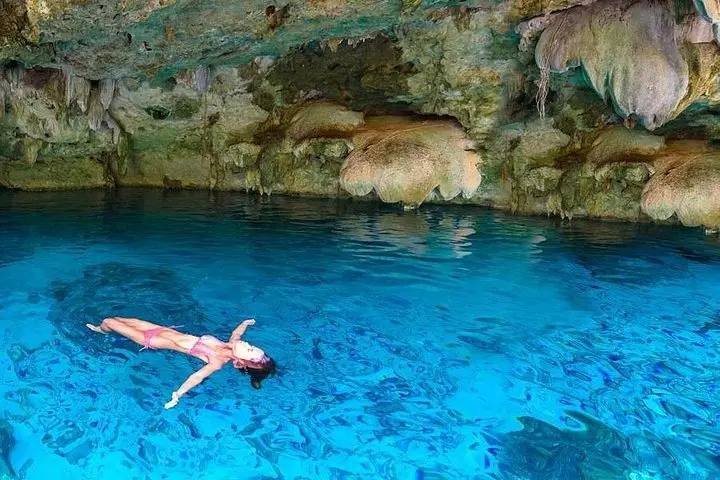
Dive into the Yucatán’s secret freshwater caverns and drift over the shallow reef gardens of Yalku Lagoon—an accessible, half-day snorkel pairing that blends geology, Mayan history, and vivid marine life.
 Related story
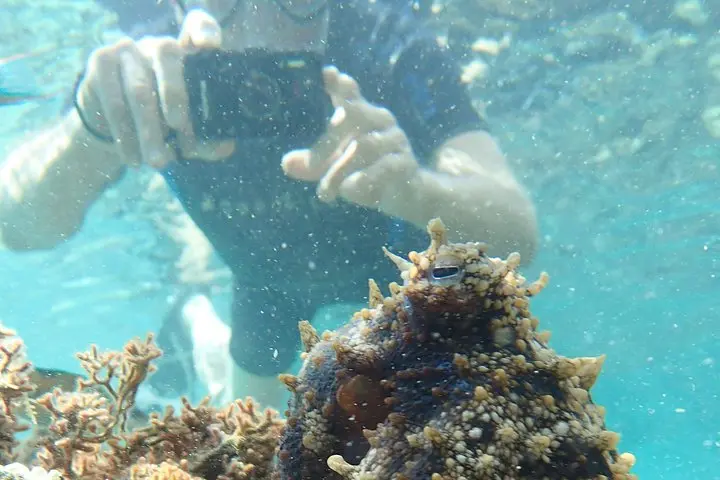
Slip beneath Porto Santo’s sunlit surface to find a mosaic of seagrass meadows, volcanic shelves, and playful schools of fish. This three-hour snorkeling tour pairs small-group access with local stewardship—ideal for travelers who value marine life over crowds.
 Related story
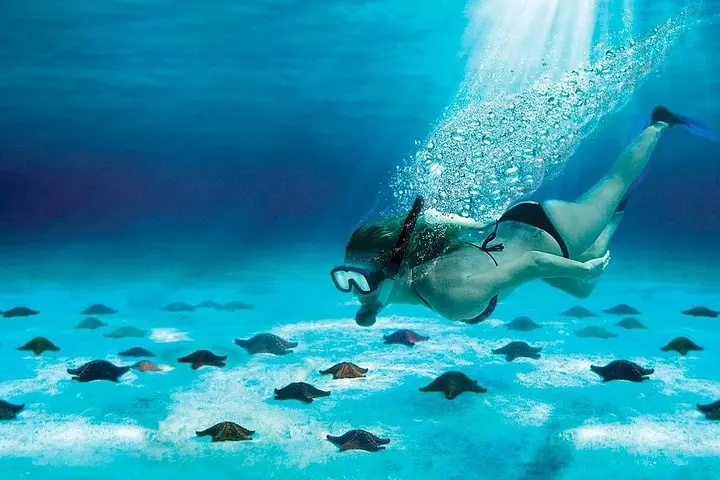
Spend a day on a high-speed boat exploring Cozumel’s famed reefs and the shallow sand flats of El Cielo. This full-day trip offers clear water, abundant marine life, and guided snorkeling at three prime sites—ideal for both first-timers and seasoned reef lovers.