
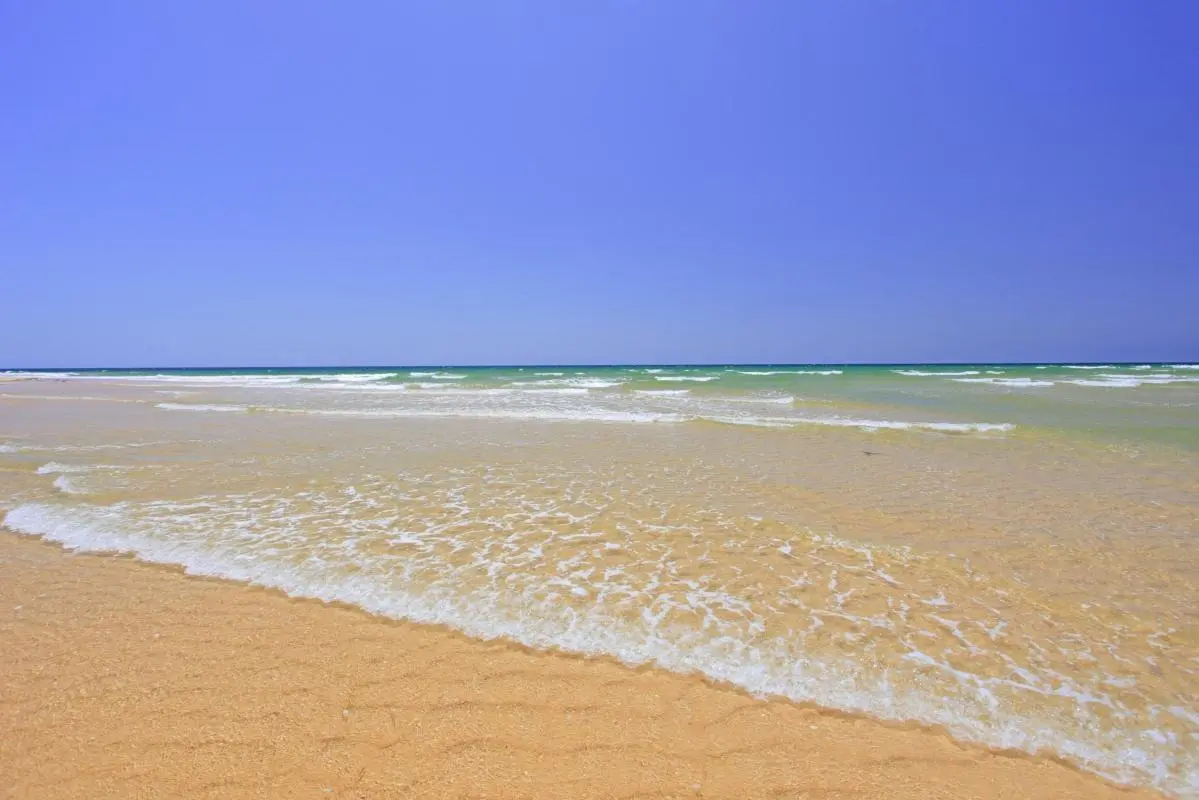
What the day feels like
The first thing that tells you you've left the city behind is the light — thin and poured-flat over a ribbon of sand that seems to hold the sky up. Praia de Faro sits like a long exhale off the edge of Faro, the barrier island that marks the mouth of the Ria Formosa. Walk out from the causeway and the soundscape changes: gulls argue over a stray crabshell, the Atlantic pushes in with a steady, measured pull, and dunes embroidered with marram grass hum quietly in the breeze. On a still morning the salt flats of the lagoon are a mirror for cloud shapes; on windy afternoons the open face of the beach earns its Atlantic reputation, good for bodyboarding and long, bracing walks.
Praia de Faro is not a single scene so much as a seam between ecosystems. To the north, the Ria Formosa — a sprawling network of lagoons, tidal channels, reedbeds and sandbars — is an estuarine nursery, where seagrass beds support juvenile fish and salt pans still draw migratory shorebirds. To the south, the Atlantic world shows off: bigger swell, coarser sand, and the smell of strong, clean water. Geologically it’s a young place — a shifting barrier island shaped by longshore drift, storms and the slow, patient reworking of tides. Culturally it’s been a working coastline for centuries: salt production, small-scale fishing and a handful of tight-knit island communities keep the human scale modest and real here.
What makes Praia de Faro a satisfying stop for travelers is this juxtaposition — easy access to both a wild Atlantic beach and the delicate life of the lagoon. The most memorable way to see both is by boat. A five-hour Ria Formosa tour is a practical deep-dive: you’ll thread channels, pass tidal flats powdered with wading birds, and land at island highlights like Ilha da Culatra, Ilha Deserta and Ilha do Farol. Each island has its character — Culatra’s low-slung fishermen’s houses and seafood shacks, Deserta’s long, empty white beaches, and Farol’s lighthouse point that makes for classic horizon lines. A skipper who knows the channels is worth their weight in local fish tacos; they’ll time crossings with the tides and point out wading bird flocks, submerged seagrass meadows and oyster beds.
If you want the human-side of Faro, the electric tuk-tuk city-and-beach tour is efficient and low-friction — great for families or travelers with limited time. It threads Faro’s old-town alleys, the cathedral views from the municipal museum terrace, then winds across the causeway to the beach in minutes. For travelers who like a hint of mystery, the city’s walking game — a kind of scavenger-hunt tour — turns Faro’s plazas and old stones into a story to solve on foot, making a two-hour urban stroll feel like a small adventure.
Practical edges matter here. Praia de Faro is exposed: sun and wind can both be relentless. The best time to visit the beach for swimming and calmer water is late morning to early afternoon in summer, when the sea has warmed and tides are moderate. To see birds and the lagoon in its most dramatic low-tide shapes, aim for a rising or falling tide; many guided boat tours plan their routes around this. If you’re taking the five-hour boat tour, plan for a full half-day — pack water, reef-safe sunscreen and a towel, and expect some unpaved gangways if you land on more natural islands.
Sustainability is part of the practice. Ria Formosa is a protected area and has been recognized as one of Portugal’s Seven Natural Wonders; stay on marked paths, avoid disturbing nesting birds or turtles, and choose boat operators who follow channel markers and minimize wake in sensitive zones. Support the islands’ small economies by eating in the simple restaurants on Culatra or buying a jar of local sea salt — it’s a small, direct way to keep tourism beneficial for residents.
For photographers, the area is generous. The contrast between lagoons and open sea gives you different light palettes within a short walk: morning soft pastels on the flats, high-contrast surf at midday, and long, warm shadows at golden hour. Watch the wind direction: an offshore breeze can clean the water surface and help with crisp reflections, while onshore winds produce dramatic spray and motion for action shots.
Logistically, Praia de Faro is easy: a short drive or quick city bus ride from Faro’s center or the airport, and the causeway is pedestrian-friendly. On summer weekends the beach gets busy, so if you want sand to yourself, go early or head to Deserta by boat for a quieter stretch. Dress for sand and salt: footwear that can handle both hot sand and pebbly access points is useful, as are layers for suddenly blustery days.
Beyond the beach, keep an eye out for pockets of the island’s quieter life: fishermen mending nets at low tide, families walking dogs along the shore, and the scattered bird hides where you can watch flamingos and herons feed in shallow pools. Praia de Faro is not a marquee destination in the sense of a resorted stretch of coastline; it’s more of a gateway — to island beaches, to boat-borne exploration of the Ria Formosa, and to the slower rhythms of a working coastal ecology. For a traveler who wants a day of wind, surf and feathered company with the option of a laid-back seafood lunch and a bit of old-town mystery, Praia de Faro makes for an accessible and quietly rewarding coastal chapter of any Algarve visit.
Trail wisdom
Small choices, better day.
Time the tide for birding
For the best birdwatching and exposed tidal flats, plan visits around low tide and early morning light.
Bring reef-safe sunscreen
The lagoon and islands are protected — use reef-safe sunscreen to minimize chemical runoff into sensitive seagrass meadows.
Cash for island eateries
Small restaurants on Culatra and Farol may prefer cash for quick payments; bring small bills.
Watch weather for boat crossings
Operators will cancel rough-water runs; check forecasts and book flexible connections back to Faro.
Local knowledge
Read the place, not just the route.
Watch for native species including Flamingos, Bottlenose dolphins.
Keep an eye out for wildlife during the transition between areas and habitats. Respect distance guidelines.
Ria Formosa is a protected natural park; favor operators with certified guides, avoid disturbing habitats and follow marked trails to reduce impact.
Follow the guide's instructions on size limits, ethical handling, and leave-no-trace practices.
A low-profile snack bar on Ilha da Culatra with fresh grilled fish. Salt pans and small bird hides along the Ria Formosa’s northern edge for quiet observation
Locally recommended viewpoints and quiet spots known best to local operators.
The Ria Formosa has been a working estuary for centuries—salt pans and small fishing communities shaped the islands’ economies and culture.
Maritime roots and regional tradition shape the waterways and working coasts.
Seasonal guide
Four versions of the same landscape.
Spring
Best forbirdwatching · mild-weather walks · early-season boat tours
Challengesunpredictable rain · cooler water temperatures
Spring brings migratory birds through the Ria Formosa and temperate days ideal for walking and photography, though swims are still cool.
Summer
Best forswimming · full-day boat tours · island beach time
Challengescrowds on weekends · strong sun and heat
Summer is peak beach season for warm water and long days; go early to avoid crowds and heat, and book boat tours in advance.
Fall
Best forcalmer seas for boating · milder temperatures · fewer crowds
Challengesshortening daylight · occasional storms
Autumn offers warm seas and quieter islands — excellent for longer boat tours and relaxed beach days with more space.
Winter
Best forstorm-watching · off-season beachcombing · bird migration
Challengescooler temperatures · reduced boat schedules
Winter is low season: expect brisk winds and dramatic skies, plus the chance to see bird flocks without the tourist bustle.
Pack with intention
What to bring.
Good to know
Common questions.
Praia de Faro is accessible by car, taxi, city bus or a short tuk-tuk ride across the causeway; many operators include pickup from Faro center.
Plan the edges
The details that make the day easier.
The Ria Formosa lagoon system is recognized as one of Portugal’s Seven Natural Wonders for its ecological importance and biodiversity.
Taste the islands: simple grilled fish and freshly harvested oysters are staples on Culatra; markets in Faro offer Algarve almond sweets and citrus-infused fish stews that reflect local produce.
- Nearest city
- Faro — 10–15 minutes by car
- tuk-tuk; best access
- causeway or boat; cell signal: intermittent on islands; ATMs: available in Faro, limited on islands.
Choose certified local guides, stay on marked paths, avoid single-use plastics, and support island businesses to keep tourism beneficial and low-impact.
Explore by topic
Follow the threads.
Keep exploring
Make the story part of the trip.
 Related story
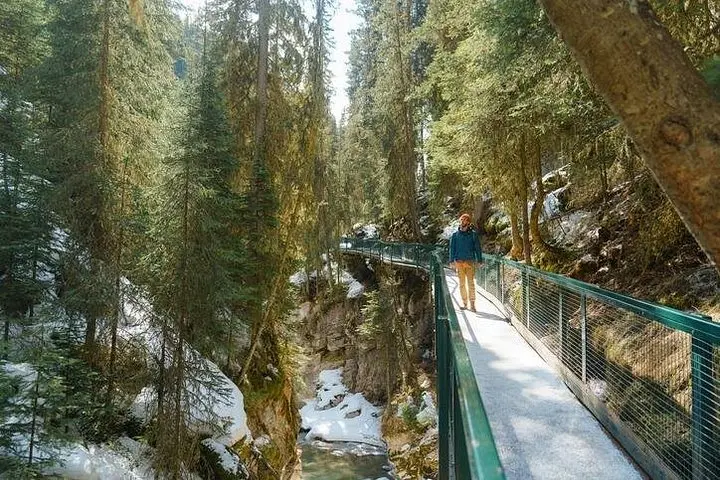
In eight efficient hours, experience the turquoise drama of Lake Louise and the cathedral-like icefalls of Johnston Canyon. This guided shuttle day trip from Banff/Canmore combines easy access, crisp winter scenery, and practical guidance for a high-reward Rockies outing.
 Related story
See Banff’s signature overlooks and hidden lakes in one compact, expertly guided 2.5-hour loop. Perfect for short-stay travelers who want big scenery without the driving.
 Related story
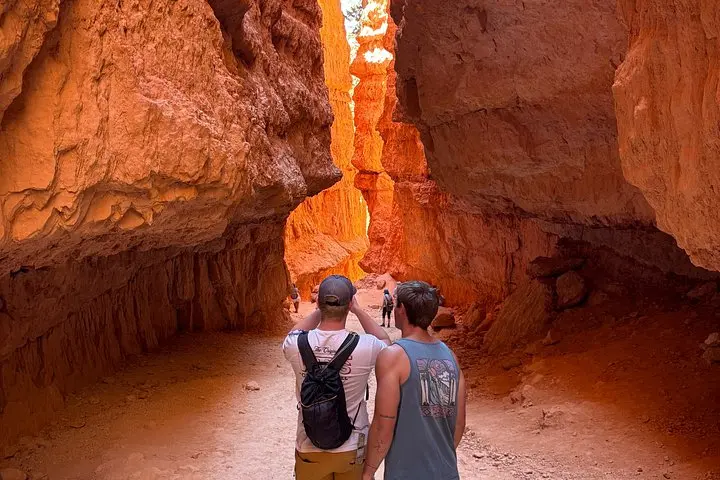
A guided sunrise hike down the Navajo Loop turns Bryce Canyon’s hoodoos from postcard scenery into an intimate geology lesson. Three miles, expert narration, and unforgettable light—this tour is the quickest way to understand how ice, time, and wind carved a city of stone.