
What the day feels like
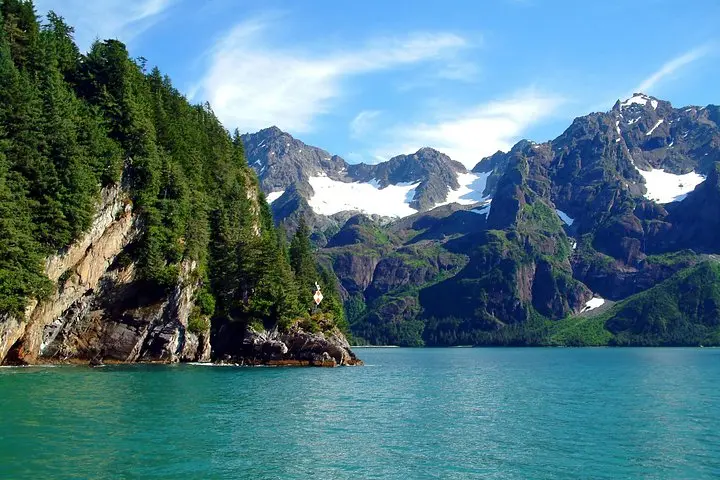
The road slips out of Anchorage and immediately picks a fight with the sea. To your right, the Chugach Mountains rise in slabs and ribs; to your left, Turnagain Arm flexes its famous tides, pushing a curling bore that dares surfers and kayakers to keep up. The Seward Highway doesn’t waste time. It steers you into Alaska’s scale—clean lines, hard edges, no filler—while the land narrates in tides, glaciers, and the steady beat of the railroad running alongside.
At Potter Marsh, the journey exhales. Boardwalks skim reed beds where trumpeter swans and salmon share the shallows. Beluga Point is next, a prow of rock where the water tightens its shoulders; if the timing and light are right, pale backs arc through pewter waves as the tide surges in. The mountains across Turnagain Arm wear snow late and early, drawing their shadows long over the flats at sunset. It’s all theater, and the highway plays the perfect balcony.
This is more than a pretty ribbon of asphalt. The Seward Highway is a thread through Alaska’s living history. The Alaska Railroad laid the groundwork in the early 20th century; by the 1950s, a full road stitched Anchorage to the ice-free port of Seward. Then came March 27, 1964. A magnitude 9.2 earthquake—the second-largest ever recorded—pitched shoreline and roadbed downward, drowning forests and tilting the land. You can still see the ghosts of it: salt-bleached snags standing in marshes, interpretive signs explaining how the coast sank and the sea took back ground. The Earth moves here, and it tells you so.
Past Bird Point and the sweeping overlook there, the highway curves into Girdwood, a mountain town tucked beneath Alyeska’s ski slopes. In winter, powder sloughs off the high bowls; in summer, the tram ferries hikers into alpine meadows. Not far beyond, Portage Valley steals the show. Glaciers drape the peaks—Portage, Explorer, Byron—broad tongues of old blue ice that set the air humming with cold. A short detour reaches the Byron Glacier trailhead, where chunks of ice sometimes calve into the creek and the valley narrows into wind. The ice doesn’t whisper; it creaks and insists, making its presence known even on warm days.
On the valley’s edge, the Alaska Wildlife Conservation Center keeps a measured distance between you and Alaska’s heavy hitters. Brown bears pad through grass. Musk ox hunker against weather. Wood bison graze in a reclamation success story decades in the making. It’s a responsible way to meet the animals you might spot—at much safer distances—along the drive: Dall sheep dotting cliffs like quartz, moose browsing in ditches, and bald eagles riding thermals over the Arm.
South of Turnagain Pass, the road loosens into the Kenai Mountains, threading canyon walls and looping around Summit Lake. The light changes, more filtered, more forest. Moose Pass is a roadside exhale—gas, coffee, tailgate picnics beside a green lake that could be Swiss if it weren’t for the stern spruce. Then it’s the home stretch into Seward, where boats tick against docks and mountain faces drop straight into Resurrection Bay. If you’ve stacked the day right, the evening will hang on long enough for a harbor stroll and seafood that tastes like it traveled a few hundred yards, not miles.
As scenic drives go, the Seward Highway is the equal of any. But it rewards a measured pace. Plan for pullouts—they’re frequent and thoughtfully placed. The famous bore tide runs best on big minus tides, and the Alaska Railroad’s schedule can add a kinetic foreground to your photos. Make space for a detour into the Portage Glacier Visitor Center, or a quick hike toward Byron Glacier if conditions are safe. If you’ve booked the self-guided audio tour, download the content before you roll; cell service fades in and out once you edge past the city and into mountains.
Geology drives the narrative here. Turnagain Arm’s extreme tidal range—among the world’s largest—sucks water in and spits it out with purpose. The silt flats look innocuous but behave like wet cement; give them a wide berth and stick to signed areas. The Chugach Range pushes storms like a bouncer, so bring layers even on bluebird days; wind knifes straight off the icefields. In winter, the highway can glass over without warning. Avalanche paths cross the road in known zones, and closures, while inconvenient, keep drivers on the safe side of probability.
Culturally, this corridor is a hinge. Anchorage’s urban energy falls away in miles and minutes, replaced by the steady cadence of railroad horns, small-town coffee counters, and trailhead chatter. Girdwood’s food scene punches high for a ski town; Seward’s harborside restaurants specialize in halibut and salmon that remind you exactly where you are. Along the way, muraled underpasses, Native place names, and interpretive panels build a mosaic of a region that’s wild, yes, but also lived-in and loved.
Practicalities keep the adventure smooth. Fuel up before leaving Anchorage, then top off in Girdwood or Moose Pass. Watch for wildlife at dawn and dusk. Expect variable speeds and occasional construction. Summer brings long daylight and heavy visitation; spring and fall offer shoulder-season calm with unpredictable weather. Winter can be magic—low sun, powder in the peaks, the Arm glazed in reflected light—but it demands tires with real winter bite and a flexible plan.
And then there’s the simple truth of it: this drive is worth repeating. Tides shift the mood, weather redraws the skyline, and each stop changes how the next mile feels. The Seward Highway doesn’t just take you somewhere; it keeps asking you to look again. Slow down. Let the water speak. The mountains will answer.
Trail wisdom
Small choices, better day.
Time the Bore Tide
Check Anchorage tide tables and aim for big minus tides to catch the Turnagain Arm bore tide at Beluga Point or Bird Point.
Use Designated Pullouts
Never stop in the travel lane—use signed viewpoints for photos and wildlife watching to keep traffic flowing and safe.
Download the Audio Tour Offline
Cell service is spotty beyond Anchorage; download the self-guided tour and maps before you depart.
Watch for Wildlife on the Shoulder
Moose and Dall sheep often graze close to the roadway—slow down at dawn and dusk and keep a long, respectful distance.
Local knowledge
Read the place, not just the route.
Watch for native species including Beluga whales (seasonal) in Turnagain Arm, Dall sheep on the cliffs near Windy Corner.
Keep an eye out for wildlife during the transition between areas and habitats. Respect distance guidelines.
Use established pullouts and boardwalks to protect fragile tidal flats and vegetation; keep at least 100 yards from bears and never approach wildlife.
Follow the guide's instructions on size limits, ethical handling, and leave-no-trace practices.
Byron Glacier Trail in Portage Valley for a short walk toward old blue ice. Potter Marsh Boardwalk for birds and evening light reflections
Locally recommended viewpoints and quiet spots known best to local operators.
The 1964 Good Friday earthquake (M9.2) reshaped Turnagain Arm, submerging forests and altering the coastline you drive today.
Maritime roots and regional tradition shape the waterways and working coasts.
Seasonal guide
Four versions of the same landscape.
Spring
Best forShoulder-season calm · Moose sightings
ChallengesIcy mornings · Avalanche control delays
Thaw reveals waterfalls and snow-fringed peaks. Expect mixed conditions—clear pavement in sun, slick in shade.
Summer
Best forLong daylight · Glacier and coastal views
ChallengesHeavy traffic · Construction zones
Prime time for road tripping with near-24-hour light in June and July; arrive early for parking at popular pullouts.
Fall
Best forGold birch foliage · Quieter roads
ChallengesShorter days · Early snowfall at passes
September paints the Kenai Mountains in color and often brings crisp, clear air. Nights cool quickly—pack layers.
Winter
Best forSnow-draped peaks · Low-angled photography light
ChallengesBlack ice · Avalanche risk
A stunning drive for prepared drivers—use true winter tires, check avalanche advisories, and build in extra time.
Operator details
What the booking data adds.
Included
- ✓Just bring your car and phone; the app guides your tour.
- ✓Support is available via chat, email, or phone if you need help.
- ✓Planning tools, route maps, scenic stops, and area previews included.
- ✓Private tour experience for your family, in your own car.
- ✓Lifetime access: use the tour anytime and keep it for future trips.
- ✓Works offline with GPS route guidance and automatic audio stories.
- ✓One purchase covers everyone in your car, not per person.
- ✓Flexible tour: start, stop, and pause anytime during your trip.
- ✓Access your tour in our separate audio tour app after booking.
- ✓Hidden gems and local stories included along the route.
Not included
- —No live guide. Entrance fees, parking, food, and car rental are separate.
Good to know
- ✓Public transportation options are available nearby
- ✓Suitable for all physical fitness levels
- ✓Easy to use: GPS-triggered audio plays automatically along the route for a hands-free experience.
- ✓Private tour: Explore in your own vehicle without crowded buses or large tour groups.
- ✓At your own pace: Start anytime and pause for hikes, picnics, photos, or scenic stops.
- ✓Works offline: Once downloaded, the tour works using GPS without Wi-Fi or cellular service.
- ✓Good value: One purchase covers everyone in your vehicle, not each person separately.
- ✓More ways to save: Choose a single tour, a nearby bundle, or access to 200+ tours.
- ✓Download in advance: Download the Tour Guide app by Action and tour while connected to Wi-Fi or a strong cellular signal.
- ✓Follow the route: Begin at the suggested starting point or join anywhere along the route shown in the app.
- ✓Lifetime access: Preview the tour before your trip and revisit the stories, photos, and details afterward.
- ✓Supported devices: iPhone with iOS 15+, Android with version 9+, or a GPS-enabled iPad/tablet with cellular capability.
- ✓Apple CarPlay is supported for iPhone users.
- ✓Android Auto isn’t supported yet. Please connect via Bluetooth, USB, or AUX.
Pack with intention
What to bring.
Good to know
Common questions.
No. The highway is paved and well-maintained; standard vehicles are fine. In winter, proper winter tires are strongly recommended.
Plan the edges
The details that make the day easier.
Cook Inlet’s Turnagain Arm has one of the world’s largest tidal ranges—over 30 feet on big exchanges—and can produce a bore tide that travels up to 10–15 mph.
Refuel in Girdwood with sourdough pancakes at The Bake Shop or wood-fired pies at Chair 5. In Seward, Ray’s Waterfront serves halibut with harbor views, and Resurrect Art Coffee House pours a solid latte in a converted church. Back in Anchorage, celebrate the day with pizza and craft beer at Moose’s Tooth.
- Closest airport
- ANC (Ted Stevens Anchorage International). Start: Anchorage; End: Seward (127 miles one way). Driving time: ~2.5 hours each way without stops. Cell service: Intermittent beyond Anchorage and Girdwood. Permits: None for the highway; site-specific fees at recreation areas and AWCC.
This corridor borders sensitive tidal flats and wildlife habitat—use established pullouts, pack out all trash, keep vehicles off vegetation, and give animals wide, stress-free space.
Explore by topic
Follow the threads.
Keep exploring
Make the story part of the trip.
 Related story
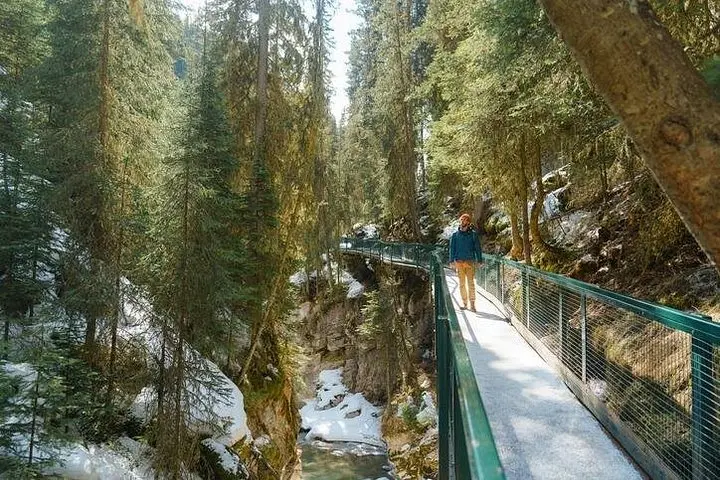
In eight efficient hours, experience the turquoise drama of Lake Louise and the cathedral-like icefalls of Johnston Canyon. This guided shuttle day trip from Banff/Canmore combines easy access, crisp winter scenery, and practical guidance for a high-reward Rockies outing.
 Related story
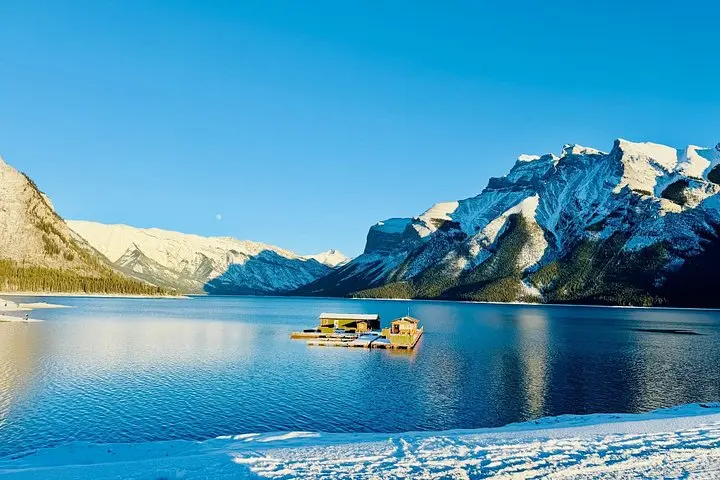
See Banff’s signature overlooks and hidden lakes in one compact, expertly guided 2.5-hour loop. Perfect for short-stay travelers who want big scenery without the driving.
 Related story
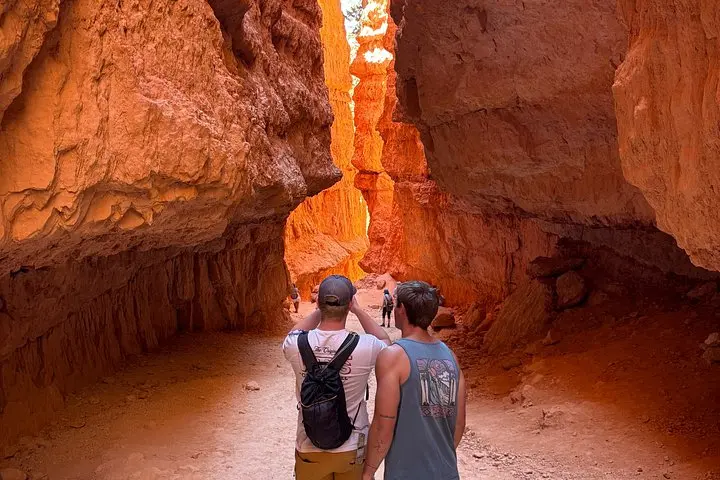
A guided sunrise hike down the Navajo Loop turns Bryce Canyon’s hoodoos from postcard scenery into an intimate geology lesson. Three miles, expert narration, and unforgettable light—this tour is the quickest way to understand how ice, time, and wind carved a city of stone.