
What the day feels like
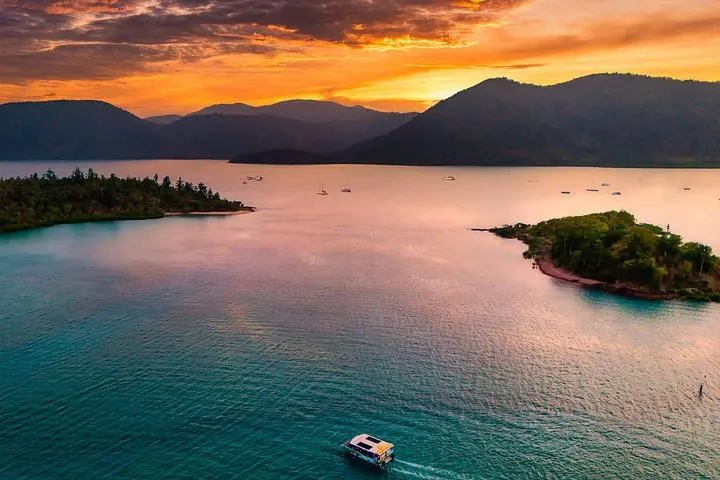
You step aboard as the late-afternoon light folds over Coral Sea ripples. The boat rocks once, a polite reminder that you’re moving away from Airlie Beach’s fluorescent shorelines and toward the wide, quiet blue. Below your feet, through sections of clear glass, patches of coral and the slow glide of fish trace the ocean’s pulse; above, the sky begins to warm, a watercolor that will bloom into a reef-side sunset. For 90 minutes this is the program: comfortable cruising, a friendly crew, a small bar keeping glasses full, and the kind of horizon that makes the rest of the world feel politely distant.
The 1.5-hour Airlie Beach Glass bottom boat Scenic Sunset Tour is compact by design—an easy, low-commitment way to sample the Whitsundays’ marine charisma without needing to commit to a full-day sail. It’s a family-friendly outing where infants and grandparents sit alongside photographers angling for that last light. What distinguishes this trip is the vantage: fixed viewing panes built into the hull give non-divers a front-row seat to reef life while the boat positions itself for sunset, so you get two acts in one—underwater discovery and a sky-ending performance.
The Whitsunday Islands are part of a larger geological story. These are continental islands—fragments of the Australian mainland left stranded when sea levels rose at the end of the last Ice Age—sitting within the Great Barrier Reef World Heritage Area. The coral gardens beneath the glass are part of that interconnected reef system, a living mosaic that supports sponges, angelfish, and hard corals. The traditional owners, including the Ngaro and other Aboriginal groups, have sung and fished these waters for thousands of years; their cultural connection is as much a layer of the place as sand and sea.
Historically the islands became a magnet for explorers, settlers, and later, tourists drawn by their luminous beaches and protected waters. Today, Airlie Beach is the staging town, a cheerfully compact base with marinas, cafes, and the inevitable souvenir stores. From here, the glass-bottom sunset cruise is a civilized half-step into the Whitsundays—no certificates required, no early-morning wake-ups, just a comfortable vessel, a scenic route, and a crew who know where to park for the best light.
Why go? It’s economical in time and cost (from about USD 68.74), ideal as a first taste of reef ecology, and useful for families or anyone who wants to experience coral and sunset together. Practically, arrive with a light jacket—the late sea breeze bites—and a camera or phone with a decent low-light function. If you’re prone to seasickness, consider ginger tablets or a patch; the water is usually benign, but the occasional chop shows up. The boat offers a bus pick-up from town, which is a convenience when you’d rather not hunt for parking or taxi drivers.
The tour is also a gentle ecological classroom. Crew members often point out species through the glass and speak to reef health and conservation measures. Visitors can learn to read reef colors and complexity—the denser the coral, the better the indicator of local biodiversity. If you want more immersion, the trip makes a good warm-up for a snorkel or full-day reef trip; otherwise, it’s a tidy, memorable evening that closes with a proper Australian sunset: a horizon set on fire, reflected in people’s cameras and the calm deck conversations.
Booking is straightforward and flexible: the tour is instant-confirm and often allows free cancellation, which suits changing itineraries. The vessel is licensed, so if you want a drink as you watch the sun sink, the bar is open for local beers and light refreshments. For photographers, that last half hour is valuable; find a rail spot, stabilize your camera, and watch as the light goes gold then cobalt. For families, the glass-bottom panels are an excellent screen for younger eyes—an introduction to reef species that’s safe and accessible.
This cruise is not a substitute for hands-on reef experiences, but it’s an excellent beginning. It gives context—how the islands sit in the reef system, how currents and wind shape the marine environment, and why responsible tourism matters here. If you leave with a renewed interest in the reef, consider booking a snorkel or diving trip on a subsequent day, or spend more time exploring Airlie Beach’s waterfront eateries and markets after you land back onshore.
Useful detail: the trip lasts 90 minutes, is suitable for all ages, and includes optional transport from town. Expect interpretive commentary, optional drinks, and intimate viewing of shallow reef sections through glass panels. If timing works, book a late-afternoon slot—light is why you’re here—and check weather notices in advance during the cyclone season. For a seamless booking and additional local insight, see the tour listing at <a href="https://app.advcollective.com/local-experts/airlie-beach-glass-bottom-boat-sunset-tour-scenic-whitsundays-evening-cruise">Airlie Beach Glass-Bottom Boat Sunset Tour</a> which includes pickup details, pricing, and availability.
At the end of the ride you’ll step back onto the wharf with sand on your shoes, a cooling breeze, and a memory that’s equal parts ocean and sky. It’s the kind of short expedition that leaves you planning the next one—another snorkel, a longer sail, or simply another sunset. Not every great adventure needs to be epic; sometimes the best introductions are the ones that let the place do the talking, and the Whitsundays speak very clearly indeed.
Trail wisdom
Small choices, better day.
Time it for golden hour
Book the late-afternoon departure to maximize softer light for both underwater viewing and sunset photos.
Bring reef-safe sunscreen
Apply an approved mineral sunscreen before boarding to protect coral and comply with local conservation guidelines.
Secure your camera
Use a strap and a small stabilizer or lean against the rail for sharper low-light shots as the sun sets.
Motion-sickness precautions
If you’re susceptible, take anti-nausea meds or ginger 30–60 minutes before departure for a calmer ride.
Local knowledge
Read the place, not just the route.
Watch for native species including Turtle, Reef fish such as angelfish and parrotfish.
Keep an eye out for wildlife during the transition between areas and habitats. Respect distance guidelines.
The region is protected under reef-management plans—use reef-safe sunscreen, avoid touching marine life, and follow crew instructions to minimize impact.
Follow the guide's instructions on size limits, ethical handling, and leave-no-trace practices.
Stroll the Airlie Beach foreshore and the lagoon at dusk for relaxed sunset views. Visit the Coral Sea Marina precinct for quieter waterfront dining away from the main strip
Locally recommended viewpoints and quiet spots known best to local operators.
The Whitsunday Islands were formed as sea levels rose after the last Ice Age and are within the Great Barrier Reef World Heritage Area; Indigenous Ngaro people are among the traditional owners of these waters.
Maritime roots and regional tradition shape the waterways and working coasts.
Seasonal guide
Four versions of the same landscape.
Spring
Best forMild weather · Calmer seas
ChallengesOccasional trade winds · More daylight for later sunsets
Spring offers warm days and improving sea conditions—good for clear water viewing and comfortable cruises.
Summer
Best forLush island landscapes · Long daylight hours
ChallengesHigher humidity · Cyclone season risk (Nov–Apr) · Warmer water temps
Summer is vibrant but can be hot and occasionally stormy—check forecasts during the wet season.
Fall
Best forWarmer seas · Less crowded waters
ChallengesResidual humidity · Variable winds
Autumn balances warmth with easing crowds—late sunsets and pleasant evenings make for memorable cruises.
Winter
Best forClear skies · Calm seas · Comfortable daytime temps
ChallengesCooler evenings on deck
Australian winter is peak dry season—stable conditions, excellent visibility, and crisp sunsets.
Operator details
What the booking data adds.
Included
- ✓Fully shaded vessel
- ✓Snacks
- ✓All safety equipment
- ✓Enjoy a complimentary drink on board
- ✓Restroom on board
- ✓1.5 Hour guided Scenic Sunset Tour
- ✓FREE Pick up from selected hotels (contact supplier to confirm time)
- ✓Funny and informative commentary
Not included
- —Parking Fees
Good to know
- ✓Service animals allowed
- ✓Public transportation options are available nearby
- ✓Infants are required to sit on an adult’s lap
- ✓Suitable for all physical fitness levels
- ✓Passengers must be fit and able to board / Disembark unaided.
Pack with intention
What to bring.
Good to know
Common questions.
The Sunset Tour runs approximately 90 minutes.
Plan the edges
The details that make the day easier.
The Whitsunday Islands include 74 islands and sit within the Great Barrier Reef World Heritage Area.
After the cruise, return to Airlie Beach for seafood on the waterfront—locals recommend fish-and-chips or fresh prawns—and try a local brewery or rum bar for a relaxed evening with island views.
- Closest airport
- Proserpine
- Whitsunday Coast Airport (PPP) ~30–40 min drive; Drive from Airlie Beach marina
- 0–10 min; Cell service: reliable onshore, patchy islandside; Permits: none for this tour but reef protection rules apply
This tour operates within the Great Barrier Reef region; visitors should use reef-safe sunscreen, avoid feeding wildlife, and follow all crew guidance to protect sensitive habitats.
Explore by topic
Follow the threads.
Keep exploring
Make the story part of the trip.
 Related story
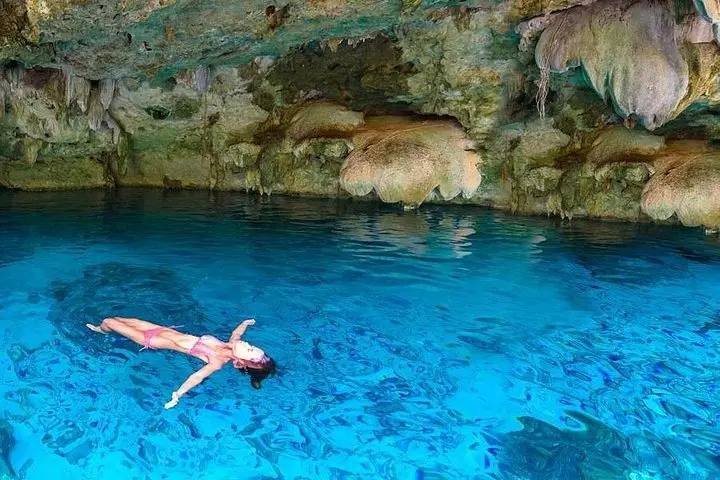
Dive into the Yucatán’s secret freshwater caverns and drift over the shallow reef gardens of Yalku Lagoon—an accessible, half-day snorkel pairing that blends geology, Mayan history, and vivid marine life.
 Related story
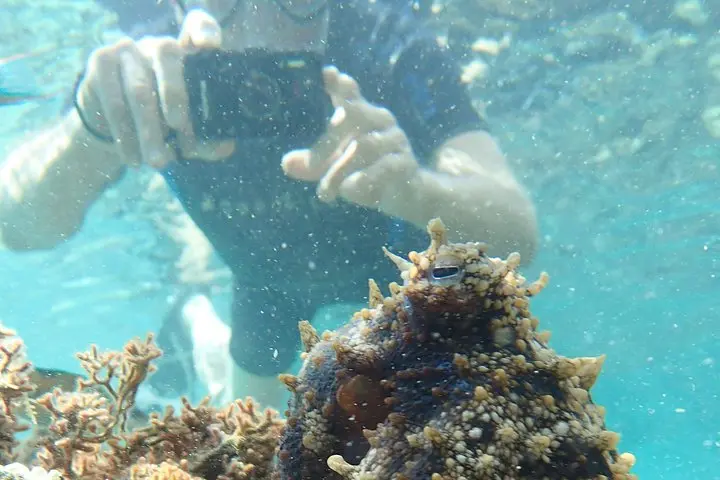
Slip beneath Porto Santo’s sunlit surface to find a mosaic of seagrass meadows, volcanic shelves, and playful schools of fish. This three-hour snorkeling tour pairs small-group access with local stewardship—ideal for travelers who value marine life over crowds.
 Related story
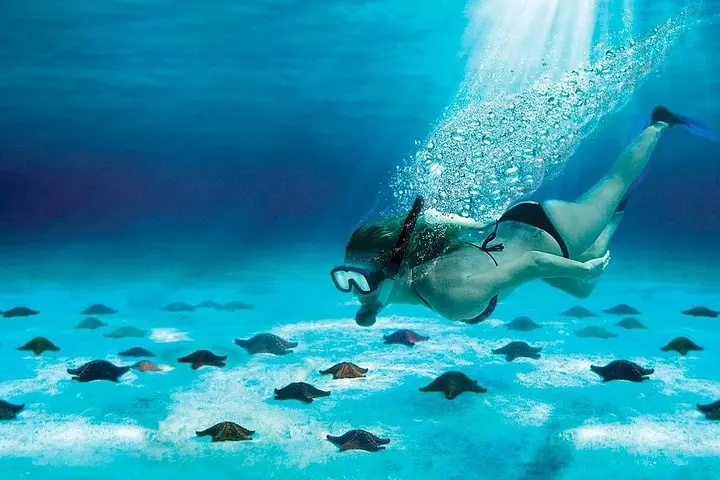
Spend a day on a high-speed boat exploring Cozumel’s famed reefs and the shallow sand flats of El Cielo. This full-day trip offers clear water, abundant marine life, and guided snorkeling at three prime sites—ideal for both first-timers and seasoned reef lovers.