
What the day feels like
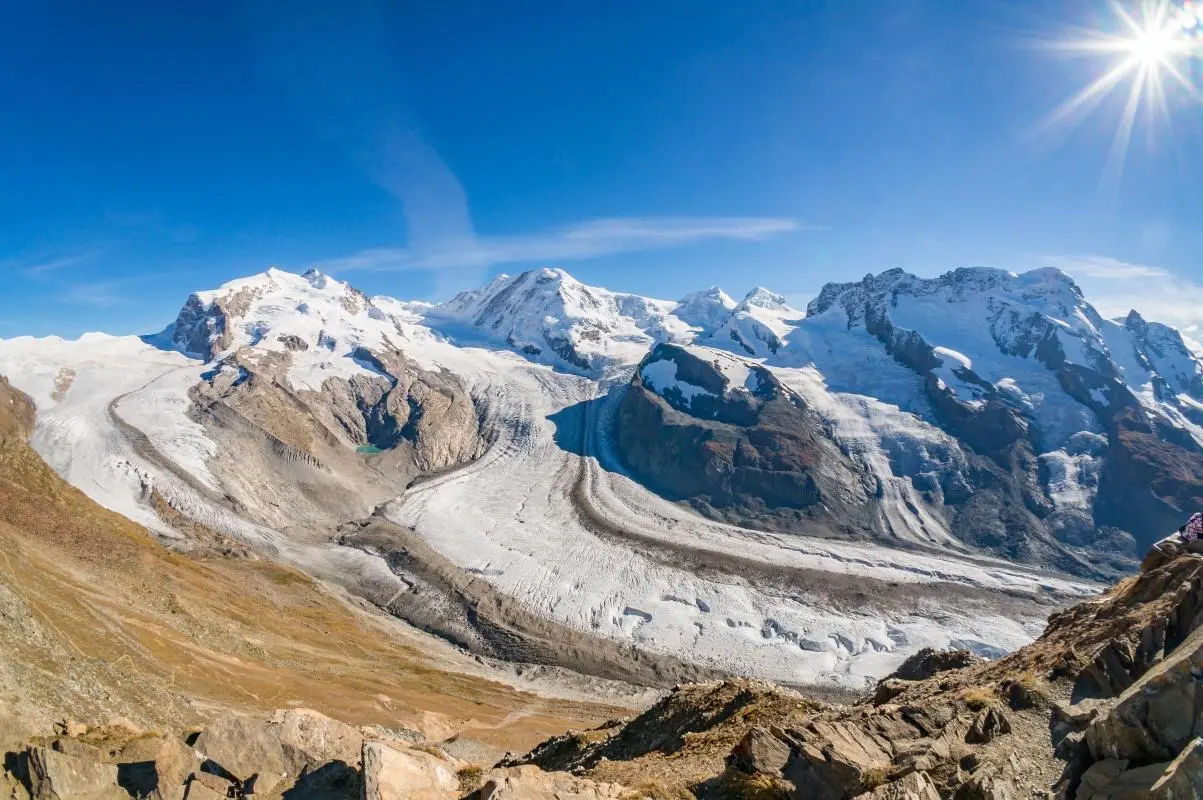
The cable car loosens its grip on the valley and the village below shrinks to a checkerboard of slate roofs and narrow, car-free alleys. Air thins and light sharpens; steel cables hum as your gondola climbs through a cloud bank and then out into a crystalline panorama. When the doors slide open at Matterhorn Glacier Paradise, you step onto a wind-swept plaza at 3,883 meters — Europe’s highest cable car station — with the Matterhorn’s serrated silhouette dominating the skyline and a sweep of 38 Alpine peaks stitching Italy, France and Switzerland together.
There’s a practical magic to this place. It’s not just postcard‑perfect vistas — though there are more than enough to fill a hundred frames — it’s the feeling of being on an edge where human engineering and deep time meet. The Glacier Paradise is a high‑alpine stage: cable cars, a concrete station, and an otherworldly ice cave carved into ancient glacier. Outside, the wind seems to read your maps and plans and offer new ones — a walk on a suspension bridge, a quick ski run, a glacier tour, or simply time spent with a thermos and a view.
The name Matterhorn Glacier Paradise refers to the Klein Matterhorn station and the glacier fields surrounding it. Historically, the Matterhorn region is a crucible of Alpine mountaineering lore — the 1865 ascent and its tragic aftermath helped shape modern alpinism and the village of Zermatt itself. Geologically, you stand above an ever-shifting landscape: the summits are granite and gneiss sculpted by repeated glaciations; the glaciers you’ll observe are residual giants fed by centuries of snowfall yet retreating year by year as temperatures climb.
Culture here is resolutely alpine. Zermatt remains car‑free, its wooden chalets and stone houses the product of mountain craft and a community organized around guiding, hospitality and high‑mountain work. In the restaurants down in town you’ll taste raclette and hearty soups; on the trail you’ll hear German, French and Italian because this is the tri‑border region where three nations’ mountain cultures meet.
The Glacier Palace is one of the site’s most singular draws: an ice grotto carved into the heart of the glacier where blue tunnels and sculptures catch and reflect a cold, crepuscular light. It’s small and intimate — a cool counterpoint to the wide, windy terrace outside. For those who want movement with views, the cable car ride itself is an aerial short story: forty minutes of steadily expanding relief, from Zermatt’s tree line through rocky ridges to the snowfields where avalanches have left white scars.
Practical reality matters here. At nearly 3,900 meters you’ll notice the air and should treat altitude with respect. Plan to move slowly the first hour, sip water, and avoid heavy exertion until you’re acclimatized. Weather can change in an instant; a calm, bright morning can become windier and colder by noon. If you’re here to ski, the area offers glacier skiing year-round on higher slopes, and private instructors can tailor a day on the snow to any level.
How to do it well: arrive early. The cable cars run on a timetable and mornings generally mean better visibility and gentler winds. If you’re coming from afar, train travel is part of the charm — trains from Visp to Zermatt climb through Alpine scenery, and from Taesch an electric shuttle or a short transfer brings you into car‑free Zermatt. Book cable‑car tickets in advance during high season and plan an easy half‑day to a full day at the top: a quick ascent and descent can be rewarding, but lingering gives you time for Glacier Palace, a short glacier walk, a café stop and, if you’re up for it, a longer hike down to Schwarzsee or a swing by Gornergrat on another day.
For photographers and hikers the region is generous but specific: a polarizing filter helps with both glare off snow and the saturated blue of high‑altitude skies; a sturdy pair of boots and crampons are useful if you plan on stepping onto snowfields. And remember to layer. Windproof shells, insulated mid‑layers and sunglasses are not optional; sunlight at this elevation is intense.
There’s an ethical slant to any visit: glaciers are receding. The infrastructure here — cable cars, trails, the Glacier Palace — invites people into a place that is changing rapidly. Keep to marked routes, avoid disturbing fragile vegetation, and support local guides and businesses that invest in conservation. The best souvenir is a story that appreciates the landscape without making it seem endless.
For many visitors, a single trip to Matterhorn Glacier Paradise becomes the hinge of a larger Swiss itinerary: a day in Zermatt, a train to Gornergrat for another angle on the Matterhorn, or a multi‑day loop that takes in Jungfrau, the Aletsch Glacier and the valley villages. Whether you’re after a high‑alpine ski, a quiet hour in an ice cave or a dramatic photograph, the place rewards planning and respect. It’s high, it’s sharp, and it will change how you reckon with mountains — not as passive backdrops but as active, weathered presences that dare you to pay attention.
Trail wisdom
Small choices, better day.
Acclimatize slowly
Spend 1–2 hours in Zermatt before ascending; hydrate and avoid strenuous activity to reduce altitude effects.
Layer for rapid weather shifts
Windproof shell, insulated mid‑layer and sunglasses will handle intense sun, wind and cold at altitude.
Book cable‑car tickets early
Reserve tickets, especially in summer and holiday periods — morning slots offer the best visibility.
Protect your camera gear
Cold, wind and reflective snow can damage unprotected equipment — bring lens cloths and keep batteries warm.
Local knowledge
Read the place, not just the route.
Watch for native species including Alpine ibex, Marmot.
Keep an eye out for wildlife during the transition between areas and habitats. Respect distance guidelines.
Glacial retreat is visible here; stay on marked routes, support local conservation initiatives, and favor public transport to reduce impact.
Follow the guide's instructions on size limits, ethical handling, and leave-no-trace practices.
Riffelsee lake for mirror refracted Matterhorn photos. Schwarzsee and Hörnliweg for quieter alpine views and glacier perspectives
Locally recommended viewpoints and quiet spots known best to local operators.
Zermatt’s identity is intertwined with 19th‑century mountaineering, notably the 1865 ascent of the Matterhorn, which cemented the village as an alpine hub.
Maritime roots and regional tradition shape the waterways and working coasts.
Seasonal guide
Four versions of the same landscape.
Spring
Best forLate‑season skiing · Snow cave visits · Fewer crowds
ChallengesUnstable spring weather · Variable snowpack · Cool temperatures
Spring offers continuing glacier skiing and quieter terraces, but expect mixed snow conditions and brisk winds.
Summer
Best forHiking lower trails · Clear panoramic views · Photography
ChallengesStrong sun and UV · Possible afternoon storms · Melting glacier features
Summer brings stable visibilities and hiking access; mornings are best for clear skies and crisp photos.
Fall
Best forCrisp light for photography · Quiet trails · Autumn village charm
ChallengesEarly snowfall possible · Shorter daylight hours · Cooling temperatures
Fall is a photographer’s favorite with clear air and fewer visitors, but dress warmly and plan for early closures.
Winter
Best forSnow sports · Glacier skiing · Festive alpine atmosphere
ChallengesVery cold temps · High winds and closures · Technical skiing conditions
Winter turns Glacier Paradise into a skiing destination; check avalanche and lift status and travel with guides if venturing off‑piste.
Pack with intention
What to bring.
Good to know
Common questions.
The Klein Matterhorn station (Matterhorn Glacier Paradise) sits at 3,883 meters above sea level, making it Europe’s highest cable‑car station.
Plan the edges
The details that make the day easier.
Klein Matterhorn (Matterhorn Glacier Paradise) is home to the highest cable‑car station in Europe at 3,883 meters above sea level.
Zermatt blends mountaineering heritage with alpine gastronomy—try raclette, local Valais wines and hearty mountain soups, and visit family‑run chalets for an authentic mountain evening.
- Elevation
- 3,883 m. Access: train to Zermatt + cable car. Best time: morning for clear views. Tickets: book ahead in peak season. Health: acclimatize and hydrate.
Glaciers are retreating; reduce your footprint by using public transport, staying on trails, and choosing local guides who contribute to conservation efforts.
Explore by topic
Follow the threads.
Keep exploring
Make the story part of the trip.
 Related story
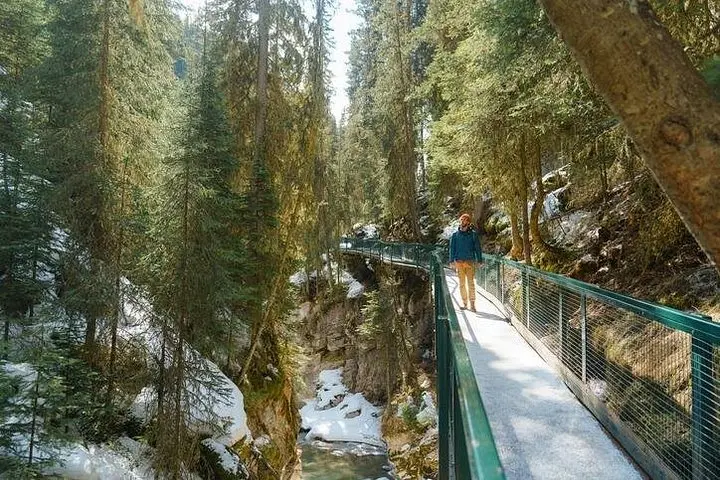
In eight efficient hours, experience the turquoise drama of Lake Louise and the cathedral-like icefalls of Johnston Canyon. This guided shuttle day trip from Banff/Canmore combines easy access, crisp winter scenery, and practical guidance for a high-reward Rockies outing.
 Related story
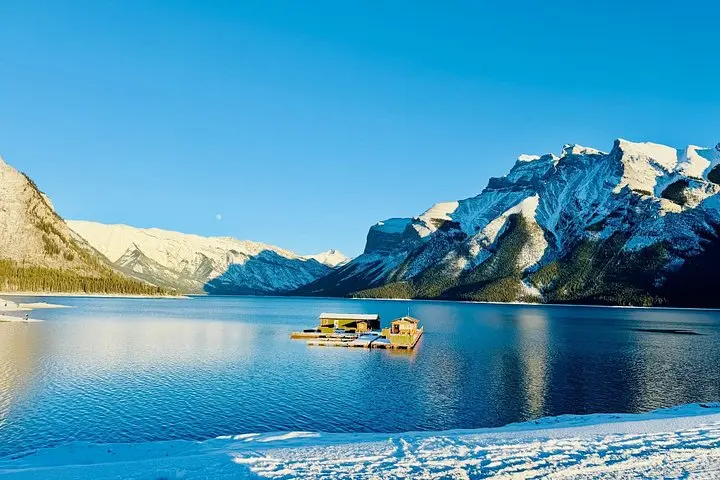
See Banff’s signature overlooks and hidden lakes in one compact, expertly guided 2.5-hour loop. Perfect for short-stay travelers who want big scenery without the driving.
 Related story
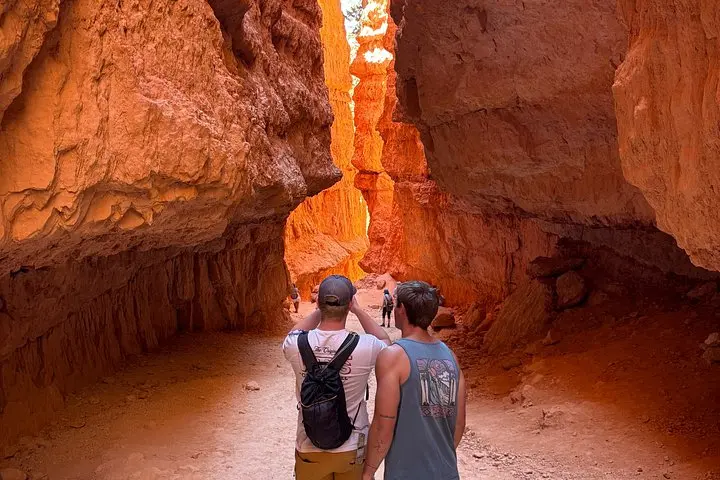
A guided sunrise hike down the Navajo Loop turns Bryce Canyon’s hoodoos from postcard scenery into an intimate geology lesson. Three miles, expert narration, and unforgettable light—this tour is the quickest way to understand how ice, time, and wind carved a city of stone.