
What the day feels like
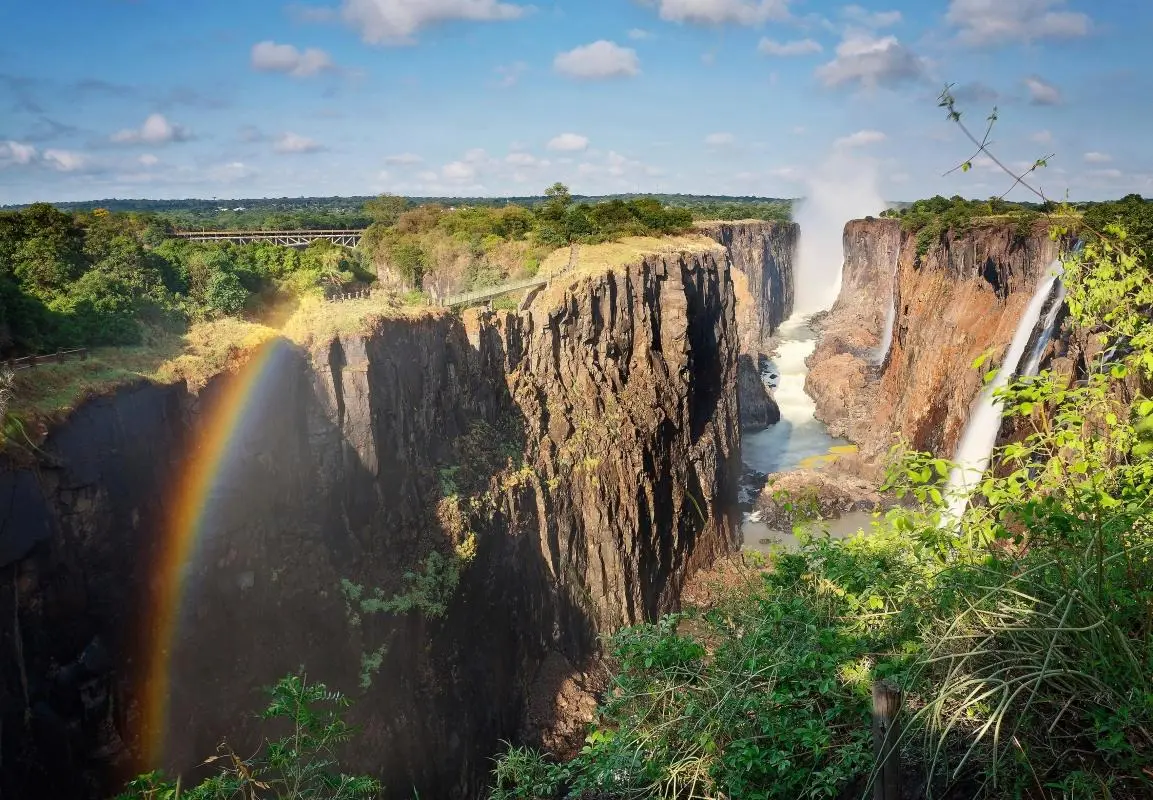
You arrive before dawn because the falls are loudest when fewer people stand between you and the mist. A half-moon hangs above the Zambezi and the rainforest is a soft, wet hush. By the time the sun clears the gorge the spray has lit into a floating curtain of diamonds; wind shifts and the waterfall—Mosi-oa-Tunya, “The Smoke That Thunders”—parts, revealing an impossible sheet of water running off a basalt lip 108 meters high and nearly 1,708 meters across. You walk a circuit of paved paths and wooden viewing platforms that put the roar in your chest and the spray on your face; rangers sweep the trails, guides point out ephemeral rainbows, and the river downstream glints like a promise of more—boat cruises, safari lodges, and game drives waiting beyond the town.
Victoria Falls National Park is both a grand spectacle and a compact field study in geology, ecology and colonial history. The falls are where the Zambezi, Africa’s fourth-largest river, negotiates a rift in a basalt plateau. Over millennia the water exploited weaknesses in the rock, scouring the lip and carving the Batoka Gorge, which slices downstream in a series of cataracts and churning white water. The result is a waterfall complex that’s less about one sheer drop and more about a braided, moving edge that changes with seasons and wind.
Its cultural resonance is older than maps. For the Lozi and Tonga people who live along the Zambezi, the falls are sacred; the name Mosi-oa-Tunya predates colonial renaming and still shapes local identity. When David Livingstone first wrote about the falls in 1855 he called them Victoria Falls, after the British queen; the dual names on signage—modern and indigenous—tell the story of layered meanings: wonder, reverence, and contested ownership.
Because the falls sit on the border between Zimbabwe and Zambia, the experience has a split personality. The Zimbabwe side—from the town of Victoria Falls—offers a full-length viewing circuit with classic, sweeping perspectives and easy access to the Rainforest Trail. The Zambia side is more intimate at low water, and it’s where, in the dry season, the famous Devil’s Pool forms on Livingstone Island for carefully guided swims. Both sides are launch points for a string of activities that turn the visit into a multiday adventure: sunset cruises on the Zambezi, cultural boma dinners with drumming and dance, and safaris into nearby Hwange National Park or across the border into Chobe.
How it feels on the ground: your shoes get damp. The paved paths are short—plan on 1.5–2.5 km to complete the main Zimbabwe circuit—there’s almost no elevation gain, but the terrain is consistently wet and often slippy. Rains feed the falls dramatically between December and April; that’s when the roar is fullest and the spray can obliterate views. From June through September the flow is lower, visibility is clearer and the gorge walls become visible; if you’re chasing Devil’s Pool or photographers’ vistas, this is the window.
Practical planning is straightforward but worth doing right. Arrive early to avoid the biggest crowds and to catch the light; wear grippy shoes and a breathable waterproof layer; carry a dry bag for electronics. Entry fees are paid at the park gates and can vary for international visitors; keep some small local currency and cash accepted widely here is the US dollar as well as local currency. If you plan to cross the border—say to swim in Devil’s Pool or take a Zambian-side tour—check visa requirements ahead of time and carry your passport.
For those who want the falls to sit beside, not replace, the rest of their trip: combine a Victoria Falls viewing day with a sunset Zambezi cruise to watch hippos and elephants drink at dusk; then add a two- or three-day safari to Hwange National Park or a multi-country overland package that includes Botswana’s Okavango Delta. Accommodation runs the gamut from the convenient Ilala Lodge—closest to the falls and often grazed by warthog and impala on hotel lawns—to the more remote Victoria Falls Safari Lodge with its panoramic waterhole views and classic safari atmosphere. Transfers from Victoria Falls International Airport are frequent and most lodges and operators provide private pick-ups.
Safety and stewardship are part of the visit. The rainforest around the falls is a fragile ecosystem; keep to the marked paths, avoid tossing coins or trash into the gorge, and hire accredited local guides so tourism dollars stay in the community. If you’re doing any river or swimming activities, listen to your guide about seasonal hazards—submerged rocks, strong currents, and wildlife like crocodiles and hippos—and never swim outside designated areas.
For photographers and casual walkers alike the falls deliver: wide-angle panoramas, intimate pockets of rainforest, and endless opportunities to watch the river negotiate its own boundaries. In the evening, the town of Victoria Falls—compact, colorful and geared to travelers—serves up grilled meats, local beer, and a handful of craft markets where woodcarving and woven goods connect you to local artisans.
The best approach is to think of Victoria Falls as a node rather than a day-trip. Walk the circuit at sunrise, take a sunset cruise, experience a boma dinner, then spend 48–72 hours pushing into the region’s greatest hits—Hwange’s elephant herds and Botswana’s delta camps. Those layered experiences are what turn a single visit into a trip you talk about on flights home: the geometry of the gorge, the human stories braided along the riverbanks, and the simple physics of water turning gravity into sound.
If you go ready—lightproof bag, good shoes, local guide—you’ll come away with wet socks and a clearer sense of why people have stood at this rim and listened for centuries. The falls are loud enough to teach humility. They’re also generous: they offer different shows in every season, and enough activities that you can decide whether you want to soak in the spray or watch it from a shaded riverbank as the light dies behind a line of distant elephants.
Trail wisdom
Small choices, better day.
Get there at sunrise
Early-morning light limits spray and crowds; the main Zimbabwe circuit (about 1.5–2.5 km) is best explored in the first two hours after opening.
Bring waterproof protection
A lightweight rain jacket and a zip-seal bag for electronics will keep gear dry on the Rainforest Trail where spray is constant.
Mind slippery surfaces
Wear shoes with good traction; wooden platforms and stone paths become slick from spray even on clear days.
Hire a local guide for border tips
Guides help with timing, border logistics for Zambia visits, and context for viewing points and wildlife sightings.
Local knowledge
Read the place, not just the route.
Watch for native species including African elephant, hippopotamus.
Keep an eye out for wildlife during the transition between areas and habitats. Respect distance guidelines.
The rainforest around the falls is a protected area; staying on marked paths and using local guides supports conservation and community-based tourism initiatives.
Follow the guide's instructions on size limits, ethical handling, and leave-no-trace practices.
Ride a sunrise canoe above the falls for still-water reflections. Visit the lesser-known Lookout Cafe for views of the gorge and a quieter photographic angle
Locally recommended viewpoints and quiet spots known best to local operators.
Named by David Livingstone in 1855, the falls also carry the indigenous name Mosi-oa-Tunya—reflecting a deep local history and ongoing cultural significance to Tonga and Lozi communities.
Maritime roots and regional tradition shape the waterways and working coasts.
Seasonal guide
Four versions of the same landscape.
Spring
Best forclearer views · hiking around the rim · birdwatching
Challengeswarmer temperatures · intermittent showers
September–November brings rising flows but still-clear visibility; mornings are cool, afternoons warm—good for combining falls viewing with river activities.
Summer
Best forlush rainforest · highest-volume spectacle · dramatic spray
Challengesheavy rains · reduced visibility from spray · muddy paths
December–February is hot and wet; the falls are at peak drama but expect limited photo clarity and frequent trail dampness.
Fall
Best forlower water lines · Devil’s Pool access (dry season) · clear photography
Challengesstrong sun · hot daytime temperatures
March–May sees flows start to drop; it’s a transitional period with good downstream visibility and easier access to islands and rock outcrops.
Winter
Best forcool mornings · game-viewing on riverbanks · comfortable hiking
Challengeslower spray and reduced rainforest greenness
June–August are dry and cool; the falls are less misty, offering sweeping views and ideal conditions for boat cruises and safaris.
Pack with intention
What to bring.
Good to know
Common questions.
Visa requirements depend on your nationality; some visitors can obtain a Kaza Univisa for joint travel—check current embassy guidance before you travel and carry your passport.
Plan the edges
The details that make the day easier.
Victoria Falls spans roughly 1,708 meters and plunges about 108 meters—creating the largest single sheet of falling water on Earth; its indigenous name, Mosi-oa-Tunya, means 'The Smoke That Thunders.'
The town of Victoria Falls hums with craft markets, grilled nyama (barbecue) stalls, and evening boma dinners—traditional meals paired with drumming and dance that connect visitors with local culture and artisans.
- Park hours
- typically sunrise–sunset; entrance fees vary for nationals and internationals; nearest airport: Victoria Falls International (VFA); currencies: USD widely accepted alongside local currency; tipping customary for guides and drivers.
Protect the rainforest—stay on paths, pack out waste, choose operators that employ local guides and contribute to community conservation funds, and avoid single-use plastics.
Explore by topic
Follow the threads.
Keep exploring
Make the story part of the trip.
 Related story
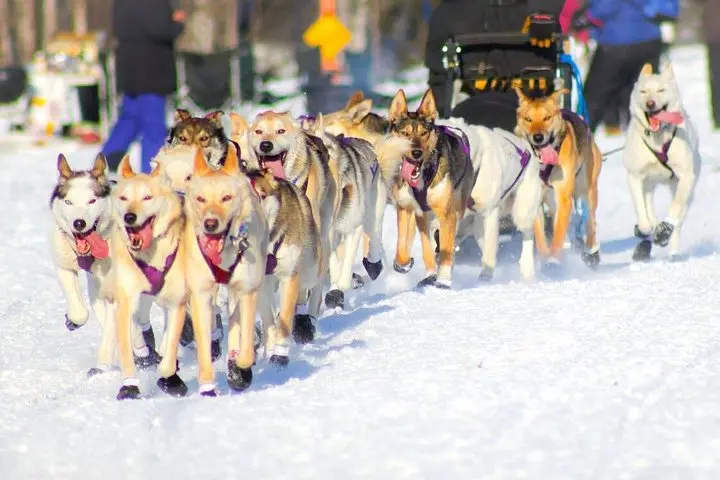
Compress the classics of Alaskan winter into a single weekend: dog sleds across frozen lakes, a snowmobile backcountry transfer, private cabins and nightly aurora hunts. This is an immersive, comfortable entry into the Iditarod world.
 Related story
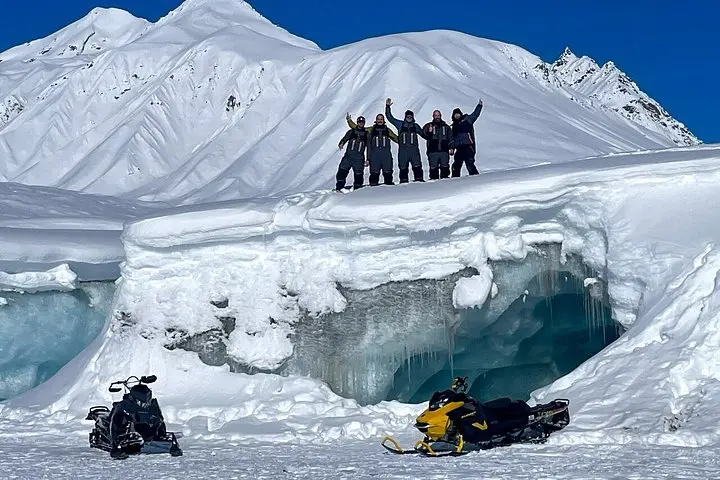
Three days, guided snowmobiles, and a base at Alpine Creek Lodge—this expedition mixes backcountry thrills with lodge-side comforts as you ride toward the Maclaren Glacier and the raw winter of the Denali Highway.
 Related story
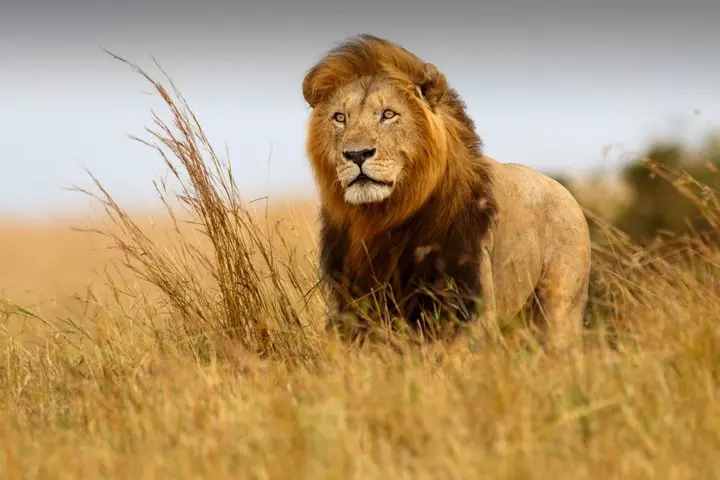
From Robberg’s wind-scoured cliffs to cave chambers and an open 4x4 game drive, this five-day Garden Route loop packs seaside hikes, whale watching and wine into one efficient, well-paced adventure.