
What the day feels like
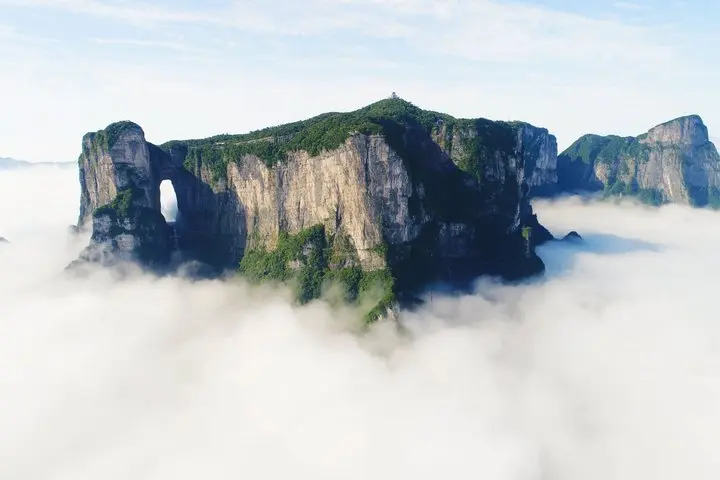
The cable car lifts you away from the city in a slow, trembling exhale. Underneath, Zhangjiajie's rooftops shrink to a patchwork of gray, then to a scalloped green sea as the valley folds in on itself. The car slides past cliff faces like a whispered invitation; wind teases at the glass and the mountain ahead — ancient, vertical, patient — seems to be waiting. By the time the car brushes the high station you’re already halfway into another world: cloud banks skimming the ridgeline, a network of boardwalks clinging to stone, and a natural arch high enough to be called a doorway to the sky.
Tianmen Mountain is theatrical in a way that feels deserved. The mountain's most famous features — the Tianmen Cave (Heaven’s Gate), the glass skywalks that dangle over plunging valleys, and a road that scars the cliff with 99 hairpin turns — are the result of millions of years of uplift and erosion slicing quartz-sandstone mesas into vertical spires. Geology here reads like a slow-motion action movie: water and ice widened joints in the rock, and gravity did the rest, collapsing sections to form the dramatic archway and steep cliffs you now walk beside.
This private-day experience removes the friction of logistics. Instead of wrestling a timetable you have a driver and guide who shepherd you between sites: the lower cable car or road ascent, the plateau with its pine-scented paths, the dizzying glass paths, and the climb of 999 steps that takes you up to Tianmen Cave. Expect a 5–7 hour day, with the most physically demanding parts being the stair climb and negotiating the exposed boardwalks — nothing technical, but the height and exposure are not for the faint-hearted.
There’s a cultural layer, too. Tianmen Mountain has been a draw for pilgrims and poets for centuries; people came to be close to sky and spirit. Today it’s equally a theater of modern spectacle — cable cars and skywalks tactically designed to give curated views — and a place where local Hunan food and small vendors keep a practical, human edge on the tourism. The mountain road with its 99 bends, carved in the 20th century, stands as a testament to modern engineering against a backdrop of very old stone.
Why should you go? For the immediacy. Few places compress vertigo, history, and spectacle into a single day like Tianmen. The glass walkway makes the ground feel like a dare; the Heaven’s Gate frames the sky in a way that changes the scale of everything around it. A private tour lets you time your visit for light and fewer crowds — sunrise or late afternoon brings better shadows and quieter boardwalks — and gives you time to absorb small, overlooked details: lichened handrails, the call of a crow under a ledge, the way clouds move through the valley like slow rivers.
Practicalities matter here. The iconic cableway is long — roughly 7,455 meters in length and a vertical rise of about 1,279 meters — so weather is a real factor. Cloud cover rolls in and out, temperatures can fall sharply at the summit, and the glass walkways are closed in high winds or heavy rain. If you’re hiking, allow time: even with the cable car you’ll be doing a fair amount of walking on uneven paths and climbing steps. The full experience on a private tour fits into a 5- to 7-hour window, which includes transfers and admissions.
For a successful day: go early, dress in layers, and carry water — bottle-refill options are limited on the plateau. Respect the glass paths and crowds: wait your turn, take controlled photos, and keep movement steady to avoid scaring fellow visitors. If heights unsettle you, approach the glass walk in short bursts or plan to stay on the less exposed side trails. And finally, allow some time at the base or in Zhangjiajie city afterward to eat something warming and spicy; Hunan cuisine rewards the hungry with bold flavors.
Beyond the checklist, there’s a less obvious reward: the way the mountain hums with continuity. Climbers, tourists, vendors, and monks have all traced these same steps in different eras. Today the experience sits at the meeting point of raw nature and human invention — stone carved by time, roads carved by hands, and cable cars that let you breathe the panorama without having to fight for it.
If you book the private tour, you get the practical advantage of skip-the-line access and a flexible pace. Bring a charged phone or camera, but also bring patience for crowds and the weather. Leave time to look at the details — the moss in a crack, a distant peak catching light — because the mountain is generous to those who slow down.
Trail wisdom
Small choices, better day.
Beat the crowds
Book the first cable car of the day or the late afternoon slot to avoid peak crowds and get cleaner light for photos.
Layer for altitude swings
Temperatures can drop quickly at the summit; pack a lightweight insulating layer and a wind shell.
Respect the glass walkways
Walk calmly, avoid running or jumping, and follow staff instructions — the glass can be closed in wet or windy conditions.
Hydrate and pace the stairs
Bring at least 1–1.5 liters of water and take steady breaks when climbing the 999 steps to Tianmen Cave.
Local knowledge
Read the place, not just the route.
Watch for native species including Red-crowned cranes are not typical here, but you may see local magpies and mountain squirrels, Occasional raptors hunting the valley thermals.
Keep an eye out for wildlife during the transition between areas and habitats. Respect distance guidelines.
High visitor numbers strain trails and facilities; stay on designated paths, carry out trash, and choose refillable water to reduce plastic waste.
Follow the guide's instructions on size limits, ethical handling, and leave-no-trace practices.
Walk the less crowded cliff trails beyond the main glass sections for quieter viewpoints. Stop at the small tea stands near the summit for local teas and better human-scale views
Locally recommended viewpoints and quiet spots known best to local operators.
Tianmen Mountain has long been a cultural landmark in Hunan; its natural arch and cliffs feature in local myths and, more recently, became a modern tourist attraction after road and cableway construction in the 20th century.
Maritime roots and regional tradition shape the waterways and working coasts.
Seasonal guide
Four versions of the same landscape.
Spring
Best forWildflowers and fresh green ridgelines · Moderate temperatures for walking
ChallengesOccasional rain and low cloud · Cooler temperatures early and late
Spring brings new greenery and fewer tourists than summer; expect intermittent showers and mist that can obscure views.
Summer
Best forLush vegetation and long daylight hours · Good for full-plateau exploration
ChallengesHigh heat and humidity · Peak crowds and occasional thunderstorms
Summer is warm and busy — go early, prepare for humidity, and watch forecasts for afternoon storms that can close attractions.
Fall
Best forClearer skies and dramatic light · Cooler, more comfortable hiking conditions
ChallengesShortening daylight hours · Potentially chilly mornings
Fall offers the best visibility and comfortable temperatures; October is often ideal for color and clarity.
Winter
Best forQuiet trails and crisp air · Dramatic, frosted scenery on clear days
ChallengesCold temperatures and possible ice on boardwalks · Some facilities or walkways may close
Winter is quieter and can be starkly beautiful, but be prepared for freezing conditions and limited services.
Operator details
What the booking data adds.
Included
- ✓Tianmen Cave Escalator + Glass‑Walkway Shoe Covers
- ✓Round-trip Tianmen Mountain cableway
- ✓Private car pickup and drop-off within the Zhangjiajie urban area
- ✓Tianmen Mountain National Forest Park admission ticket
- ✓Professional English‑speaking guide
Not included
- —Gratuities for guide and driver are optional and at the traveler’s discretion.
- —Meals
Good to know
- ✓Public transportation options are available nearby
- ✓Infants are required to sit on an adult’s lap
- ✓Not recommended for travelers with spinal injuries
- ✓Not recommended for pregnant travelers
- ✓Not recommended for travelers with poor cardiovascular health
- ✓Travelers should have at least a moderate level of physical fitness
Pack with intention
What to bring.
Good to know
Common questions.
The private tour runs about 5–7 hours and typically includes hotel pickup/drop-off, park admission, cableway access, and a private guide/driver.
Plan the edges
The details that make the day easier.
The Tianmen Mountain cableway spans approximately 7,455 meters and climbs more than 1,200 meters, making it one of the world's longest passenger cableways.
After your hike, head back to Zhangjiajie city for Hunan (Xiang) cuisine — seek spicy braised fish or smoked pork with chili and warm up with a local tea house or a cold local beer. Small family-run restaurants near the park offer authentic flavors and a chance to mingle with guides and locals.
- Closest airport
- Zhangjiajie Hehua Airport (DYG) — ~40 minutes to Tianmen Mountain by car; Driving: cableway lower station is in the city and transfers are typically 15–45 minutes; Cell service: generally good in town, variable on exposed ridgelines; Permits: park admission required — a private tour usually secures tickets and handles queues.
Tianmen Mountain receives high visitor numbers; help protect fragile cliff ecosystems by staying on marked trails, avoiding single-use plastics, and supporting local vendors rather than littering the landscape.
Explore by topic
Follow the threads.
Keep exploring
Make the story part of the trip.
 Related story
Compress the classics of Alaskan winter into a single weekend: dog sleds across frozen lakes, a snowmobile backcountry transfer, private cabins and nightly aurora hunts. This is an immersive, comfortable entry into the Iditarod world.
 Related story
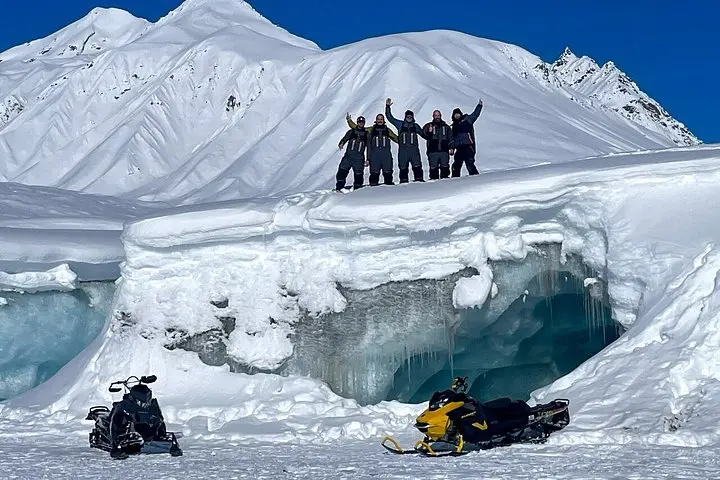
Three days, guided snowmobiles, and a base at Alpine Creek Lodge—this expedition mixes backcountry thrills with lodge-side comforts as you ride toward the Maclaren Glacier and the raw winter of the Denali Highway.
 Related story
From Robberg’s wind-scoured cliffs to cave chambers and an open 4x4 game drive, this five-day Garden Route loop packs seaside hikes, whale watching and wine into one efficient, well-paced adventure.